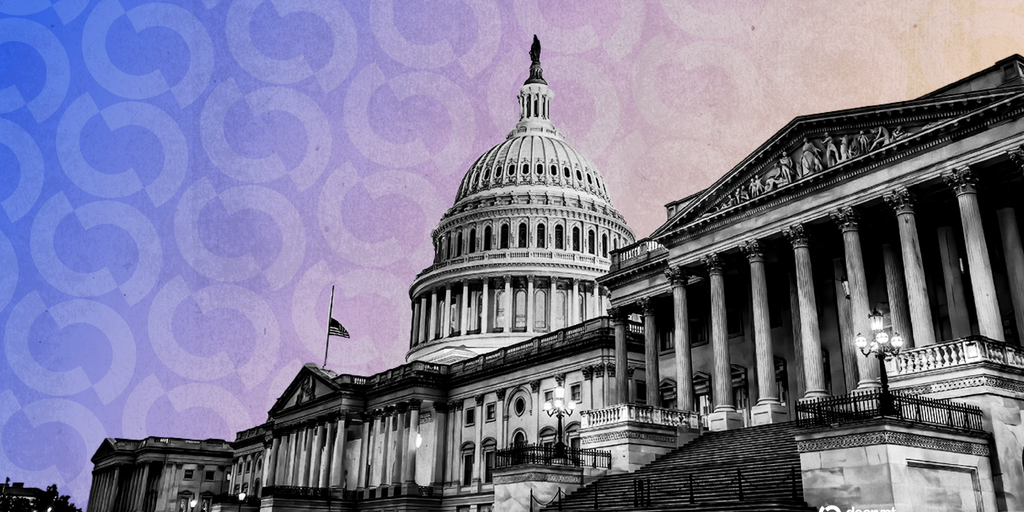
Introduction: Washington Goes All-In on Crypto
The United States crypto regulatory landscape is rapidly shifting, driven by a confluence of political intent and agency action that signals a dramatic "all-in" moment for Washington. Recent developments – former President Donald Trump’s direct appeal for legislative clarity, the Commodity Futures Trading Commission’s (CFTC) assertive warning of unilateral action, and the Securities and Exchange Commission’s (SEC) surprising advancement of a crypto fundraising framework – collectively mark a pivotal turning point. This intensified focus suggests that the era of regulatory ambiguity and reactive enforcement may be giving way to a more structured, albeit potentially complex, regime. As a Senior Crypto Analyst, it's clear these events are not isolated incidents but rather orchestrated moves in a high-stakes game to define the future of digital assets within the world's largest economy.
Trump's Legislative Clarion Call: Demanding a "Fair Version" of Clarity
At the heart of Washington's renewed crypto push is Donald Trump's unequivocal call for the passage of a "fair version" of the Clarity Act. This intervention is significant for several reasons. Firstly, it elevates crypto regulation to a high-profile political issue, underscoring its growing importance in national discourse and potential electoral impact. Trump's endorsement, particularly his emphasis on a "fair" version, signals a legislative approach that aims to foster innovation rather than stifle it through overly burdensome rules. It suggests a direct challenge to the current regulatory status quo, which has often been criticized for its lack of precise definitions and reliance on enforcement actions post-facto.
The Clarity Act itself, still in various stages of legislative discussion, seeks to delineate the jurisdiction of various agencies over digital assets, clarify when a token ceases to be a security, and establish a framework for secondary market transactions. Trump’s advocacy for a "fair" iteration implies a careful balancing act: protecting investors without suffocating the nascent industry. This political will, especially from a former President with significant influence, injects a powerful new dynamic into the legislative process, potentially galvanizing Congress to move beyond gridlock and deliver tangible regulatory statutes. For the crypto industry, this is a beacon of hope for a future where innovation can thrive under predictable rules, rather than operate in perpetual fear of regulatory ambush.
The CFTC's Assertive Stance: A Race for Rules and Jurisdiction
Parallel to the legislative push, the Commodity Futures Trading Commission (CFTC) has dramatically escalated its rhetoric, issuing a clear warning: if Congress fails to pass comprehensive crypto legislation, the agency will proceed to write its own rules. This ultimatum highlights the ongoing inter-agency turf war and the mounting frustration within the CFTC over the lack of a clear mandate. The CFTC views many digital assets, particularly Bitcoin and Ethereum, as commodities falling under its purview, advocating for a principles-based approach that differs significantly from the SEC's securities-centric framework.
The implication of the CFTC's threat is profound. Should Congress stall, the crypto industry could face a fragmented regulatory landscape where two powerful agencies – the SEC and the CFTC – operate under distinct and potentially conflicting rulebooks. While the CFTC's desire for clarity is laudable, unilateral action could create further complexity for projects and exchanges that might fall under both jurisdictions. For instance, a hybrid token might be deemed a commodity by the CFTC and a security by the SEC, creating compliance nightmares. This aggressive stance by the CFTC, therefore, serves as both a plea for legislative action and a warning of the potential chaos that could ensue if such action is not forthcoming. It underscores the urgency for a unified legislative framework that harmonizes the efforts of these crucial regulatory bodies.
The SEC's Unexpected Pivot: Advancing a Crypto Fundraising Framework
Perhaps the most unexpected development in this series of events is the Securities and Exchange Commission’s (SEC) abrupt advancement of its first crypto fundraising framework. For years, the SEC, under Chairman Gary Gensler, has adopted a firm stance that most digital assets are unregistered securities, leading to numerous enforcement actions and a perceived reluctance to offer clear pathways for compliant crypto capital formation. This sudden pivot marks a significant shift from a purely enforcement-first approach to one that begins to entertain structured avenues for legal fundraising.
While details of the framework are still emerging, its very existence is a game-changer. It suggests the SEC may be acknowledging the need for a mechanism to allow legitimate crypto projects to raise capital in the U.S. without running afoul of securities laws. This could involve revised registration processes, specific disclosure requirements for token sales, or tailored exemptions that recognize the unique characteristics of digital assets. For startups and innovators, this framework could unlock significant capital, bringing clarity to an area previously fraught with legal peril. However, the "abruptness" also raises questions: Is this a genuine shift in philosophy, a response to political pressure from figures like Trump, or an attempt to preempt the CFTC's unilateral rule-making? Regardless of the underlying motive, the move opens a new chapter for compliant token issuance and investment in the U.S., potentially revitalizing the domestic crypto market and drawing capital back from more permissive jurisdictions.
A Crossroads for Crypto: The Path to Clarity or Continued Conundrum?
These simultaneous developments – a strong political push for legislative clarity, an impatient regulatory body threatening unilateral action, and a historically enforcement-focused agency suddenly offering a framework – paint a picture of a sector at a critical juncture. The promise is a future where the U.S. provides a clear, competitive regulatory environment for crypto, fostering innovation and attracting global talent and capital. The danger, however, is a scenario where these disparate efforts fail to converge, leading to a patchwork of rules and continued regulatory arbitrage. If Trump’s push for the Clarity Act succeeds, it could harmonize the efforts of the SEC and CFTC, assigning clear jurisdictional boundaries and providing a unified approach to digital assets. This would be the optimal outcome for market participants, offering predictability and reducing compliance burdens.
Conversely, if legislative efforts stall, the CFTC’s threat to write its own rules, combined with the SEC’s independent framework, could result in a more fragmented and potentially contradictory regulatory ecosystem. Companies might find themselves navigating two parallel and possibly conflicting sets of requirements, exacerbating rather than alleviating current challenges. The question remains whether Washington truly is "all-in" on a coherent strategy, or if these are merely independent agencies and political figures jostling for influence in a rapidly evolving technological domain. The next few months will be crucial in determining whether these moves coalesce into a robust, pro-innovation framework or devolve into further regulatory complexities.
Conclusion: Charting a Course Through Washington's Crypto Wake-Up Call
The recent flurry of activity from Trump, the CFTC, and the SEC signifies a profound awakening in Washington regarding the critical importance of cryptocurrency regulation. This multifaceted approach, characterized by political advocacy, assertive agency posturing, and a nascent shift towards constructive frameworks, underscores a collective realization that the status quo is no longer tenable. For market participants, this moment presents both immense opportunity and potential pitfalls. While the prospect of legislative clarity and practical fundraising frameworks is highly encouraging, the risk of continued inter-agency friction and fragmented rule-making remains a significant concern.
As the crypto industry navigates this evolving landscape, vigilance and proactive engagement will be paramount. Companies must stay abreast of legislative developments, prepare for the implications of potential CFTC rule-making, and carefully analyze the contours of the SEC’s new fundraising framework. The ultimate goal for all stakeholders should be a cohesive, principles-based regulatory environment that protects investors, deters illicit activity, and most importantly, champions the innovation that digital assets promise. Washington has indeed gone "all-in" on crypto; the coming months will reveal whether this commitment leads to a clear path forward or merely deepens the existing regulatory labyrinth.