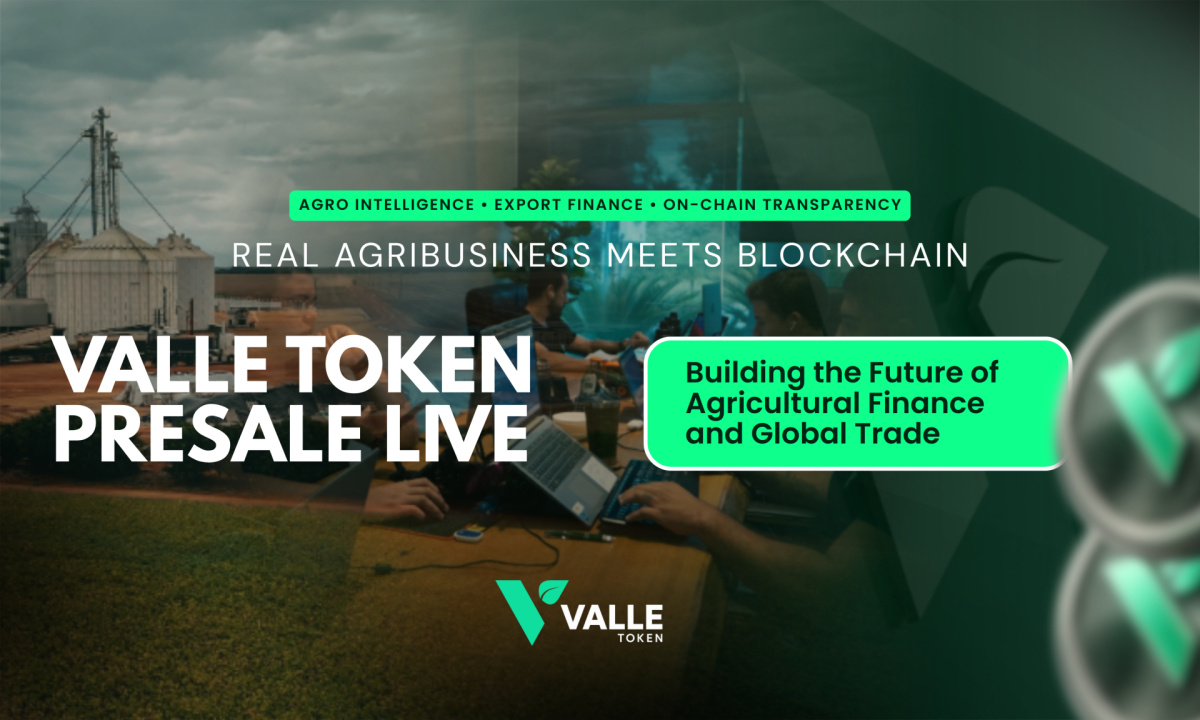
Introduction: A New Horizon for Real-World Assets
The cryptocurrency landscape, ever-evolving, continually seeks its next frontier for genuine, tangible value creation. Today, July 1st, 2026, marks a pivotal moment with the official launch of the Valle Capital Token from Tortola, British Virgin Islands. This new entrant is poised to merge the burgeoning Real-World Asset (RWA) tokenization narrative with the foundational, yet often opaque, agribusiness sector. As Senior Crypto Analysts, our role is to dissect such developments, assessing their potential to drive innovation, generate investor value, and navigate the complex interplay between traditional finance and decentralized technology. Valle Capital’s ambitious endeavor to tokenize agribusiness assets represents not just a new token launch, but a significant litmus test for RWA's true potential and scalability in a critical global industry.
Valle Capital: Bridging Agribusiness and Digital Finance
At its core, the Valle Capital Token aims to unlock liquidity and investment opportunities within the global agribusiness sector by tokenizing a diverse array of underlying assets. This involves creating a transparent, accessible, and potentially more efficient ecosystem for financing one of the world's most critical industries. From farmlands and livestock to crop yields and supply chain financing, Valle Capital envisions fractional ownership and streamlined capital formation. The traditional agribusiness finance model, often characterized by regional fragmentation, high transaction costs, and limited access for diverse investors, stands ripe for disruption. Valle Capital proposes to inject DeFi principles – transparency, immutability, and programmability – into this trillion-dollar industry, promising a paradigm shift for both asset owners and global investors.
RWA's Ascendance: A 2026 Perspective
By mid-2026, the concept of Real-World Assets (RWA) has firmly moved beyond theoretical discussions to become a cornerstone of institutional crypto adoption. The last two years have seen significant strides in regulatory frameworks, oracle solutions, and legal infrastructure designed to bridge off-chain assets with on-chain representations. We've witnessed a maturation in how digital assets are collateralized by everything from government bonds to luxury goods and real estate. Valle Capital enters a market where the appetite for yield derived from tangible, non-crypto-native assets is high, especially as market participants seek diversification and stability away from the inherent volatility of purely digital native assets. Their success hinges on meticulous legal structuring, robust asset due diligence, and the ability to navigate evolving global regulatory landscapes that remain a mosaic of varying approaches.
Why Agribusiness? Unlocking a Vital Yet Underserved Sector
The choice of agribusiness as a primary focus for RWA tokenization is both strategic and profound. Agribusiness is a fundamental global industry, providing food security and economic stability, yet it often suffers from capital inefficiency. Key characteristics make it an ideal candidate for blockchain disruption:
- Massive Asset Base: Agricultural land, equipment, and produce represent trillions in value.
- Illiquidity: Traditional investments in agribusiness are often long-term and illiquid, making fractional tokenization attractive.
- Global Demand: Food and agricultural products are in constant demand, providing a stable underlying economic driver.
- Supply Chain Complexity: Blockchain can enhance transparency and traceability, from farm to fork, benefiting both producers and consumers.
- ESG Integration: The sector's inherent link to sustainability and environmental, social, and governance (ESG) factors aligns well with growing investor mandates, allowing for verifiable impact tracking.
Ecosystem & Technology: The Backbone of Valle Capital
While specific technological details were not fully elucidated in the initial announcement, our analysis suggests Valle Capital will likely leverage a robust, enterprise-grade Layer 1 or Layer 2 blockchain solution, chosen for its scalability, security, and low transaction costs – essential for managing high-volume, potentially micro-fractionalized assets. Key components of its ecosystem are expected to include:
- Tokenomics: A carefully designed token utility and governance model that incentivizes participation, secures the network, and aligns stakeholder interests.
- Decentralized Autonomous Organization (DAO): Potentially granting token holders governance rights over asset selection, ecosystem parameters, and fee structures.
- Oracles: Critical for integrating real-world data – such as crop yields, commodity prices, weather patterns, and land valuations – securely and reliably onto the blockchain.
- Legal Frameworks: Secure, compliant solutions for the underlying physical assets, including robust legal opinions and asset servicing partners to ensure enforceability and investor protection.
- Partnerships: Collaborations with traditional agribusiness players, financial institutions, and specialized legal firms will be paramount for adoption and regulatory compliance.
Benefits and Value Proposition: A Multi-faceted Opportunity
The launch of Valle Capital Token presents compelling benefits across various stakeholder groups:
- For Investors: Offers diversification into a stable, inflation-hedged asset class, access to high-demand global markets, and potentially attractive yields traditionally unavailable to retail or even smaller institutional investors. The fractional nature of tokenization lowers entry barriers.
- For Agribusinesses: Provides a novel source of capital, potentially at lower costs and with greater flexibility than traditional bank loans or equity financing. It can also improve supply chain efficiency and transparency, reducing intermediaries and fostering direct relationships.
- For the Crypto Ecosystem: Further legitimizes the RWA narrative, demonstrating blockchain’s capacity to integrate with and enhance fundamental global industries. It draws in new capital and user bases, driving mainstream adoption.
Navigating the Hurdles: Critical Risks and Challenges
While the promise is substantial, Valle Capital faces formidable challenges inherent in the RWA space:
- Regulatory Complexity: Navigating the patchwork of international regulations for securities, commodities, and property rights across different jurisdictions is a monumental task. Legal enforceability of on-chain claims to off-chain assets remains a primary concern.
- Oracle Reliability: The integrity of the entire system hinges on accurate, tamper-proof data feeds for asset valuation, performance, and environmental metrics. Any compromise here could undermine investor confidence.
- Liquidity & Market Depth: Building sufficient market depth for the Valle Capital Token, especially during nascent stages, will be crucial to ensure fair pricing and easy entry/exit for investors.
- Operational Risks: Managing physical assets involves inherent risks such as climate change impact on crops, geopolitical events affecting supply chains, and the operational complexities of agribusiness itself.
- Smart Contract Security: As with all blockchain projects, the underlying smart contracts are susceptible to bugs or exploits, requiring rigorous auditing and ongoing security measures.
- Traditional Sector Adoption: Convincing conservative, traditional agribusiness entities and financial institutions to embrace a blockchain-native solution will require sustained education, proven ROI, and robust support infrastructure.
Conclusion: A Glimpse into Agribusiness Finance's Future
The launch of the Valle Capital Token is more than just another crypto project; it is a profound statement about the future trajectory of Real-World Asset tokenization and its potential to revolutionize foundational industries. By targeting agribusiness, Valle Capital taps into a sector ripe for innovation, offering both substantial opportunities and unique challenges. As Senior Crypto Analysts, we will be closely monitoring its initial performance, the robustness of its asset backing mechanisms, and its ability to foster trust among a diverse group of stakeholders – from traditional farmers to crypto-native investors. Should Valle Capital successfully navigate the regulatory complexities, establish reliable oracle solutions, and build deep market liquidity, it could well serve as a blueprint for how blockchain technology can not only bridge the gap between traditional and decentralized finance but fundamentally enhance the efficiency, transparency, and accessibility of critical global industries. Its journey will undoubtedly offer invaluable lessons for the broader RWA ecosystem and the continued maturation of the crypto market.