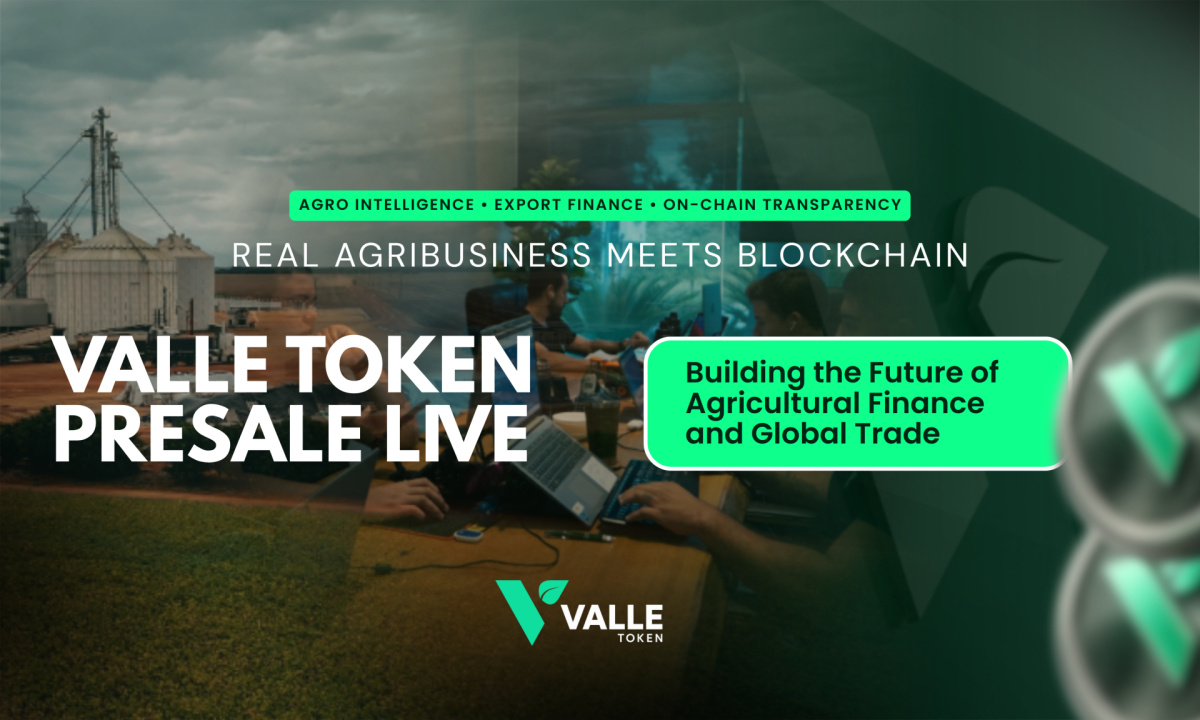
The Dawn of a New Financial Epoch: Valle Capital Token Unveils RWA-Agribusiness Ecosystem
Tortola, British Virgin Islands – July 1st, 2026 – The crypto landscape witnessed a significant stride today with the official launch of the Valle Capital Token, inaugurating an ambitious ecosystem designed to merge the burgeoning world of Real-World Assets (RWA) with the fundamental stability of agribusiness. From the perspective of a Senior Crypto Analyst, this launch represents more than just another token offering; it signifies a strategic evolution in how digital finance interfaces with tangible economic sectors, potentially unlocking profound value and reshaping investment paradigms.
The announcement, emanating from the British Virgin Islands, positions Valle Capital Token at the vanguard of a movement seeking to inject liquidity, transparency, and global accessibility into an often-underserved yet critically important industry. By tokenizing agribusiness assets, Valle Capital aims to create a symbiotic relationship where DeFi innovation empowers agricultural growth, and in return, offers crypto investors access to a historically robust asset class.
Understanding Valle Capital's Vision: RWA and the Agribusiness Imperative
At its core, Valle Capital Token is designed to fractionalize ownership and facilitate investment in a diversified portfolio of agribusiness assets. This includes, but is not limited to, farmlands, agricultural infrastructure, crop yields, and even supply chain financing. The mechanism is straightforward: real-world assets are assessed, collateralized, and represented by digital tokens on a blockchain. These tokens, in turn, can be traded, lent, and utilized within the broader DeFi ecosystem, bringing unprecedented liquidity and programmability to a traditionally illiquid sector.
The choice of agribusiness as the primary RWA focus is particularly astute. Agriculture is a foundational industry, characterized by consistent demand, inherent tangibility, and often, a natural hedge against inflation. Unlike many volatile digital assets, the value of productive farmland or essential food crops is intrinsically linked to fundamental human needs and global economic cycles, offering a degree of stability that crypto investors often seek to balance their portfolios. Valle Capital’s initiative seeks to democratize access to these assets, allowing a broader investor base to participate in the wealth generation traditionally reserved for large institutional investors or those with direct access to agricultural land.
The Mechanics of Tokenization and Ecosystem Development
Valle Capital Token’s operational framework will likely involve a multi-layered approach. Initially, the process would entail rigorous due diligence on target agribusiness assets – land titles, production forecasts, environmental impact assessments, and legal frameworks. These assets are then converted into a digital representation (NFTs or fungible tokens representing fractional ownership) backed by legal agreements and a robust trust structure, often leveraging the transparent and immutable nature of blockchain technology to record ownership and transactions.
The ecosystem extends beyond mere asset tokenization. It envisions a holistic platform where agribusiness projects can secure capital more efficiently, bypassing traditional banking hurdles and high interest rates. Conversely, investors gain diversified exposure to various agricultural ventures, potentially earning yields derived from real-world agricultural operations, such as crop sales, lease agreements, or profit-sharing models. This creates a powerful feedback loop: investor capital fuels agricultural expansion and innovation, which in turn generates returns for token holders, enhancing the value proposition of the Valle Capital Token.
Opportunities for Investors and the Broader DeFi Landscape
For the astute crypto investor, Valle Capital presents several compelling opportunities:
- Diversification: A tangible hedge against crypto market volatility, offering exposure to real-world economic cycles.
- Yield Generation: Potential for sustainable, asset-backed yields derived from productive agricultural activities, distinct from purely speculative DeFi yields.
- Liquidity: Transforming an historically illiquid asset class (farmland) into liquid, tradable digital assets.
- Impact Investing: The potential to contribute to food security, sustainable farming practices, and rural economic development.
- Bridging TradFi and DeFi: An important step in legitimizing and integrating blockchain technology into mainstream finance.
For the DeFi ecosystem, Valle Capital’s model could introduce a new class of stable, yield-bearing collateral, enhancing the robustness and utility of decentralized lending, borrowing, and synthetic asset protocols. It further validates the Real-World Asset narrative, demonstrating that blockchain's utility extends far beyond digital native assets.
Navigating the Challenges: Risks and Regulatory Landscape
Despite the immense potential, a Senior Crypto Analyst must also highlight the inherent challenges. The primary hurdles include:
- Regulatory Ambiguity: While based in the BVI, the global nature of agribusiness and crypto means navigating diverse and evolving regulatory frameworks across multiple jurisdictions.
- Asset Valuation and Oracles: Accurate, real-time valuation of real-world agricultural assets and their yields requires robust, tamper-proof oracle solutions.
- Operational Risks: Agricultural operations are subject to risks like weather events, pest outbreaks, market price fluctuations for commodities, and geopolitical factors.
- Legal Enforcement: Ensuring that the legal claims backing the tokens are robust and enforceable in the event of default or dispute.
- Scalability and Adoption: The success hinges on attracting sufficient institutional and retail capital, as well as onboarding credible agribusiness partners.
Valle Capital will need to demonstrate transparent governance, meticulous asset management, and a clear legal framework to instill confidence and attract significant capital. Establishing strong partnerships with established agricultural firms, legal experts, and traditional financial institutions will be paramount to mitigating these risks.
Conclusion: A Watershed Moment for RWA and Agribusiness
The launch of Valle Capital Token’s RWA and agribusiness ecosystem is undeniably a landmark event. It epitomizes the ongoing convergence of traditional economic sectors with the transformative power of blockchain technology. By addressing a critical need for accessible capital in agriculture and offering crypto investors a tangible, yield-bearing asset class, Valle Capital is poised to carve out a significant niche. While the path ahead is fraught with regulatory complexities and operational challenges, the strategic fusion of a fundamental human need (food) with cutting-edge financial technology holds the promise of not only generating substantial returns but also fostering sustainable development. As a Senior Crypto Analyst, I will be keenly observing Valle Capital's trajectory, recognizing its potential to not just participate in, but actively define, the future of real-world asset tokenization within the global economy.