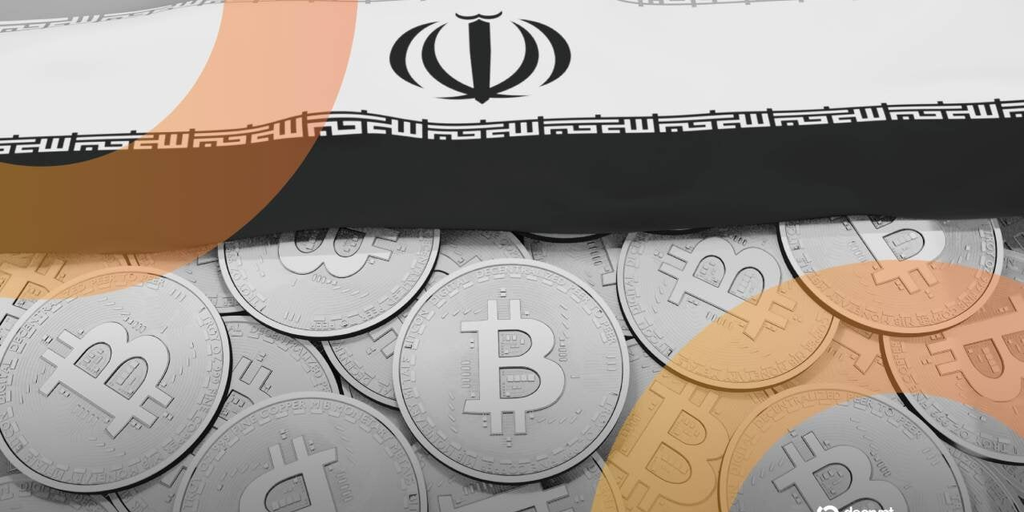
A New Front in Financial Warfare: US Treasury Targets Crypto for Iran Sanctions Evasion
The U.S. Department of the Treasury has once again sent a strong signal to the global cryptocurrency ecosystem, announcing sanctions against two crypto exchanges accused of laundering millions of dollars for Iran's Islamic Revolutionary Guard Corps (IRGC). This move, targeting a Georgia- and UAE-based operator and an Iran-based platform, represents a critical escalation in the ongoing battle against illicit finance within the digital asset space. As a senior crypto analyst, I view this development not merely as an isolated incident but as a significant waypoint in the evolving regulatory landscape, carrying profound implications for compliance, innovation, and the future perception of cryptocurrencies.
The Genesis of Sanctions: Targeting Iran's Illicit Networks
Iran has long faced stringent international sanctions, particularly from the United States, aimed at curtailing its nuclear program, support for regional proxy groups, and human rights abuses. These sanctions have severely limited Iran's access to the traditional global financial system, pushing the nation and its affiliated entities, like the IRGC, to seek alternative avenues for fundraising and money movement. Cryptocurrencies, with their perceived anonymity and borderless nature, have unfortunately become an attractive, albeit high-risk, instrument for such endeavors.
The IRGC, designated a foreign terrorist organization by the U.S., is a powerful and pervasive entity within Iran, with vast economic interests and a significant role in both domestic and foreign policy. Its financing networks are complex and often rely on exploiting vulnerabilities in global financial systems. The Treasury's focus on crypto exchanges highlights a growing understanding within government agencies that digital assets are no longer fringe instruments but integral components that can be weaponized by state-sponsored actors to circumvent sanctions and fund nefarious activities.
The Sanctions Unpacked: Who and How
While specific names of the sanctioned entities are often detailed by the Treasury, the context provided points to a sophisticated cross-border operation. The involvement of a Georgia- and UAE-based operator suggests the exploitation of jurisdictions with perceived laxer regulatory oversight or, at minimum, strategic geographic positioning. The Iran-based platform indicates an indigenous capability to facilitate domestic crypto-fiat conversions or peer-to-peer (P2P) transactions, essential for any local illicit finance operation.
The laundering process likely involved a combination of techniques. These could include using multiple layers of transactions across various wallets and exchanges, employing 'mixers' or 'tumblers' to obscure transaction origins, leveraging P2P networks to avoid centralized exchange KYC (Know Your Customer) protocols, or creating shell companies to funnel funds through legitimate-appearing fronts. The 'millions of dollars' figure underscores the scale of these operations and the persistent challenge in tracking funds once they enter the digital realm, even with advanced blockchain analytics tools.
Broader Implications for the Crypto Ecosystem
Enhanced Regulatory Scrutiny and Compliance Burden
This round of sanctions will undoubtedly intensify regulatory scrutiny on centralized crypto exchanges globally. Regulators will pressure exchanges to bolster their Anti-Money Laundering (AML) and Counter-Terrorist Financing (CTF) frameworks, leading to more stringent KYC requirements, enhanced transaction monitoring, and potentially, increased delisting of privacy-centric coins or services. For legitimate crypto businesses, this means higher compliance costs and a more complex operating environment, but also an opportunity to build trust by demonstrating robust safeguards.
The Dual Nature of Digital Assets
The incident starkly reminds us of the dual nature of digital assets. While cryptocurrencies offer unparalleled innovation, financial inclusion, and efficiency, their inherent characteristics—decentralization, pseudonymity, and global accessibility—can be exploited by malicious actors. The challenge for policymakers and the industry is to harness the former while mitigating the latter, a task that often leads to tension between privacy advocates and national security imperatives.
The Role of Blockchain Analytics
These sanctions are also a testament to the increasing sophistication of blockchain analytics firms and government agencies in tracing illicit funds. The ability to identify the flow of millions across different platforms and jurisdictions indicates that the 'anonymity' once associated with crypto is largely a myth, especially for large, centralized transactions. This capability is a powerful deterrent and a crucial tool in the hands of law enforcement, but it also prompts illicit actors to continually evolve their evasion tactics.
The U.S. Treasury's Strategic Calculus
The Treasury's strategy is clear: wherever illicit financial activity touches the U.S. financial system or global networks, it will be pursued. By targeting crypto exchanges, the U.S. sends a message that digital assets are not a safe haven for sanctions evasion. This action is part of a broader U.S. foreign policy objective to exert financial pressure on adversaries and disrupt their ability to fund destabilizing activities. It also reinforces the notion that the U.S. aims to be at the forefront of regulating emerging financial technologies, influencing global standards in the process.
Looking Ahead: Navigating a Tightening Regulatory Net
What can we expect moving forward? More proactive enforcement actions are likely. The Treasury and other global regulators will continue to invest in blockchain forensics and collaborate internationally to share intelligence and coordinate enforcement. Crypto exchanges, particularly those operating in jurisdictions perceived as high-risk, will face immense pressure to comply or face severe penalties, including exclusion from key financial markets.
Innovation in privacy-enhancing technologies within crypto will also likely accelerate in response, creating a perpetual cat-and-mouse game between regulators and those seeking to evade them. However, for the mainstream adoption of cryptocurrencies to flourish, the industry must demonstrate its commitment to security, transparency, and compliance, actively rooting out bad actors and cooperating with regulatory bodies.
Conclusion: A Watershed Moment for Crypto Compliance
The sanctions against crypto exchanges for laundering millions for Iran's Revolutionary Guard mark a watershed moment. They underscore the reality that the crypto world is deeply intertwined with geopolitical forces and traditional financial crime concerns. For serious participants in the crypto economy, this is a call to action: reinforce compliance, embrace responsible innovation, and work collaboratively to build a secure and legitimate digital financial future. The era of the 'Wild West' in crypto is definitively over; the era of strict accountability is here.