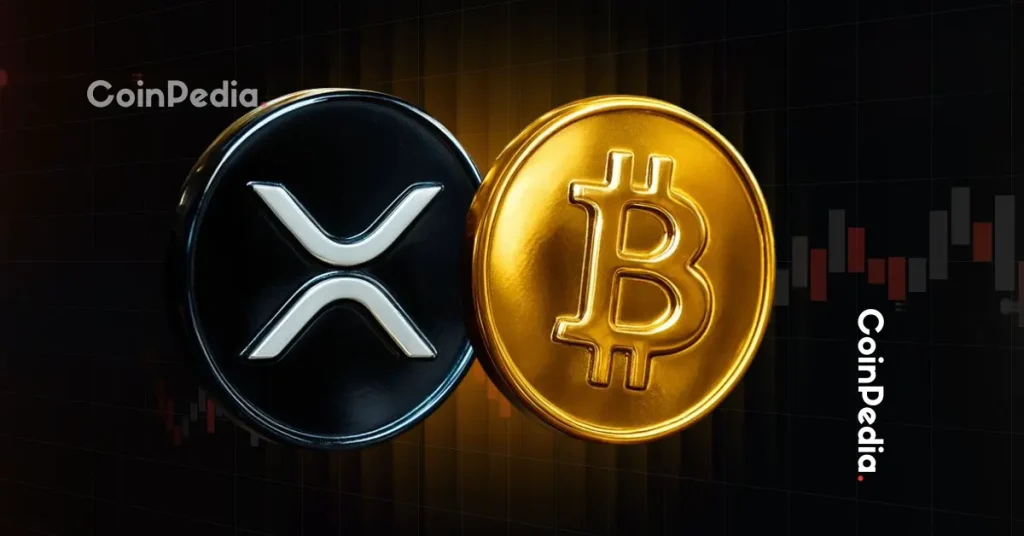
A Bold Declaration from the Heart of Tokenized Finance
In a burgeoning landscape where traditional financial assets are rapidly finding their digital counterparts, a recent declaration from Allen Konevsky, Chairman and Chief Executive of tZERO Group, has sent ripples through the crypto community. Konevsky, heading one of the only two firms holding a special purpose broker-dealer license from the US Securities and Exchange Commission, asserted a long-term bias toward cryptocurrencies that function as "infrastructure ingredients" rather than mere "stores of value." His primary examples? XRP and Ether, positioned as having a distinct advantage over Bitcoin for the burgeoning tokenized capital markets.
This statement is not just an opinion; it comes from a key player at the forefront of legitimizing and operationalizing tokenized securities. tZERO's unique regulatory standing grants its perspective significant weight, offering a glimpse into the practical considerations and infrastructural demands that institutional players prioritize when venturing into the digital asset space. As a Senior Crypto Analyst, it's crucial to dissect this argument, understand its underlying logic, and assess its implications for the future architecture of finance.
Infrastructure vs. Store of Value: The Core Dichotomy
Konevsky's argument hinges on a fundamental distinction in blockchain utility. Bitcoin, since its inception, has largely been championed as "digital gold" – a decentralized, scarce, and censorship-resistant store of value. Its primary design optimizes for security, immutability, and resistance to debasement, making it an ideal long-term holding. However, its transaction speed (averaging 10 minutes per block) and cost (which can fluctuate significantly with network congestion) are often cited as limitations for high-frequency, high-volume financial applications.
In contrast, XRP and Ether are designed with different core objectives. XRP, the native asset of the XRP Ledger, was built specifically for fast, low-cost international payments and remittances. Its average transaction settlement time is 3-5 seconds, with minimal fees, making it highly efficient for value transfer. Ether, powering the Ethereum network, serves as "gas" for executing smart contracts and decentralized applications, providing a programmable layer critical for creating and managing complex tokenized assets, including security tokens and NFTs.
The Case for XRP in Capital Markets
For tokenized capital markets – think fractionalized real estate, private equity, or corporate bonds – efficiency, speed, and low cost are paramount. These markets demand rapid settlement, high throughput, and the ability to handle a large volume of micro-transactions seamlessly. This is where XRP's architecture truly shines.
The XRP Ledger's consensus mechanism allows for near-instantaneous finality, a feature critical for avoiding settlement risk in financial transactions. Its native decentralized exchange (DEX) functionality can facilitate direct asset swaps, further streamlining the trading of tokenized securities. Moreover, Ripple, the company closely associated with XRP, has spent years building enterprise-grade solutions and forging partnerships with financial institutions globally, focusing on cross-border payments. This enterprise-centric approach and proven track record in facilitating institutional value transfer make XRP a compelling candidate for the underlying rails of future tokenized capital markets.
Consider a scenario where a tokenized bond needs to be bought and sold repeatedly throughout the day. Using a network with 10-minute block times and higher fees could significantly erode profitability and create operational bottlenecks. XRP's speed and cost-effectiveness directly address these pain points, offering a more agile and economically viable solution for market participants.
Bitcoin's Niche and Limitations for Specific Use Cases
While Konevsky's statement highlights Bitcoin's perceived shortcomings for "infrastructure" roles, it's vital to acknowledge Bitcoin's unparalleled strengths. Its robust decentralization, immense liquidity, and brand recognition are foundational to the entire crypto ecosystem. Bitcoin's security model, based on proof-of-work and a vast network of miners, makes it incredibly resilient against attacks, cementing its role as a premier store of value.
However, when it comes to the specific requirements of a high-speed, programmable capital market infrastructure, Bitcoin's design choices present limitations. While solutions like the Lightning Network offer off-chain scaling for payments, their integration into complex tokenized security frameworks is still nascent compared to smart contract platforms like Ethereum or specialized ledgers like XRP. For fractional ownership, automated compliance, dividend distribution, and other complex financial operations, the native programmability and transactional efficiency of platforms like Ethereum or the XRP Ledger offer more direct and scalable pathways.
Ether's Programmable Power and the Multi-Chain Future
Ether's inclusion alongside XRP reinforces the importance of programmability. Ethereum's EVM (Ethereum Virtual Machine) and its robust ecosystem of ERC standards (e.g., ERC-1400 for security tokens) have become the de facto standard for issuing and managing tokenized assets. While the base layer can suffer from congestion and high gas fees, Layer 2 solutions and the upcoming Ethereum 2.0 upgrades aim to address these scalability concerns, further solidifying its role as a foundational blockchain for complex financial instruments.
Ultimately, Konevsky's perspective points towards a future where different blockchains serve distinct, specialized purposes within the broader digital economy. Just as traditional finance employs various systems for payments, trading, and custody, the tokenized future will likely be multi-chain. Bitcoin will continue to reign as the supreme digital store of value. Ethereum and its competitors will provide the programmable backbone for complex applications. And fast, efficient ledgers like XRP will optimize for rapid, low-cost value transfer, potentially becoming the settlement layer for a new generation of tokenized capital markets.
The Road Ahead: Navigating Regulation and Adoption
While the technical merits of XRP and Ether for infrastructure are compelling, the journey to widespread adoption in tokenized capital markets is not without hurdles. Regulatory clarity, particularly for XRP given its ongoing legal battles with the SEC, remains a critical factor. Institutions demand certainty and compliance. Furthermore, ensuring interoperability between different blockchain networks and integrating these novel systems with existing financial infrastructure will be key challenges.
Konevsky's insights from tZERO are a powerful reminder that the utility layer of blockchain technology is evolving rapidly. As traditional finance increasingly embraces tokenization, the debate over which digital assets are best suited to power this revolution will only intensify. His argument for XRP and Ether underscores a practical, utility-driven vision, suggesting that the "plumbing" of the future financial system may prioritize speed, cost, and programmability above all else.
Featured News Partner: Coinpedia News