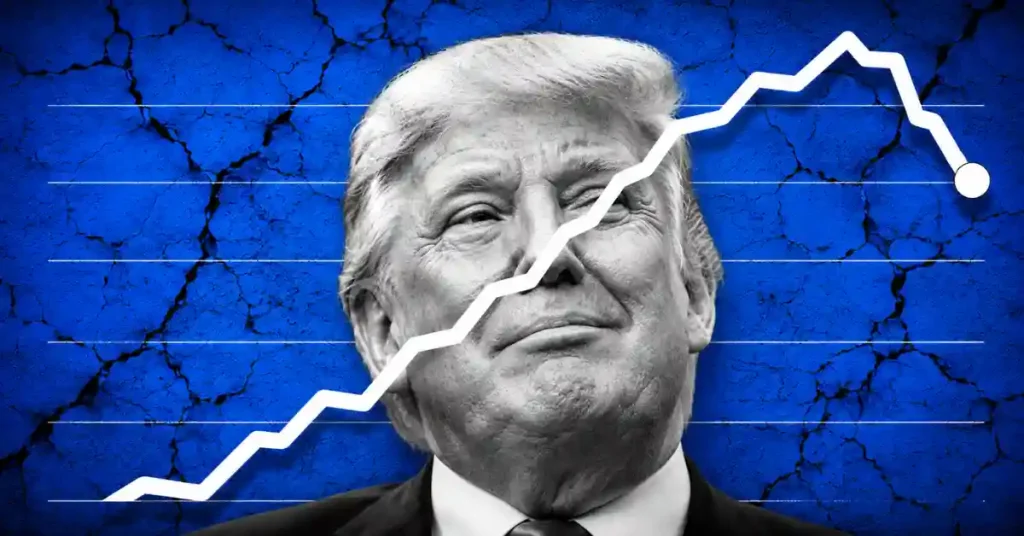
A Watershed Moment: States Gain Power Over Federal Crypto Enforcement
In a development that sent ripples through the crypto world and Washington D.C. alike, former President Donald Trump has reportedly agreed to a critical provision: empowering state attorneys general to sue the Department of Justice (DOJ) and crypto exchanges for violations of the CLARITY Act. This unexpected concession, unveiled by Senate Republicans as their “last, best and final offer,” marks a potentially monumental shift in the regulatory landscape for digital assets in the United States. As a senior crypto analyst, I view this as a pivotal moment, introducing a novel layer of checks and balances that could redefine federal-state dynamics in crypto governance and bring much-needed, or perhaps much-contested, clarity.
Understanding the CLARITY Act’s Implicit Mandate
While the provided context offers a succinct glimpse into this agreement, the CLARITY Act itself (or the assumed principles behind its name) requires deeper inferential analysis. Given the ability for State AGs to sue for 'violations' concerning both the DOJ and crypto exchanges, it strongly suggests the Act is designed to establish clear regulatory boundaries, procedural fairness, and accountability within the federal government’s interaction with the crypto industry. It likely aims to prevent arbitrary enforcement, ensure due process, or define specific conditions under which federal agencies can intervene with digital asset businesses. The name 'CLARITY' itself implies a legislative effort to bring much-needed legal certainty and transparency to a notoriously opaque and often ad-hoc regulatory environment. This framework, therefore, acts as a bulwark against potential federal overreach or inconsistent application of laws, demanding a level of predictability and adherence to established rules.
Empowering States: A Decentralized Approach to Accountability
The most striking aspect of this agreement is the unprecedented empowerment of state attorneys general. Historically, federal agencies like the DOJ and SEC have held primary sway over nationwide enforcement actions. By allowing State AGs to sue, Trump’s agreement effectively decentralizes a significant portion of regulatory oversight. This move introduces a formidable new deterrent against federal misconduct or deviation from the CLARITY Act’s tenets. State AGs, often closer to the ground and more attuned to local industry impacts, now possess a direct mechanism to challenge federal actions they deem unlawful or detrimental to their constituents’ interests. This could foster a more robust and responsive regulatory environment, forcing federal agencies to operate with greater transparency and adherence to legislative intent.
Potential Ramifications for the Crypto Industry
For crypto exchanges and the broader digital asset ecosystem, this development presents a double-edged sword. On one hand, it could usher in an era of greater regulatory certainty. If the CLARITY Act indeed sets clear rules for federal engagement, the threat of state-level lawsuits could compel the DOJ to follow these rules meticulously, reducing the risk of capricious or politically motivated enforcement actions. This increased predictability might attract more institutional capital and foster innovation by reducing regulatory uncertainty, a perennial complaint within the industry.
However, the prospect of 50 different state attorneys general, each with their interpretations and political agendas, independently suing over CLARITY Act violations introduces a new layer of complexity. While the lawsuits would target federal violations of *federal* law, differing state perspectives could lead to a patchwork of legal challenges, creating a challenging compliance landscape for exchanges operating nationwide. The industry could face a barrage of state-initiated legal scrutiny, even if the primary target is federal overreach. Defining what constitutes a “violation” will be paramount, and the initial years following such an agreement could be marked by extensive litigation aimed at establishing precedents and clarifying jurisdictional boundaries.
Political Motivations and Future Implications
From a political standpoint, Trump’s agreement is highly strategic. It aligns with a growing sentiment among a segment of the Republican party, and increasingly across the aisle, for clearer crypto regulation and a pushback against perceived federal overreach. By embracing a framework that holds federal agencies accountable, Trump could solidify his position as a champion for the crypto community, appealing to a demographic that values decentralization and skepticism of centralized power. The framing by a GOP aide as the “last, best and final offer” suggests intense negotiations and a desire to achieve a significant legislative win, potentially tying up loose ends or laying groundwork for future policy. This could also be a maneuver to gain bipartisan support for the broader legislative package within which this provision is embedded.
Looking ahead, this agreement sets a powerful precedent. Future presidential administrations and federal agencies would operate under the implicit understanding that their crypto-related actions are not just subject to congressional oversight or judicial review from the federal bench, but also to direct legal challenge from state capitals. This dynamic could force a more collaborative or at least more cautious approach from federal regulators, necessitating greater engagement with states on crypto policy. It could also spark a broader debate about federalism and the appropriate balance of power in regulating emerging technologies.
Challenges and the Road Ahead
While the agreement promises enhanced accountability, several challenges lie ahead. The exact wording of the CLARITY Act and its definition of ‘violations’ will be crucial. The potential for frivolous or politically motivated lawsuits from state AGs cannot be ignored, which could clog courts and create unnecessary headaches for the DOJ and exchanges alike. Furthermore, the interplay between state-level lawsuits and existing federal enforcement mechanisms will need to be carefully navigated to prevent jurisdictional conflicts and ensure a coherent regulatory approach.
Conclusion: A New Era of Crypto Governance?
Trump’s agreement to empower state attorneys general to sue over CLARITY Act violations is more than just a political concession; it’s a potential paradigm shift in U.S. crypto regulation. It introduces a powerful new mechanism for accountability, decentralizing aspects of federal oversight and potentially bringing a new era of checks and balances. While it promises greater certainty and a bulwark against federal overreach, it also introduces complexities related to fragmented enforcement and potential litigation. The coming months and years will reveal whether this agreement ushers in genuine clarity and stability for the crypto industry or merely adds another layer of legal and political contention to an already intricate landscape. Regardless, it signals a maturation of the crypto debate, moving beyond nascent technology into serious discussions about governance, accountability, and the future of financial regulation.
Featured News Partner: Coinpedia News