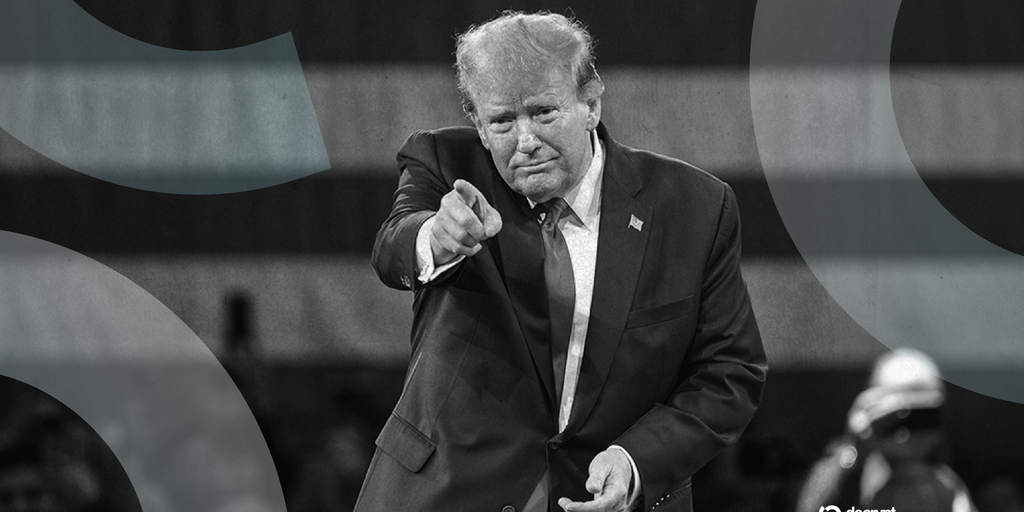
President Trump's Crypto Dive: A Signal to the Markets?
Recent ethics filings have unveiled a fascinating development in the political landscape intersecting with the digital asset world: former President Donald Trump has reported trades in prominent crypto-adjacent firms, including the leading U.S. cryptocurrency exchange Coinbase, the popular retail trading platform Robinhood, and several Bitcoin mining companies. This disclosure, far from being a mere footnote in a financial report, sends ripples through the crypto community, sparking intense discussion about its potential market, regulatory, and political implications. From the perspective of a senior crypto analyst, this move is a powerful indicator of shifting perceptions and mainstreaming adoption, demanding a detailed examination.
Trump's engagement with these assets is particularly noteworthy given his historical stance, which has often ranged from skeptical to outright critical of cryptocurrencies. His previous comments, once dismissing Bitcoin as a 'scam' or asserting its instability, now stand in stark contrast to his personal financial actions. This pivot, whether born from evolving understanding, strategic financial planning, or a keen eye on burgeoning trends, signals a profound shift that cannot be ignored by investors, policymakers, or market participants.
A Shifting Stance or a Strategic Play?
For years, former President Trump has been an outspoken critic of cryptocurrencies, often citing their volatility and perceived use in illicit activities. Yet, the disclosure of his investments in firms deeply embedded in the crypto ecosystem suggests a potential evolution in his perspective. Is this a genuine change of heart regarding the utility and future of digital assets, or a calculated financial maneuver designed to capitalize on a booming sector? The answer likely lies in a combination of factors.
Regardless of the underlying motivation, the sheer fact that a figure of his stature has entered these positions lends a new layer of legitimacy to the crypto space. It can be interpreted as a tacit acknowledgment of the industry's staying power and its growing integration into the broader financial landscape. For many, particularly his vast base of supporters who might have previously viewed crypto with suspicion, this could serve as an implicit endorsement, encouraging them to explore digital assets for themselves.
The Nuance of the Holdings: Coinbase, Robinhood, and Mining Stocks
The specific nature of Trump's disclosed holdings offers further insights. Investing in Coinbase (COIN) signifies an endorsement of the broader cryptocurrency exchange infrastructure and a belief in the market's continued growth. As the largest regulated crypto exchange in the U.S., Coinbase's performance is often seen as a bellwether for the institutional adoption and regulatory clarity of the crypto market.
Robinhood (HOOD), while offering traditional stock trading, has also become a gateway for millions of retail investors into cryptocurrencies. An investment in Robinhood suggests an appreciation for the platform's role in democratizing access to financial markets, including digital assets, and its appeal to a younger, digitally native demographic. This also highlights the convergence of traditional and crypto markets, a trend that is only accelerating.
Perhaps the most direct conviction in the underlying asset, Bitcoin, comes from the reported investments in Bitcoin mining stocks. These companies are directly tied to the health and profitability of the Bitcoin network. Investing in them indicates a belief not just in Bitcoin's price appreciation, but also in the continued security, decentralization, and economic viability of its proof-of-work mechanism. This level of direct exposure implies a deeper understanding or conviction about Bitcoin's fundamental value proposition.
Market Implications: The 'Trump Bump' and Mainstream Adoption
The revelation of these trades could have a tangible, albeit indirect, impact on the market. For Coinbase and Robinhood, the association with a high-profile political figure could boost investor confidence and attract new retail participants, particularly from demographics that align with Trump's political base. Similarly, Bitcoin mining stocks, already sensitive to BTC price movements and energy policy, might see renewed interest or scrutiny.
More broadly, this serves as a powerful signal of crypto's ongoing journey into the mainstream. When a former President, known for his traditional business acumen and often conservative financial views, allocates capital to the digital asset ecosystem, it chips away at the lingering skepticism among institutional investors and the general public. It reinforces the narrative that cryptocurrencies are not a fleeting fad but a legitimate asset class deserving of consideration.
Regulatory Ripple Effects?
Perhaps the most significant long-term implication of these disclosures lies in the realm of regulation. The United States remains at a critical juncture regarding cryptocurrency policy, with ongoing debates concerning regulatory clarity, consumer protection, and innovation. Should Donald Trump return to the Oval Office, his personal investments could subtly, or even explicitly, influence his administration's approach to digital assets.
While it is crucial to separate personal financial interests from public policy, the optics are undeniable. Having a President with direct financial ties to the crypto industry could theoretically lead to a more nuanced or even favorable regulatory environment, aiming to foster innovation rather than stifle it. Conversely, it could also invite heightened scrutiny regarding potential conflicts of interest. The crypto industry will undoubtedly be watching closely for any hints of policy shifts that align with these newfound financial stakes.
The Broader Trend: Political Engagement with Digital Assets
Trump's reported trades are not an isolated incident but rather fit into a growing pattern of political figures and public elites engaging with the digital asset space. From pro-crypto senators and congressmen to mayors advocating for Bitcoin adoption in their cities, the political landscape is increasingly acknowledging, and in some cases embracing, cryptocurrencies. This trend highlights a maturation of the industry, moving beyond niche tech circles into the mainstream political discourse.
This widespread engagement suggests that crypto is no longer a fringe topic but a significant economic and technological force that politicians cannot afford to ignore. As the 2024 election cycle heats up, expect digital assets to feature more prominently in policy discussions and campaign platforms, with candidates forced to articulate their vision for the future of finance.
Conclusion: A New Chapter for Crypto in the Political Arena
The disclosure of President Trump's trades in Coinbase, Robinhood, and Bitcoin mining stocks is more than just a financial filing; it's a significant cultural and political marker for the digital asset industry. It underscores a powerful shift from skepticism to engagement, signaling crypto's deepening roots within the established financial and political order.
As a senior crypto analyst, I view this as a pivotal moment, cementing the industry's mainstream acceptance and ensuring its continued presence in high-level economic and regulatory discussions. The 'Trump effect' on crypto, whether through market sentiment or future policy, will be a critical narrative to follow as the digital asset revolution continues to unfold.