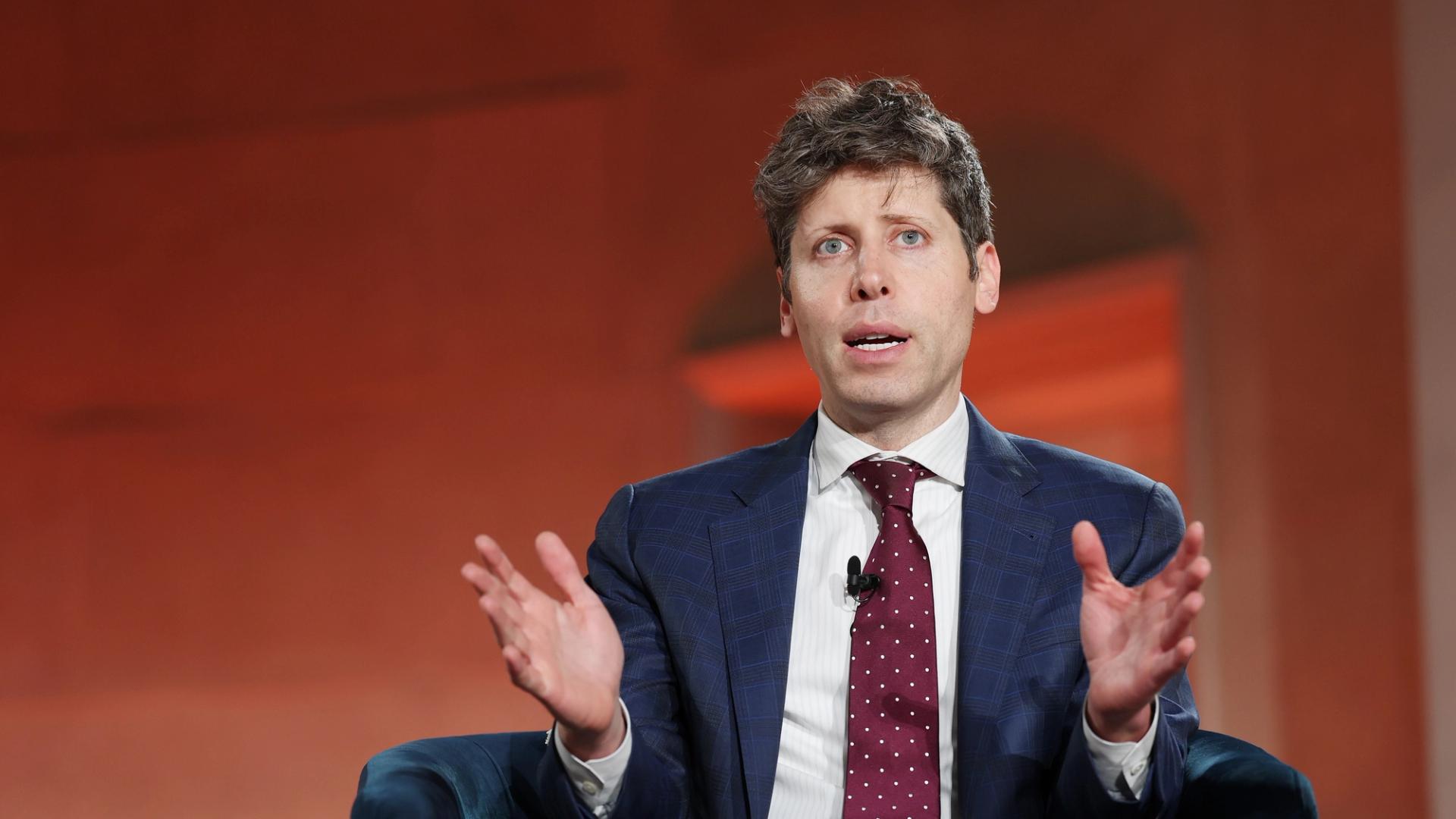
The Uncanny Echo of History: OpenAI and the Magazine-Cover Indicator
As a seasoned observer of speculative markets, particularly within the often-turbulent cryptocurrency space, one learns to spot patterns. Cycles of hype, irrational exuberance, and inevitable corrections are not unique to digital assets; they are fundamental tenets of human psychology playing out on financial stages. This is why the recent TIME magazine cover, emblazoned with 'Trust Us' and featuring OpenAI's leadership, immediately triggered a familiar, if unsettling, sense of déjà vu.
The ‘magazine-cover indicator’ is a well-trodden, if occasionally messy, contrarian signal in market analysis. It posits that when a niche, high-growth, or speculative theme makes it to the cover of a mainstream, general-interest publication like TIME, it often signals peak public enthusiasm – a point frequently preceding a market top or significant correction. Think of the infamous 'The Death of Equities' BusinessWeek cover in 1979 (preceding a multi-decade bull market) or various tech bubble covers of the late 90s and early 2000s. These are not infallible prophecies, but rather powerful reflections of a market sentiment reaching its zenith.
Why OpenAI's TIME Cover Checks All the Classic Boxes
The OpenAI cover hits every classic benchmark for this contrarian indicator. First, it’s a mainstream publication, ensuring broad public exposure beyond financial pages. Second, the theme – Artificial Intelligence – is now widely understood, if not fully comprehended, by the general populace. It’s no longer confined to academic papers or Silicon Valley labs; it’s in our newsfeeds, our work, and our cultural discourse. Third, it follows a multi-year run-up in investor enthusiasm, marked by astronomical valuations, frenzied funding rounds, and an almost religious belief in AI's transformative power.
The phrase 'Trust Us' amplifies this signal. In an era where technological giants face increasing scrutiny over data privacy, ethical AI development, and societal impact, a plea for trust, rather than a demonstration of it through transparent governance or robust safeguards, can feel jarring. For a technology as potentially disruptive and complex as AI, which promises to reshape industries and human existence itself, blind trust is a dangerous commodity. It echoes the 'move fast and break things' ethos of past tech booms, now applied to an even more powerful, and potentially perilous, set of tools.
The Crypto Analyst’s Perspective: Echoes of Market Mania
From the vantage point of a crypto analyst, the parallels are stark and numerous. We've witnessed countless cycles where a groundbreaking technology or novel application captures public imagination, leading to an initial surge of genuine innovation, followed by speculative excess. Projects with flimsy fundamentals or even outright scams ride the coattails of legitimate breakthroughs, buoyed by the rising tide of retail FOMO (Fear Of Missing Out).
The narrative surrounding AI today bears striking resemblance to various crypto narratives at their peak. It's often framed as an inevitable, irreversible force, promising unprecedented efficiency, wealth creation, and even a utopian future. While the underlying technology of AI is undeniably transformative, the current market dynamics around it scream 'irrational exuberance.' Valuations for AI companies, even those pre-revenue, have soared into the billions, often based more on potential and hype than proven profitability or sustainable business models. This isn't to diminish AI's profound long-term impact, but rather to question the sustainability of its current market pricing.
Beyond the Hype: Risks and Realities for AI Bulls
While AI's long-term trajectory appears promising, the immediate horizon, viewed through the lens of the magazine-cover indicator, suggests caution. What are the risks? Regulatory scrutiny is rapidly intensifying globally, as governments grapple with the ethical, security, and economic implications of AI. Technological hurdles, while overcome daily, remain significant, especially regarding explainability, bias, and general artificial intelligence. Competition is fierce, with every tech giant and countless startups vying for dominance. And, crucially, the 'trust' factor itself is a double-edged sword: if public trust erodes due to misuse, ethical breaches, or perceived dangers, the industry could face a significant backlash, impacting investment and adoption.
Furthermore, the notion that a few centralized entities should be implicitly trusted with such powerful technology raises critical questions about decentralization, a core tenet often championed in the crypto world. If AI is to truly serve humanity, its development and deployment might benefit from more distributed, transparent, and auditable frameworks, rather than a centralized 'trust us' approach.
Conclusion: A Time for Prudence, Not Blind Faith
The OpenAI TIME cover serves not as a death knell for AI, but as a potent reminder of market psychology and historical patterns. It's a flashing yellow light for investors and enthusiasts alike. The fundamental value and transformative potential of AI remain immense, but the current market frenzy around it bears all the hallmarks of a peak in speculative interest. As a crypto analyst, I've seen how quickly sentiment can shift and how painful the ensuing corrections can be.
For AI bulls, this is a moment to temper enthusiasm with critical analysis, to prioritize due diligence over blind faith, and to prepare for potential market volatility. The future of AI is bright, but the path to realizing its full potential will likely involve more than just a simple plea for 'trust.' It will require robust governance, ethical frameworks, and a healthy dose of market realism.