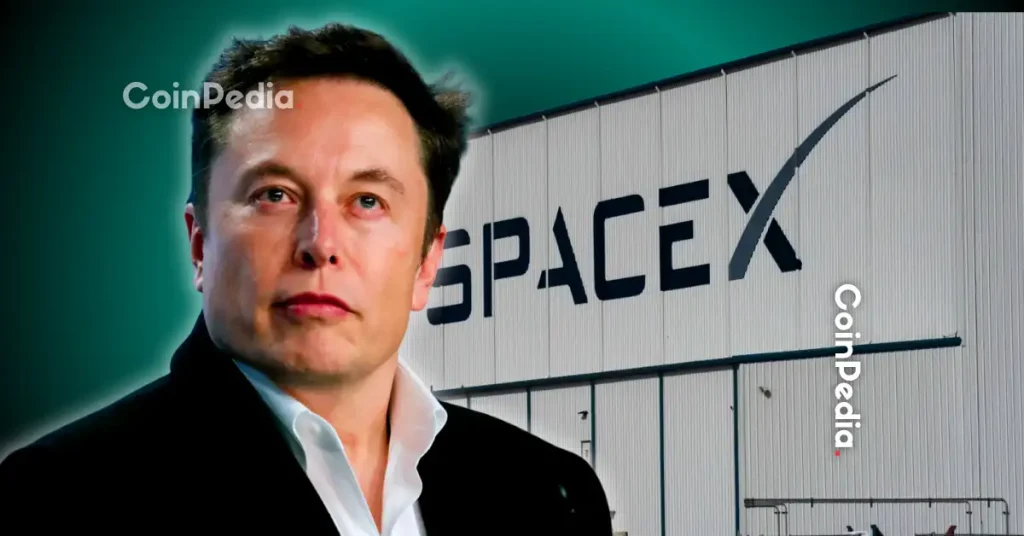
SpaceX Soars: Oppenheimer's $280 Target Signals Bullish Momentum for High-Tech Visionaries
In a landscape increasingly defined by technological disruption and ambitious long-term visions, SpaceX continues to capture the imagination of investors and analysts alike. Recent news from Wall Street underscores a growing confidence in Elon Musk's aerospace giant, with Oppenheimer reiterating a "Buy" rating and significantly raising its 12-month price target for SpaceX shares to an impressive $280 from $250. This bullish revision comes as SpaceX shares have consistently held above their IPO price for four consecutive weeks through September 2nd, a testament to the company's robust performance and perceived stability in an often-volatile market.
The Gravitational Pull of Innovation: What Drives a $280 Valuation?
For a Senior Crypto Analyst observing the broader investment landscape, the $280 price target for SpaceX is more than just a number; it's a powerful signal about market appetite for transformative, high-risk, high-reward ventures. While SpaceX operates in the physical realm of rockets and satellites rather than digital ledgers, the underlying investment thesis—backing audacious goals with potentially paradigm-shifting outcomes—resonates deeply with the ethos of many crypto investors. Oppenheimer's Timothy Horan, the analyst behind the upgraded target, likely sees the culmination of several key factors contributing to this heightened valuation.
Foremost among these is Starlink, SpaceX's burgeoning satellite internet constellation. Starlink is rapidly expanding its global footprint, offering high-speed internet access in underserved regions and demonstrating a scalable business model with recurring revenue. The potential for Starlink to become a dominant global ISP, especially in challenging terrains or disaster-stricken areas, presents an enormous total addressable market. Its ability to generate substantial cash flow could not only fund SpaceX's more ambitious deep-space projects but also pave a clearer path to profitability and, eventually, a highly anticipated public listing. The subscription-based model of Starlink, combined with its technological edge in low-earth orbit satellite deployment, positions it as a significant value driver.
Beyond Starlink, the continued progress of Starship, SpaceX's fully reusable super heavy-lift launch system, is a critical component of its long-term valuation. Starship is not merely an incremental improvement; it represents a fundamental shift in space logistics, promising dramatically lower costs for sending payloads and humans to orbit, the Moon, and ultimately Mars. Each successful test flight, even partial ones, de-risks this ambitious program and strengthens the belief in SpaceX's capability to execute on its grand vision. The implications of a fully operational Starship for various industries—from satellite deployment to space tourism and resource extraction—are staggering and largely unprecedented.
Furthermore, SpaceX's continued dominance in the commercial launch market, leveraging its Falcon 9 and Falcon Heavy rockets, provides a stable revenue stream and reinforces its operational excellence. This proven track record, combined with aggressive innovation, paints a picture of a company that is not just dreaming big but also consistently delivering on complex engineering challenges.
The Elon Musk Factor: Visionary Leadership and Market Confidence
It's impossible to discuss SpaceX's valuation without acknowledging the profound influence of Elon Musk. While his public persona and sometimes controversial actions can be divisive, his unparalleled vision and relentless drive are undeniable forces behind SpaceX's success. Musk's ability to attract top engineering talent, set audacious goals, and inspire a culture of rapid innovation and iteration is a significant asset. Investors, both traditional and those in the crypto space, often gravitate towards projects and companies led by charismatic, visionary figures who challenge the status quo. Musk embodies this, and his long-term commitment to making humanity a multi-planetary species underpins much of the speculative value embedded in SpaceX shares.
From a crypto analyst's perspective, this echoes the importance of strong, visionary leadership within decentralized projects. While crypto aims for decentralization, the initial phases of many successful protocols often involve strong guiding figures whose credibility and vision attract early adopters and developers. The confidence placed in Musk's ability to execute on seemingly impossible goals mirrors the belief investors place in foundational figures in the blockchain space to guide their ecosystems through nascent stages.
Broader Market Implications and the Crypto Overlap
The Oppenheimer upgrade for SpaceX also offers broader insights into the current investment climate. It suggests a robust appetite for high-growth, technology-driven companies, even those operating in private markets with extended timelines for public offerings. This optimism in innovative, capital-intensive ventures reflects a market willing to back significant R&D and long-term payoff, a sentiment that also fuels investment in many early-stage crypto projects.
For the crypto sector, SpaceX's advancements, particularly with Starlink, could have indirect but significant implications. Global internet access is a fundamental requirement for widespread blockchain adoption and the expansion of Web3 applications. A more robust, ubiquitous, and potentially decentralized internet infrastructure, which Starlink contributes to, would naturally accelerate the reach and utility of decentralized networks. Imagine a world where remote communities, currently cut off from reliable internet, gain access through Starlink, simultaneously opening pathways to decentralized finance (DeFi) or NFT markets that were previously inaccessible.
Moreover, the concept of a multi-planetary economy, as envisioned by SpaceX, presents fascinating long-term potential for decentralized systems. Future off-world economies, potentially operating with vastly different legal and governmental structures, could find blockchain-based currencies and governance models to be ideal solutions for transparent, secure, and permissionless transactions and organizational structures. While speculative, the foundational work SpaceX is doing today lays the groundwork for such futuristic scenarios.
Challenges and the Path Forward
Despite the bullish outlook, SpaceX is not without its challenges. The enormous capital expenditure required for Starship development and Starlink constellation expansion is substantial. Regulatory hurdles, international competition, and the inherent risks of spaceflight all remain significant factors. However, the market's current valuation suggests confidence in SpaceX's ability to navigate these complexities.
The Oppenheimer target of $280 signals that Wall Street believes SpaceX is firmly on a trajectory for continued growth and innovation. For those observing from the vantage point of digital assets, SpaceX serves as a powerful reminder of the market's willingness to reward truly disruptive technology and visionary leadership, traits that are often celebrated—and sought after—within the crypto ecosystem itself. The stability of its private shares, even without a direct public listing, points to a strong underlying fundamental story and an eagerness among investors to participate in the next frontier of human endeavor, whether it be space or the decentralized web.
Featured News Partner: Coinpedia News