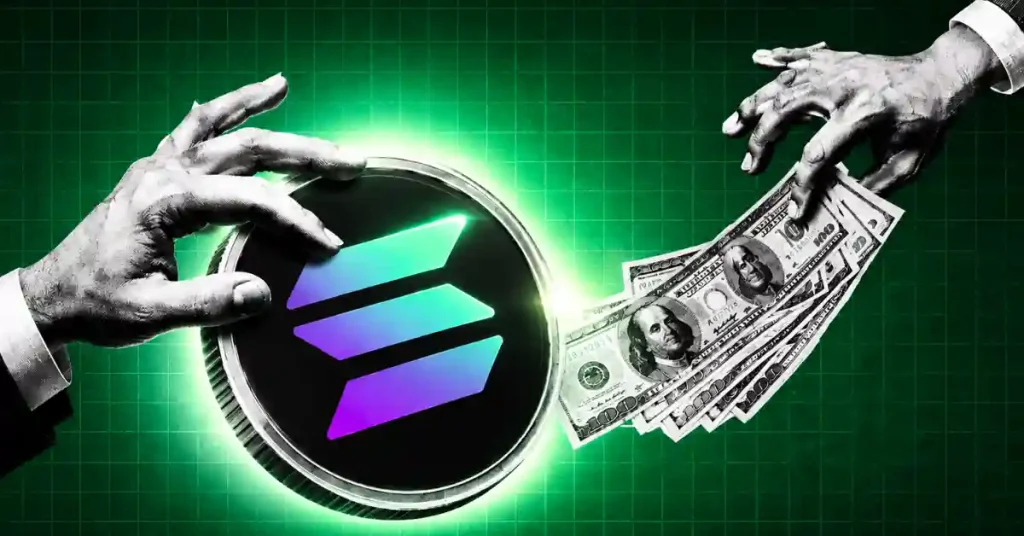
Solana's Ascent Under Threat: SkyAI Board Fight Escalates
Solana (SOL) has been a beacon of resilience in the cryptocurrency market, staging an impressive recovery and showcasing a vibrant, expanding ecosystem. However, a significant corporate dispute brewing within SkyAI, a publicly traded company that holds a substantial treasury of SOL tokens, now casts a looming shadow over this bullish sentiment. This escalating board fight threatens to inject significant market volatility, potentially exposing SOL to a downside risk that could see its price retest the critical $50 mark.
SkyAI, formerly known as Sharps Technology, possesses approximately 2.08 million SOL tokens, valued at roughly $207 million at recent prices. This makes SkyAI one of the largest public corporate holders of Solana. The core of the problem lies in an internal power struggle, where disagreements among board members could lead to strategic decisions regarding these substantial holdings, including the possibility of a large-scale sell-off. For a market as sensitive and liquid as cryptocurrency, the sudden release of such a large block of tokens could trigger intense selling pressure and undermine broader investor confidence.
SkyAI's Significant Solana Treasury: A Deeper Dive
SkyAI's substantial SOL treasury is a direct consequence of its strategic investments under its previous identity, Sharps Technology. While the company has since transitioned its focus, these digital asset holdings remain a critical component of its balance sheet. A granular look at its holdings reveals approximately 1.49 million liquid SOL and about 509,650 locked SOL tokens. The liquid portion represents the immediate and most potent threat, as these tokens can be sold off relatively quickly, depending on the outcome of the corporate dispute.
The sheer volume of these liquid holdings cannot be understated. To put it in context, 1.49 million SOL constitutes a material percentage of Solana's typical daily trading volume, which often fluctuates between $500 million and $1.5 billion. A rapid, uncoordinated injection of over $150 million worth of SOL into the open market could easily overwhelm buy-side liquidity, creating a significant imbalance. While the locked SOL tokens are not an immediate concern, their eventual unlock schedule will also require careful management to prevent future market disruptions, adding to the long-term overhang.
The Escalating Corporate Governance Battle and Its Market Implications
The heart of the matter lies in the internal machinations at SkyAI. Boardroom battles frequently stem from divergent views on company strategy, asset management, and how best to maximize shareholder value. In this specific scenario, the future of SkyAI's substantial SOL holdings is undeniably a central point of contention. Various factions within the board might advocate for different paths: some may push for liquidation to appease shareholders, fund new corporate ventures, or consolidate power, while others might prefer to hold, betting on Solana's long-term growth trajectory.
These corporate governance issues, though external to the Solana blockchain's technology, carry direct implications for its market dynamics. The pervasive uncertainty surrounding SkyAI's treasury fuels FUD (Fear, Uncertainty, and Doubt) across the broader SOL investor community. Even in the absence of an actual sale, the mere prospect of a significant institutional holder potentially offloading millions of tokens can prompt pre-emptive selling by other investors, exacerbating any perceived downward pressure. This situation starkly highlights how even decentralized assets can be susceptible to traditional corporate disputes and decisions that are entirely separate from the blockchain's core technical development or community governance.
Analyzing the Potential Market Impact and the $50 Risk Threshold
The projected risk of SOL plummeting to $50 is a serious concern for market participants. While Solana currently trades well above this level, a decline to $50 would represent a substantial drawdown from recent highs. This isn't an arbitrary figure; it likely corresponds to crucial technical support levels or psychological thresholds that, once breached under severe selling pressure, could trigger further capitulation. A rapid, large-scale liquidation of SkyAI's liquid SOL could easily set off a cascading effect across the market.
Should the board opt for an aggressive liquidation of its 1.49 million liquid SOL on open exchanges, the immediate consequence would be an overwhelming influx of supply that far exceeds demand. This would drive the price down sharply, likely triggering a wave of stop-loss orders and panic selling from retail investors. Market makers and institutional traders, sensing instability, might withdraw their buy orders, creating a 'liquidity vacuum' where prices can fall dramatically with minimal resistance. Furthermore, news of a major public company offloading its SOL could disseminate negative sentiment throughout the broader crypto market, influencing both retail and institutional investment decisions.
Solana's Resilience vs. External Shocks: A Test of Strength
Despite this significant external threat, Solana's underlying fundamentals remain notably robust. The network has consistently demonstrated remarkable technological progress, including the much-anticipated Firedancer upgrade designed to drastically enhance its scalability and throughput. Its growing Total Value Locked (TVL) in DeFi protocols, vibrant ecosystem of active decentralized applications (DApps), and burgeoning developer community all contribute to a picture of an innovative and fundamentally strong blockchain. Furthermore, institutional interest in Solana continues to be high, with various investment products and venture capital firms actively backing its development and adoption.
The current situation, therefore, presents a critical test: Can Solana's inherent resilience and the strength of its organic demand effectively absorb such a potent supply-side shock? While a healthy ecosystem with diverse stakeholders can typically weather selling pressure, even the strongest projects are not entirely immune to the impact of large, concentrated holdings. The market's reaction will not only gauge Solana's fundamental strength but also the maturity and confidence of its investor base.
Navigating the Uncertainty: Key Considerations for Investors
For Solana investors, diligent monitoring of developments at SkyAI will be paramount. Key indicators to watch include any official pronouncements from SkyAI regarding its treasury management strategy, potential shifts in its board composition, or news related to shareholder activism. Any signal indicating an expedited or large-scale sale process for the SOL holdings should be considered a major red flag.
From a technical analysis perspective, investors should closely monitor key support levels for SOL. A decisive breach of these intermediate supports could indeed signal a deeper move towards the $50 psychological and technical threshold. Conversely, if the board dispute resolves amicably without a major liquidation, or if a strategic, non-market-disrupting sale (e.g., a private over-the-counter deal with institutional buyers) is arranged, this could alleviate the market overhang. However, the current situation undoubtedly injects a significant layer of uncertainty into SOL's short to medium-term outlook, necessitating cautious observation and strategic planning from all market participants.
Conclusion: Corporate Governance's Unexpected Influence on Crypto Valuations
The escalating SkyAI board fight serves as a powerful reminder that even assets within the decentralized world of cryptocurrency are not entirely insulated from the complexities of traditional corporate governance, especially when significant holdings are concentrated within centralized entities. While Solana’s underlying technology and ecosystem continue their impressive evolution, the immediate prospect of 2.08 million SOL being liquidated due to an internal corporate battle represents a tangible and immediate risk. Investors must carefully weigh Solana's intrinsic value and long-term potential against this external, potentially volatile factor. The coming weeks will be crucial in determining whether Solana can successfully navigate this corporate hurdle without a significant retest of lower price levels, or if the $50 risk becomes a stark reality, underscoring the intricate interplay between traditional finance structures and the burgeoning digital asset space.
Featured News Partner: Coinpedia News