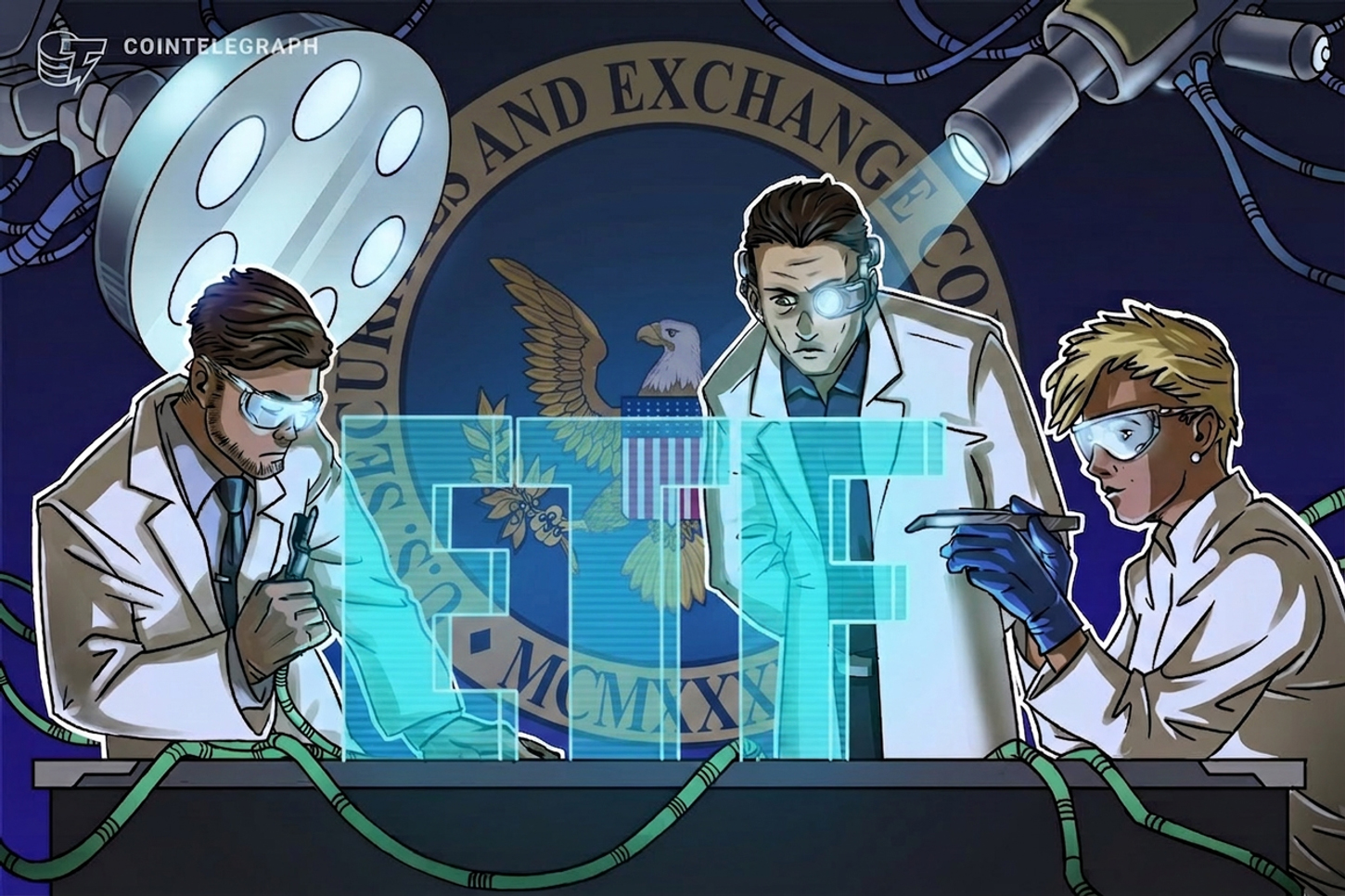
The SEC's Proactive Stance on Evolving ETFs
The U.S. Securities and Exchange Commission (SEC) has initiated a crucial public comment period, signaling its intent to re-evaluate and potentially reshape the regulatory landscape for the next generation of Exchange Traded Funds (ETFs). This request for feedback on how emerging ETF structures and investment strategies should be regulated comes at a pivotal time, as financial innovation, particularly within specialized and thematic product categories, continues to accelerate. For the cryptocurrency sector, this move by the SEC is of paramount importance, as it could directly influence the future pathway for digital asset ETFs and their integration into mainstream finance.
The current regulatory framework, largely established for traditional, broad-market ETFs, is increasingly strained by the sophistication and novelty of modern investment vehicles. As issuers develop increasingly specialized products – from highly leveraged instruments to those tracking esoteric market segments or novel asset classes – the SEC is clearly seeking to future-proof its oversight. This proactive approach underscores the agency's dual mandate: fostering efficient capital markets while safeguarding investor interests in an ever-more complex financial ecosystem.
The Expanding ETF Universe and Regulatory Lag
ETFs have exploded in popularity over the past two decades, offering investors diversified exposure, liquidity, and cost-efficiency. However, the initial design principles often centered around replicating well-established indices or baskets of traditional securities. The 'next generation' of ETFs, by contrast, frequently ventures into uncharted territory. These include actively managed ETFs, those employing complex derivatives strategies (e.g., inverse or ultra-leveraged products), thematic ETFs focused on niche industries, and, critically, those seeking exposure to nascent and often volatile asset classes like cryptocurrencies.
The challenge for regulators lies in adapting existing rules, designed for a different era, to these innovative structures. Questions around appropriate disclosure for complex strategies, valuation methodologies for less liquid underlying assets, and the overall market integrity for products that might amplify market movements become central. Without clear guidelines, there's a risk of either stifling beneficial innovation or, conversely, exposing investors to unforeseen risks. The SEC's call for comments is an acknowledgment that a 'one-size-fits-all' approach is no longer sufficient and that a more nuanced, adaptable regulatory framework is desperately needed.
Crypto ETFs: Unique Challenges in the Regulatory Spotlight
From a crypto analyst's perspective, this SEC initiative is particularly salient. While the U.S. has seen the approval of several Bitcoin futures ETFs, spot Bitcoin ETFs and other direct digital asset products have faced consistent resistance due to concerns around market manipulation, custody, and investor protection in largely unregulated underlying markets. The 'next-gen' ETF consultation provides a formal avenue for the industry to articulate how these concerns can be mitigated within new product structures.
Key issues for crypto ETFs that this consultation could address include:
- **Custody Solutions:** How can digital assets, especially those for institutional-grade funds, be securely stored and managed in a way that meets traditional finance standards?
- **Market Surveillance:** What mechanisms can be employed to monitor and prevent manipulation in the fragmented and often opaque spot crypto markets that underpin potential ETFs?
- **Valuation Accuracy:** Given the 24/7 nature and volatility of crypto, how can fair and consistent valuation be ensured for daily NAV calculations and redemptions?
- **Liquidity Management:** How do redemption mechanisms work for highly liquid ETF shares when the underlying assets might experience periods of reduced liquidity?
The outcome of this comment period could establish clearer pathways, or erect new barriers, for the long-awaited mainstreaming of various digital asset ETFs beyond futures-based products. It's an opportunity for the crypto industry to present robust solutions to regulatory apprehension.
Key Areas of SEC Scrutiny and Potential Feedback
The SEC's request will likely solicit feedback on several critical dimensions:
- **Product Complexity & Suitability:** How can the SEC ensure that investors understand the risks associated with increasingly complex products, especially those employing leverage or inverse strategies? What suitability requirements should be in place?
- **Novel Underlying Assets:** For ETFs tracking new or illiquid assets, what are the appropriate due diligence standards for issuers? How should liquidity and pricing be assessed?
- **Operational Resilience & Cybersecurity:** As ETFs become more intricate and rely on diverse technologies, what standards are needed to protect against operational failures and cyber threats, particularly relevant for digital asset custodianship?
- **Market Integrity & Disclosure:** What measures are necessary to prevent market manipulation, especially in less regulated underlying markets? How can disclosure be standardized to provide transparent, comparable information across varied ETF structures?
- **Role of Intermediaries:** How should brokers, advisors, and other intermediaries be regulated when recommending or distributing these new products?
The feedback received will be instrumental in shaping rules that balance the desire for innovation with the fundamental need for investor protection and market stability. This isn't merely a technical exercise; it's a foundational discussion about the future architecture of investment products.
Navigating the Innovation-Protection Tightrope
The SEC faces a delicate balancing act. Overly prescriptive regulations could stifle innovation, deterring product development and potentially pushing financial activity into less regulated spaces. Conversely, insufficient oversight could lead to investor harm, systemic risks, and a loss of confidence in regulated markets. The agency's approach will need to be flexible enough to accommodate future innovations while providing a clear and robust framework for risk management.
For issuers, this period demands active engagement. Providing constructive feedback, backed by data and industry best practices, will be crucial in shaping proportionate and effective regulation. For investors, the long-term benefit is a more transparent and secure market for a wider array of investment opportunities. The discourse around 'next-gen' ETFs is not just about financial products; it's about defining the guardrails for the next phase of financial market evolution.
Conclusion: A Critical Juncture for Financial Markets
The SEC's request for public comment on regulating next-generation ETFs marks a critical juncture for the financial industry. It's an explicit acknowledgment that the pace of innovation has outstripped existing frameworks and that a collaborative effort is needed to chart a sustainable path forward. For the cryptocurrency sector, this is an unparalleled opportunity to engage with regulators, address long-standing concerns, and advocate for responsible integration into the mainstream financial product landscape. The coming months will be pivotal in determining how capital markets evolve, offering both significant challenges and immense opportunities for growth under a refined regulatory umbrella.