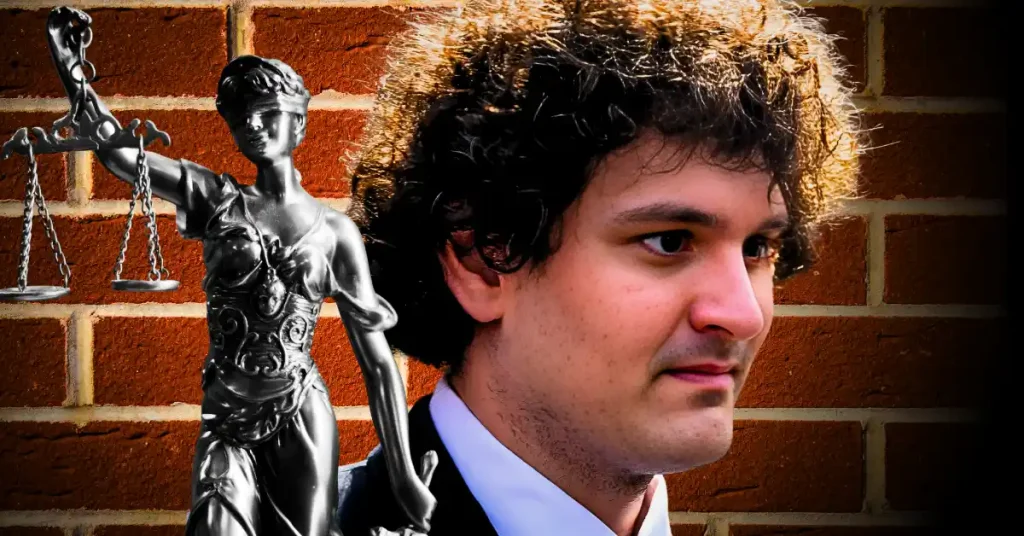
The Iron Grip of Justice: SBF's Appeal Fails
In a significant development that reverberates throughout the financial and cryptocurrency worlds, the US Court of Appeals for the Second Circuit has delivered a decisive blow to Sam Bankman-Fried’s (SBF) hopes for immediate freedom. On Tuesday, August 4, the former FTX founder and CEO saw his appeal to overturn his conviction and 25-year prison sentence unequivocally rejected. This ruling reaffirms the initial verdict rendered in March 2024, where SBF was found guilty of a litany of charges including fraud, conspiracy, and money laundering related to the spectacular collapse of his once-dominant crypto exchange.
For many, this decision marks a critical juncture, solidifying the legal system’s stance on accountability within the digital asset space. SBF’s conviction was widely seen as a landmark case, signaling a new era of enforcement against perceived malfeasance in the burgeoning crypto sector. His subsequent appeal was a predictable, yet closely watched, attempt to challenge the overwhelming evidence and stringent sentencing he received.
The Grounds for Appeal: A Last Ditch Effort
While the specific arguments presented by SBF’s legal team in this appeal were not fully detailed in the immediate public announcements, appeals in such high-profile white-collar cases typically center on several common grounds. These often include allegations of prosecutorial misconduct, errors in jury instructions, the improper admission or exclusion of evidence, and claims of insufficient evidence to support the conviction. In SBF’s case, his defense previously attempted to characterize customer funds held by FTX as merely assets within the company's control rather than distinct customer property, an argument largely rejected by the trial court.
Another common tactic is to challenge the severity of the sentence itself, arguing it was disproportionate or based on incorrect guidelines. Given the 25-year term, which was notably less than the 100+ years prosecutors sought but still substantial, it is highly probable that SBF's legal team contended the sentence was excessive or predicated on a miscalculation of financial loss or victim count. The appeal also likely probed procedural aspects of the trial, seeking any technical errors that could warrant a retrial or a reduced sentence.
The Second Circuit's Unyielding Stance: What It Means
The Second Circuit, known for its expertise in financial and corporate law, heard the arguments and, in turning down SBF's appeal, effectively endorsed the findings of the trial court. This rejection means that the appellate judges found no reversible errors in the original trial proceedings or the sentencing that would justify overturning the conviction or reducing the sentence. For SBF, this represents a significant setback, as it closes one of the primary avenues for challenging his legal fate.
An appellate court's decision carries substantial weight, as it reviews the application of law and procedure, not merely re-evaluates facts. The Second Circuit's affirmation of the lower court's judgment sends a clear message that the legal process was robust and the jury's verdict was sound under the prevailing legal standards. This outcome drastically narrows SBF's options and underscores the formidable challenge he faces in securing any form of relief.
SBF's Diminishing Pathways: What Are His Next Legal Options?
With the Second Circuit’s decision, SBF’s direct appeal options are rapidly dwindling. His primary remaining legal pathways are:
Petition for Rehearing *En Banc* by the Second Circuit: SBF's legal team could petition the entire panel of judges of the Second Circuit to rehear the case (known as an *en banc* review). This is an exceptionally rare occurrence, typically reserved for cases where there is a significant split among the judges of the circuit on a particular legal issue, or where the case involves a question of exceptional public importance. Given the unanimous decision implied by the appeal's rejection, the likelihood of an *en banc* review being granted is exceedingly low.
Petition for *Certiorari* to the U.S. Supreme Court: This is SBF's final direct appeal option. He could petition the U.S. Supreme Court to review his case. However, the Supreme Court accepts only a minuscule fraction of the petitions it receives, usually focusing on cases that involve fundamental constitutional questions, conflicting interpretations of federal law among different circuit courts, or issues of profound national importance. A case like SBF's, while high-profile, primarily involves the application of established fraud statutes. Unless his legal team can frame a compelling constitutional or circuit-split issue, the chances of the Supreme Court agreeing to hear his case are historically slim.
Collateral Attacks (e.g., Habeas Corpus Petition): Much further down the line, SBF could potentially pursue a *habeas corpus* petition in federal court. This is a post-conviction challenge, not a direct appeal, arguing that his imprisonment is unlawful due to constitutional violations not properly litigated during the trial or appeal process (e.g., ineffective assistance of counsel). Such avenues are typically explored once direct appeals are exhausted and are also very difficult to win.
Each of these options presents significant hurdles and is rarely successful. The legal process is designed to be deliberative and conclusive, and once a conviction is affirmed at the appellate level, overturning it becomes an increasingly arduous task.
Broader Implications for the Crypto Ecosystem and Regulatory Landscape
The reaffirmation of SBF's conviction by the Second Circuit sends an undeniable message across the cryptocurrency industry: accountability for financial misconduct is paramount, regardless of the technological novelty of the sector. This ruling reinforces the precedent set by the initial sentencing, underscoring regulators’ and courts’ willingness to apply existing financial laws to digital assets with full force.
For investors, this outcome may foster a greater sense of confidence in the legal frameworks surrounding crypto, albeit through the harsh lesson of FTX's collapse. It signals that bad actors will face severe consequences, potentially deterring future fraudulent schemes and encouraging more robust compliance and transparency within crypto enterprises. This ruling, alongside ongoing enforcement actions against other prominent crypto figures and entities, solidifies the narrative that the 'Wild West' era of crypto is truly over, replaced by an increasingly stringent regulatory and judicial oversight.
Furthermore, it provides a benchmark for ongoing and future legal battles in the crypto space, from exchange operators to DeFi protocol developers. The emphasis on the fiduciary duty owed to customers and the classification of customer funds will likely influence how legal arguments are shaped and how future crypto businesses structure their operations and disclosures. As the industry matures, such legal precedents will be crucial in defining its long-term trajectory.
A Stark Reminder of Accountability
Sam Bankman-Fried’s journey from crypto wunderkind to convicted felon, now solidified by an appellate court’s rejection, serves as a stark reminder of the rule of law. His options are narrowing, and the prospect of a decades-long incarceration looms large. This saga is not just about one individual; it’s a defining moment for the digital asset industry, signaling an era where innovation must walk hand-in-hand with strict adherence to legal and ethical standards, under the ever-watchful eye of justice.
Featured News Partner: Coinpedia News