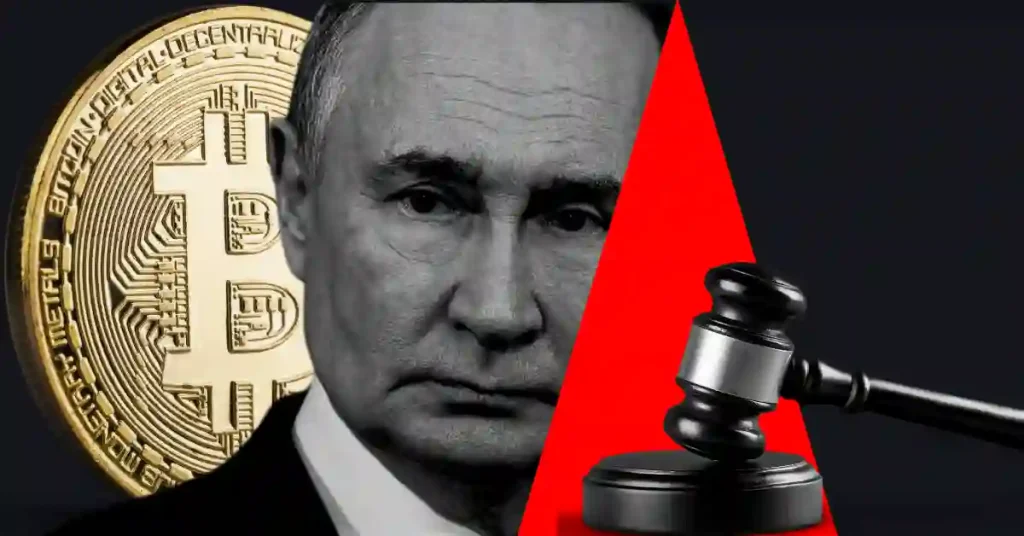
Russia Enacts Sweeping Crypto Regulation: A Deep Dive into the "Digital Currency and Digital Rights Law"
In a move that sends ripples across the global cryptocurrency landscape, Russian President Vladimir Putin officially signed the “Digital Currency and Digital Rights Law” on August 4th. This landmark legislation, the nation's first comprehensive crypto regulation framework, aims to establish a structured environment for digital assets within Russia. While the immediate impact remains to be seen, with most provisions slated for September 1, 2026, and full compliance by July 1, 2027, this development signals a significant pivot in Russia's long-standing, often ambivalent, stance on cryptocurrencies.
Unpacking the "Digital Currency and Digital Rights Law"
The details surrounding the full scope of this new law are still emerging, but the very act of its signing marks a definitive step towards legitimizing and, crucially, controlling the crypto sector in Russia. Historically, Russian authorities have oscillated between outright bans and cautious acceptance, particularly influenced by the Central Bank's strong skepticism regarding financial stability risks and the potential for illicit activities. This new framework suggests a shift from broad prohibitions to a system of regulated integration.
While the provided source context is brief, a “Digital Currency and Digital Rights Law” typically encompasses several key areas: definition of digital assets, licensing requirements for cryptocurrency exchanges and service providers, anti-money laundering (AML) and counter-terrorist financing (CTF) protocols, taxation frameworks, and rules regarding the issuance and circulation of stablecoins and non-fungible tokens (NFTs). Given Russia's past concerns, it is highly probable that the law will impose strict restrictions on the use of cryptocurrencies for payments for goods and services within the country, favoring the ruble as the sole legal tender for such transactions, while possibly permitting regulated trading, mining, and holding under specific conditions. This reflects a common global regulatory trend: embrace the technology, but control its financial implications for national sovereignty.
The Rationale Behind the Gradual Rollout
Perhaps one of the most intriguing aspects of this legislation is its staggered implementation schedule. With most provisions taking effect over two years from now, and full compliance nearly three years away, Russia is signaling a methodical, rather than immediate, transition. This extended timeline offers several strategic advantages. Firstly, it provides ample time for the Russian financial sector, technological infrastructure, and regulatory bodies to adapt to the complexities of digital asset management. Developing robust licensing, monitoring, and enforcement mechanisms requires significant preparation and inter-agency coordination. Secondly, it allows the crypto industry within Russia to prepare for compliance, minimizing potential disruption and fostering a more stable transition for businesses operating in this space. Lastly, it gives the government flexibility to refine regulations based on ongoing international developments and domestic economic conditions, ensuring the framework remains relevant and effective.
Geopolitical and Economic Implications
From a geopolitical perspective, Russia's decision to regulate crypto, rather than outlaw it, is significant. Amidst ongoing international sanctions, the ability to control and potentially leverage digital assets could be seen as an attempt to fortify alternative financial pathways, albeit under strict state oversight. While unlikely to serve as a direct tool for sanctions evasion in its regulated form, a legal framework for crypto could streamline capital flows, attract investment in specific tech sectors, and even offer a new avenue for generating tax revenue for the state. This move also places Russia among a growing list of nations – including major economies – that are seeking to bring digital assets into a formal regulatory fold, showcasing a commitment to financial innovation while attempting to mitigate risks.
Domestically, the law is poised to provide greater clarity and consumer protection. By establishing legal definitions and requiring licensing, the framework aims to reduce scams, increase transparency, and provide recourse for investors. However, this also carries the inherent risk of increased state surveillance and control over individual financial activities, a concern frequently raised by privacy advocates within the crypto community.
A Double-Edged Sword for Innovation
For the nascent Russian crypto industry, this regulation presents a double-edged sword. On one hand, legal recognition brings legitimacy, potentially attracting more traditional investors and fostering institutional adoption. A clear regulatory environment can reduce uncertainty, encourage local innovation in blockchain technology, and even attract skilled professionals. On the other hand, the nature of regulation in a state-controlled economy like Russia often leans towards strict oversight, which could stifle the very decentralized, permissionless spirit that defines much of the crypto world. Overly burdensome compliance requirements or restrictive use cases (e.g., blanket bans on payments) could deter innovation and push some activities underground, rather than integrating them into the formal economy.
The Road Ahead: Navigating the New Landscape
As a senior crypto analyst, my gaze is now firmly fixed on the specifics that will emerge over the coming months and years. Key areas to watch include:
- Specific Definitions and Classifications: How will various digital assets (utility tokens, security tokens, stablecoins, NFTs) be legally defined and treated?
- Licensing Requirements: What will be the thresholds and conditions for exchanges, custodians, and other service providers?
- AML/CTF Enforcement: How will Russia align its crypto regulations with global financial action task force (FATF) standards?
- Interplay with the Digital Ruble: How will this framework interact with Russia's ongoing development and potential rollout of its central bank digital currency (CBDC), the digital ruble? Will there be synergy or competition?
- International Response: How will other nations, particularly those with existing sanctions against Russia, react to a regulated Russian crypto market?
Russia's "Digital Currency and Digital Rights Law" marks a pivotal moment. It signifies a long-term commitment to integrating digital assets into the national financial fabric, albeit on its own terms. While aiming for stability and control, its ultimate success will hinge on striking a delicate balance between fostering innovation, ensuring financial stability, and maintaining its strategic geopolitical objectives. The world will be watching closely as this complex regulatory framework takes shape.
Featured News Partner: Coinpedia News