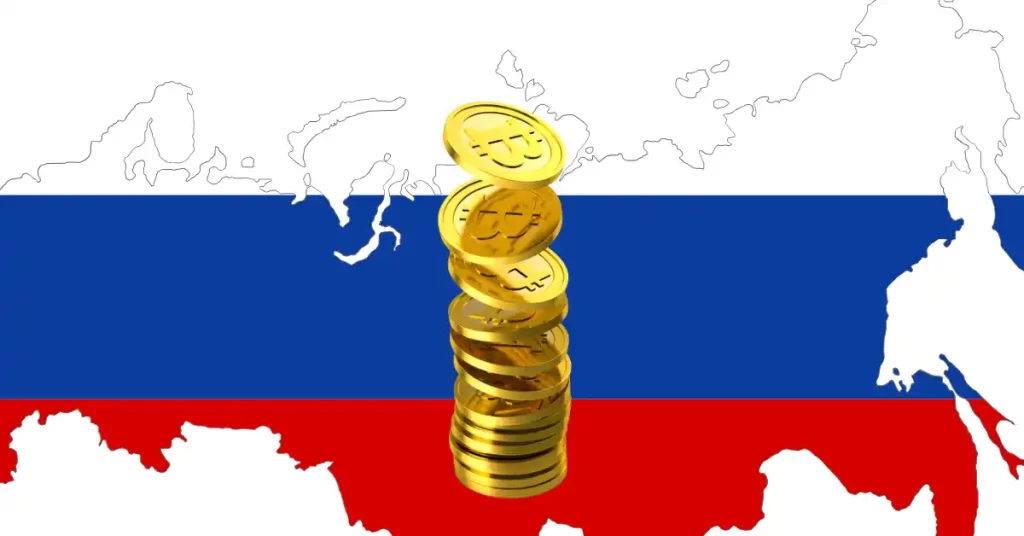
A Strategic Pivot: Russia's Regulated Entry into Digital Assets
In a move poised to reshape its domestic financial landscape, Russia is set to implement a new cryptocurrency law on September 1, 2026. This landmark legislation brings three cornerstone digital assets – Bitcoin (BTC), Ethereum (ETH), and Tether (USDT) – under the regulatory purview of the Bank of Russia. For retail investors, this signifies a significant, albeit controlled, opening, allowing access to these approved cryptocurrencies through licensed platforms. However, the 'green light' comes with stringent caveats: strict purchase limits will remain in place, and crucially, the use of cryptocurrencies for payments within Russia continues to be strictly prohibited.
As a Senior Crypto Analyst, I view this development not as a full embrace of decentralized finance, but rather as a highly strategic and pragmatic acknowledgment of cryptocurrencies' growing influence. Russia, historically cautious and at times openly hostile towards digital assets, is now attempting to channel a significant, previously unregulated, market segment into a supervised framework. This pivot warrants a deep dive into its implications for the global crypto ecosystem, Russian citizens, and the broader geopolitical context.
The Fine Print: What the New Law Entails
The core of Russia's new law is its selective approval of BTC, ETH, and USDT. These assets represent the top tiers of the crypto market in terms of market capitalization, liquidity, and perceived stability (in USDT's case). The Bank of Russia's mandate will involve overseeing the licensed platforms facilitating these transactions, implying a focus on KYC/AML (Know Your Customer/Anti-Money Laundering) compliance and investor protection within the defined boundaries. Retail investors can gain access, suggesting a path to legitimizing a segment of the population that has likely been engaging with crypto via less regulated channels.
However, the explicit ban on crypto payments inside Russia is a critical distinction. This provision immediately signals that the intent is not to foster a parallel currency system or undermine the ruble. Instead, cryptocurrencies are being treated primarily as investment vehicles or regulated digital commodities, rather than transactional mediums. Furthermore, the emphasis on 'strict purchase limits' underscores a paternalistic approach, aiming to shield investors from volatility and capital flight, while maintaining tight control over the volume of capital flowing into these assets.
Analyzing the Strategic Rationale: Control Over Ban
Russia's shift from an often-skeptical stance to a regulated framework is telling. Previously, the nation grappled with outright bans, then considered digital financial assets, and now settles on a controlled integration. This evolution likely stems from several factors:
- Inescapable Reality: Cryptocurrencies have proven resilient and globally pervasive. Rather than futilely attempting to prohibit them, regulation offers a path to oversight, taxation, and control.
- Economic Pragmatism: By bringing the market into the light, Russia can potentially generate tax revenue and gain insights into capital flows, an advantage over a shadow economy.
- Mitigating Risk: Regulated platforms, under central bank supervision, can reduce the prevalence of scams, illicit activities, and investor losses compared to an entirely unregulated environment.
- Sanctions Environment: While the payment ban precludes direct use for circumventing international sanctions, the ability to hold certain digital assets might offer Russian citizens a regulated alternative for wealth preservation in an uncertain economic climate. It's a nuanced play, not an overt circumvention strategy, but an acknowledgment of a global financial tool.
The choice of BTC, ETH, and USDT is also strategic. Bitcoin and Ethereum are the undisputed market leaders, offering deep liquidity. USDT, a stablecoin pegged to the US dollar, provides a degree of stability, acting as a crucial on-ramp and off-ramp in many global markets, offering a controlled exposure to a dollar-denominated asset without direct access to fiat USD.
Implications for Retail Investors and Domestic Innovation
For Russian retail investors, the law presents a mixed bag. On one hand, it offers a newfound legitimacy and potentially safer access to the world's leading digital assets. This could attract a segment of the population previously hesitant to engage due to regulatory ambiguity or fear of unregulated platforms. Licensed entities may offer more robust security, customer support, and clearer legal recourse. On the other hand, strict purchase limits and the inability to use crypto for payments significantly curtail the utility and freedom typically associated with digital assets. This approach treats crypto as a controlled investment product rather than a fundamental technological shift with diverse applications.
Regarding domestic innovation, the impact is likely to be stifled. A blanket ban on crypto payments discourages the development of dApps, DeFi protocols, and Web3 solutions that rely on transactional utility. While the trading of approved assets might generate some domestic industry around custodial services and exchange platforms, the broader innovative potential of blockchain technology within Russia remains severely constrained compared to more permissive jurisdictions.
Russia's Place in the Global Crypto Landscape
This move positions Russia distinctively on the global crypto map. Unlike China, which has enacted an outright ban on all crypto activities, or the European Union, which has developed comprehensive frameworks like MiCA for a wide array of crypto-assets and services, Russia has opted for a highly selective and controlled approach. It stands in contrast to the more free-market philosophy of some Western nations, while simultaneously acknowledging the inevitability of crypto's presence.
The payment ban is the most critical element preventing Russia from truly integrating into the global decentralized economy. It ensures that the ruble remains the sole legal tender for goods and services, upholding the central bank's monetary sovereignty. This approach mirrors a pattern seen in several nations grappling with the challenge of balancing financial innovation with national security and economic stability. It’s a clear message: Russia wants to participate in the digital asset investment space, but only on its own tightly controlled terms.
Challenges and the Path Forward
Implementing and enforcing this new law will not be without challenges. The Bank of Russia will need robust mechanisms to monitor licensed platforms, track compliance with purchase limits, and prevent the circumvention of the payment ban. There's also the ongoing challenge of adapting regulation to the rapidly evolving crypto landscape; what constitutes a 'leading asset' or 'stable' today may change tomorrow.
Looking ahead, the crucial questions revolve around flexibility. Will the Bank of Russia consider expanding the list of approved assets in the future? Will purchase limits be adjusted based on market maturity or economic conditions? And perhaps most importantly, will the ban on crypto payments ever be relaxed, thereby unlocking the full potential of blockchain technology within Russia? For now, the answer seems to be a resounding 'no,' cementing crypto's role as a restricted investment, not a transformative payment rail.
Conclusion: A Pragmatic, Yet Paternalistic, Step
Russia's new crypto law is a testament to the undeniable staying power of digital assets. By bringing Bitcoin, Ethereum, and USDT into a regulated framework, Russia takes a significant, albeit highly cautious, step towards integrating cryptocurrencies into its financial system. It's a pragmatic recognition of market forces, filtered through a lens of strict state control and an unwavering commitment to monetary sovereignty. For the global crypto market, it signifies another major economy acknowledging the space, while for Russian citizens, it offers regulated access to a limited selection of assets under strict conditions. The world will be watching closely to see if this controlled integration lays a foundation for future expansion or remains a tightly managed, isolated segment of Russia's financial architecture.
Featured News Partner: Coinpedia News