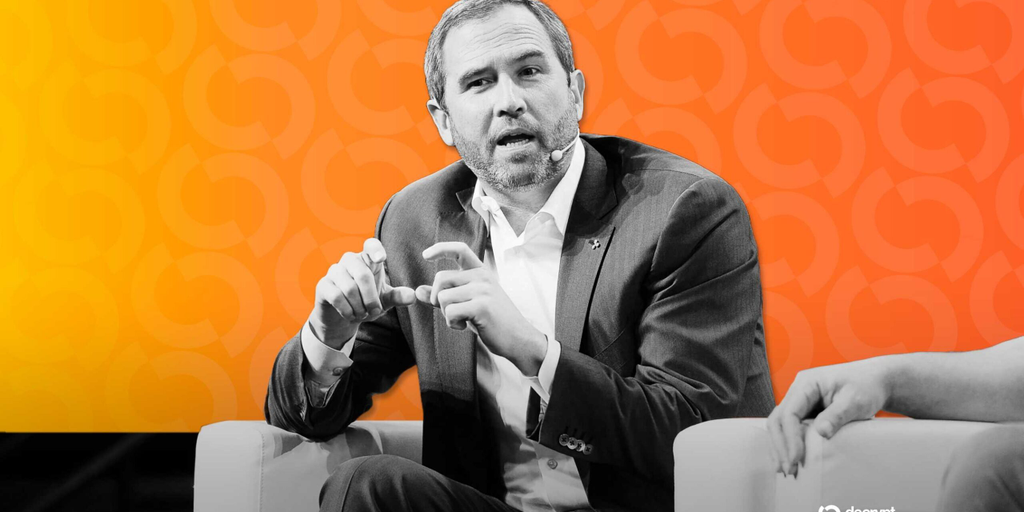
Ripple Fires Back: Garlinghouse Slams Dimon's 'Clarity Act' Criticism, Unmasking Wall Street's Crypto Divide
In a burgeoning digital economy often characterized by rapid innovation and regulatory ambiguity, the clash of titans is not uncommon. Yet, few confrontations encapsulate the ideological chasm between traditional finance and the nascent crypto industry as sharply as the recent exchange between Ripple CEO Brad Garlinghouse and JPMorgan CEO Jamie Dimon. Garlinghouse's pointed rebuke of Dimon's criticism regarding a key piece of crypto legislation — a bill often referred to generally as the "Clarity Act" due to its stated goal of providing regulatory certainty — has ignited a crucial debate on hypocrisy, innovation, and the future of finance in the United States.
The Battleground: Regulatory Clarity for Digital Assets
At the heart of this dispute lies the urgent need for a coherent regulatory framework for digital assets in the U.S. For years, the crypto industry has operated under a cloud of uncertainty, grappling with an enforcement-led approach from regulators like the SEC, which often designates digital assets as unregistered securities. This lack of clear rules has stifled innovation, pushed talent and capital overseas, and left businesses and investors in a precarious legal limbo. Proposed legislation, broadly aiming to act as a "Clarity Act," seeks to delineate clear definitions, establish jurisdictional boundaries between agencies like the SEC and CFTC, and provide a predictable environment for crypto companies to operate and grow.
Proponents argue that such legislation is not about condoning illicit activity or undermining financial stability, but rather about bringing legitimate digital assets into a regulated fold. It aims to protect consumers, prevent market manipulation, and foster responsible innovation, positioning the U.S. as a leader in the global digital economy. Without it, the risk of the U.S. falling behind other forward-thinking jurisdictions like the EU (with its MiCA framework) and the UK becomes increasingly acute.
Jamie Dimon's Enduring Skepticism: A Wall Street Stalwart's View
Jamie Dimon, the venerable chief of JPMorgan Chase, has long been a vocal critic of cryptocurrencies, particularly Bitcoin, which he once famously dismissed as "a fraud" and "worthless." His skepticism often centers on concerns about illicit use, the speculative nature of many tokens, and a fundamental distrust in decentralized, permissionless systems that operate outside traditional banking rails. Dimon's arguments typically align with a perspective that views digital assets as inherently risky, lacking intrinsic value, and posing systemic threats if not severely restricted or banned outright.
From this vantage point, any legislation designed to legitimize or provide regulatory clarity to the broader crypto market might be seen as a dangerous concession. Dimon's criticism of the "Clarity Act" likely stems from a belief that it might inadvertently enable further growth of what he perceives as a problematic asset class, rather than imposing the stringent controls he believes are necessary. His stance reflects a deep-seated conservatism within segments of traditional finance, which views the disruption brought by crypto with apprehension, preferring the established, centralized control of existing financial institutions.
Brad Garlinghouse's Counter-Offensive: Hypocrisy and the Call for Fair Play
Brad Garlinghouse's counter-attack on Dimon was sharp and multi-faceted, notably highlighting what he perceives as a stark hypocrisy. Garlinghouse pointed out the apparent contradiction in Dimon's public anti-crypto stance while JPMorgan itself is deeply engaged in blockchain technology and digital assets. JPMorgan's own blockchain division, Onyx, develops enterprise solutions, and its JPM Coin facilitates interbank payments – essentially a private, permissioned digital asset operating on a private ledger. Garlinghouse's argument is that Dimon appears to embrace the benefits of blockchain and digital ledger technology when it serves JPMorgan's interests within a controlled environment, yet lambasts the broader, open, and decentralized crypto ecosystem.
For Garlinghouse, whose company Ripple has famously endured a protracted legal battle with the SEC over the classification of its XRP token, the demand for regulatory clarity is not merely theoretical; it's existential. Ripple's entire business model revolves around leveraging XRP for cross-border payments, and the lack of clear rules in the U.S. has forced the company to expand significantly into more crypto-friendly jurisdictions. His criticism of Dimon isn't just about defending crypto; it's about advocating for a level playing field where innovation isn't stifled by outdated perspectives or self-serving corporate interests.
The Broader Implications: U.S. Competitiveness and the Future of Finance
The Garlinghouse-Dimon skirmish is more than just a war of words between two industry leaders; it's a microcosm of the larger struggle for the future of finance and the U.S.'s role within it. The absence of comprehensive and thoughtful crypto legislation in the U.S. is not just an inconvenience for companies like Ripple; it's a strategic disadvantage for the entire nation. As other major economies establish clear frameworks, they attract investment, foster innovation, and cultivate talent, potentially leaving the U.S. behind.
The debate over the "Clarity Act" underscores a fundamental philosophical divide: Is crypto a dangerous fad to be suppressed, or a transformative technology to be integrated responsibly? Garlinghouse and many in the crypto industry believe that ignoring or demonizing crypto is akin to rejecting the internet in its early days. They argue that a balanced regulatory approach can harness the benefits of decentralization and programmable money while mitigating risks, ultimately strengthening the U.S. financial system.
Conclusion: An Ongoing Dialogue Towards a Clear Path
The exchange between Brad Garlinghouse and Jamie Dimon vividly illustrates the ongoing tension between established financial giants and the burgeoning digital asset space. While Dimon represents a cautious, traditionalist perspective, Garlinghouse embodies the crypto industry's urgent plea for rational, forward-looking regulation. As legislative efforts continue to unfold in Washington, D.C., the outcome of this debate will profoundly shape not only the trajectory of the crypto market but also the U.S.'s standing as a global financial leader. Achieving genuine regulatory clarity will require overcoming entrenched skepticism and fostering a deeper understanding of both the challenges and immense opportunities presented by digital assets. The ball is now firmly in the court of policymakers to bridge this divide and forge a clear path forward.