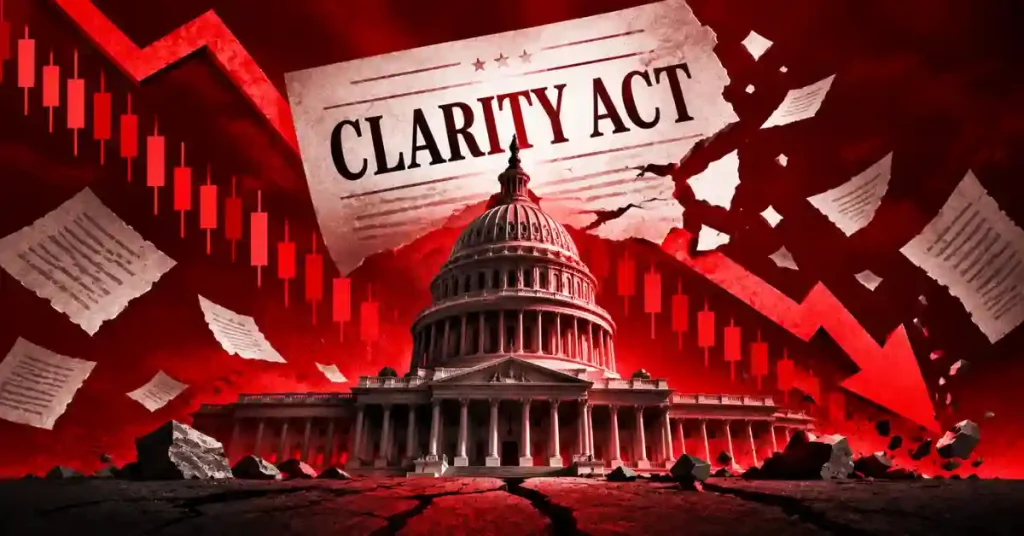
The Echoes from Capitol Hill: 'Clarity is Dead'
In a stark pronouncement that sent ripples through the digital asset community, former federal prosecutor Renato Mariotti declared that “CLARITY is dead” following his recent conversations with lawmakers and congressional staff in Washington. This definitive statement underscores a growing pessimism regarding the prospects of comprehensive crypto legislation in the United States, particularly as a crucial bill faces a looming September 15th Senate vote amidst shrinking legislative calendars and dwindling support.
As a senior crypto analyst, this development represents a significant setback for an industry desperately seeking regulatory certainty. Mariotti’s insights, stemming from direct engagement with the political machinery, offer a candid glimpse into the deep-seated challenges that continue to plague efforts to establish a coherent framework for digital assets. The implication is clear: the pathway to predictable, innovation-friendly regulation remains obstructed, pushing the crypto industry further into a protracted period of uncertainty.
The Unnamed Bill and Its Unspoken Significance
While the specific name of ‘the bill’ facing the September 15th Senate vote is not explicitly mentioned in the source, the context heavily suggests a piece of legislation that has been central to the crypto regulatory debate – most likely a stablecoin bill. Legislation concerning stablecoins has been a priority for many lawmakers, aiming to establish clear rules for their issuance, reserves, and oversight. The failure of such a bill to garner sufficient support by its critical deadline would not only impact the stablecoin market but also serve as a grim barometer for the broader legislative appetite for crypto.
From a market structure perspective, stablecoins are a fundamental pillar of the crypto economy, acting as the bridge between traditional fiat currencies and the volatile world of digital assets. They are crucial for facilitating trading, lending, and payments within the decentralized finance (DeFi) ecosystem. The inability of Congress to legislate effectively on stablecoins sends a chilling message to investors and innovators alike, suggesting that even the seemingly less contentious areas of crypto regulation are fraught with insurmountable political hurdles. This compounds the existing uncertainty around broader market structure bills, such as those attempting to delineate the jurisdiction of the SEC and CFTC.
Renato Mariotti: A Voice of Authority in the Regulatory Wilderness
Renato Mariotti’s pronouncement carries substantial weight due to his background as a former federal prosecutor. His professional experience provides him with an intimate understanding of legal frameworks, enforcement mechanisms, and the often-complex political machinations that dictate legislative outcomes. When an individual with his insight engages directly with policymakers and concludes that “clarity is dead,” it is not merely an opinion but an informed assessment of the current political reality.
His candid observations provide an invaluable 'insider' perspective that often eludes public discourse. Mariotti's assessment suggests that despite the fervent advocacy from the crypto industry and the recognized need for clear rules, the political will, consensus, or perhaps even the fundamental understanding required to push through meaningful legislation is currently absent. This puts the onus back on the industry to navigate an ambiguous landscape, largely at the mercy of existing agencies and their interpretations of outdated statutes.
The Anatomy of Legislative Gridlock: Why Clarity Remains Elusive
Several factors contribute to the legislative paralysis Mariotti highlights:
Firstly, **Political Polarization** continues to hamstring efforts on novel issues. Crypto, despite its bipartisan interest, often falls victim to broader partisan divides, with lawmakers struggling to find common ground on intricate policy details.
Secondly, the ongoing **Jurisdictional Turf War** between the Securities and Exchange Commission (SEC) and the Commodity Futures Trading Commission (CFTC) over the classification and oversight of digital assets remains a significant impediment. This inter-agency rivalry prevents a unified regulatory approach and often confuses lawmakers attempting to craft legislation.
Thirdly, there's a pervasive **Lack of Comprehensive Understanding** among many lawmakers regarding the underlying technology, economic implications, and diverse applications of blockchain and digital assets. This knowledge gap often leads to hesitant legislative efforts or proposals that miss the mark.
Fourthly, **Intense Lobbying Efforts** from both pro-crypto and anti-crypto factions create a cacophony of competing interests. While advocacy is vital, the sheer volume and diversity of demands can make it difficult for legislators to forge a path that satisfies enough stakeholders.
Finally, the **Shrinking Congressional Calendar** and the approach of an election year mean that lawmakers prioritize issues deemed more critical for their constituents or re-election campaigns. Complex, divisive issues like crypto regulation often get pushed to the back burner.
The Chilling Effect: Consequences for the Crypto Industry
The death of legislative clarity has profound implications for the crypto industry:
The most immediate consequence is **Persistent Regulatory Uncertainty**. Without clear rules, businesses face an unpredictable operational environment, making strategic planning, capital allocation, and risk management exceedingly difficult. This uncertainty disproportionately affects startups and smaller innovators who lack the resources to navigate complex legal ambiguities.
This uncertainty invariably leads to an **Innovation Drain**. The United States, once a global leader in technological advancement, risks ceding its position in the burgeoning digital asset space. Innovators, developers, and entrepreneurs may increasingly look to more welcoming jurisdictions, such as the European Union (with its MiCA framework) or financial hubs like Dubai and Singapore, which are actively developing comprehensive frameworks. This 'brain drain' could see critical talent and capital migrating offshore, stifling domestic job creation and technological leadership.
Furthermore, the absence of legislative action emboldens the **SEC's 'Regulation by Enforcement' Strategy**. Without congressional guidance, the SEC is likely to continue asserting its jurisdiction through lawsuits against crypto firms, leading to costly legal battles and an adversarial environment that stifles growth and encourages caution over innovation. This approach, while providing some form of regulatory action, fails to offer the holistic, forward-looking framework the industry needs.
**Institutional Hesitation** will also persist. Large financial institutions, while increasingly interested in crypto, remain wary of full-scale adoption without a clear regulatory runway. The lack of clarity acts as a significant barrier to mainstream institutional investment and integration, slowing the overall maturation of the asset class.
What Does 'Clarity is Dead' Truly Mean? A Long Road Ahead
Mariotti's statement does not necessarily signal the permanent demise of crypto regulation but rather the effective end of hopes for significant legislative clarity in the immediate future—at least for the remainder of this congressional session. It underscores that comprehensive, bipartisan crypto legislation is off the table for now, pushing the timeline for meaningful progress well into the next political cycle, contingent on the outcomes of upcoming elections.
For the crypto industry, this means continuing to operate in a patchwork regulatory landscape, relying on ad-hoc guidance, state-level initiatives, and navigating ongoing enforcement actions. The focus may shift towards incremental regulatory actions, potential executive orders, or even renewed efforts at self-regulation by the industry itself, though these often lack the comprehensive scope and legal certainty of federal legislation.
The path forward is now more reliant than ever on sustained industry advocacy, increased education of policymakers, and perhaps, a change in the political landscape after the next election cycle. The quest for clarity, it seems, has entered a prolonged holding pattern, challenging the resilience and adaptability of every participant in the digital asset ecosystem.
Featured News Partner: Coinpedia News