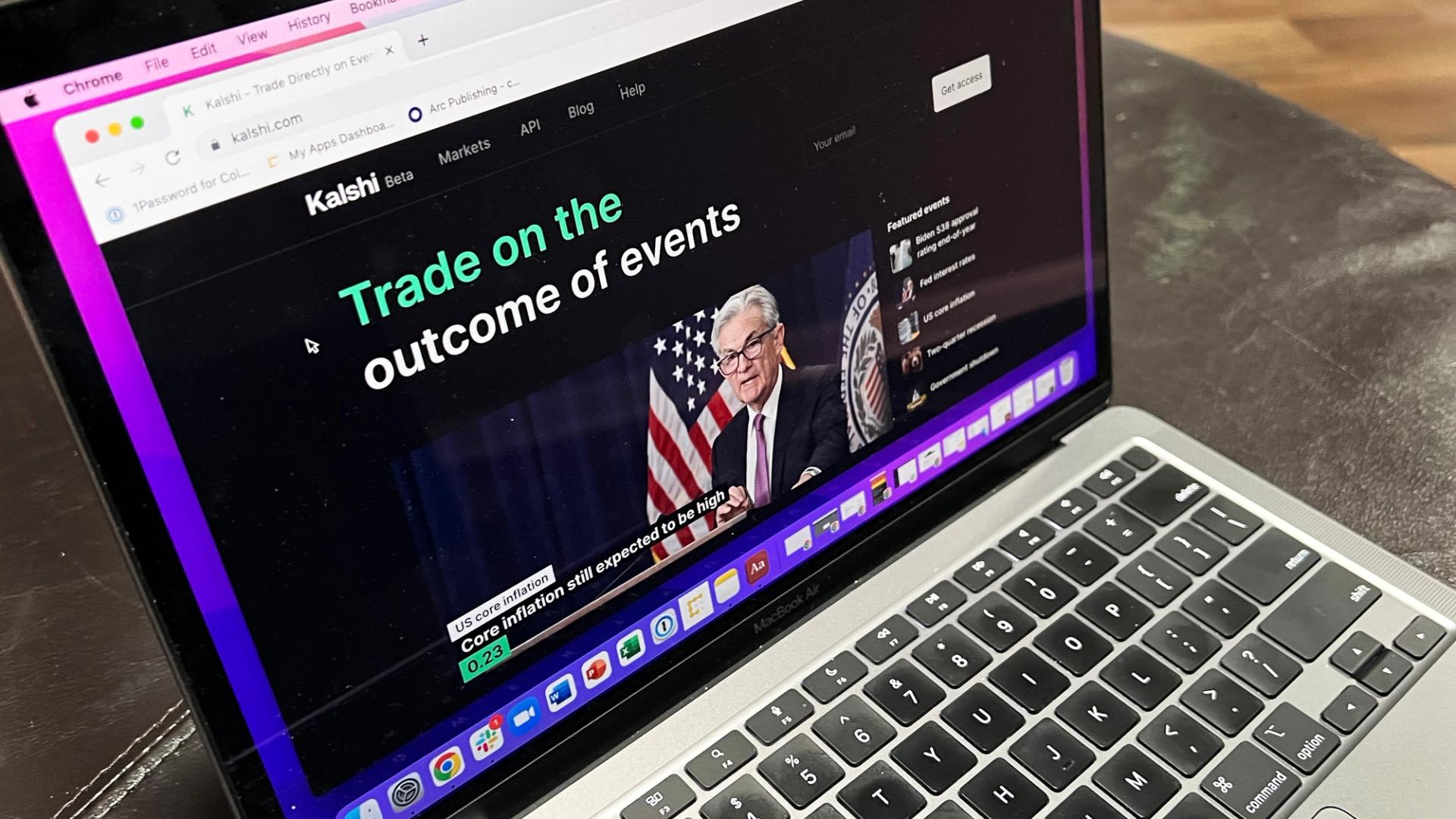
The Gathering Storm: Kalshi's Regulatory Gauntlet
In a burgeoning landscape where financial innovation constantly pushes traditional boundaries, prediction markets have emerged as a fascinating yet contentious frontier. At the forefront of this battle is Kalshi, a regulated platform that allows users to trade on the outcome of future events, positioning itself as a legitimate tool for hedging and information aggregation. However, Kalshi's ambitious vision is colliding head-on with the steadfast mandate of the Commodity Futures Trading Commission (CFTC), leading to a high-stakes legal entanglement that threatens to redefine the very nature of event-based contracts in the United States.
The immediate fallout of this regulatory clash is already palpable: Washington state residents find themselves cut off from Kalshi’s services, a direct consequence of intensified scrutiny and Kalshi's proactive combat against restrictive interpretations. This localized restriction, however, is merely a ripple in a much larger wave, signifying a critical juncture for not just Kalshi, but for the entire FinTech sector exploring novel financial instruments. The outcome of this escalating conflict will set profound precedents, influencing the trajectory of innovation, consumer access, and the overarching regulatory philosophy towards emerging technologies.
Utility vs. Gambling: The Core Contention
Kalshi operates on the premise that its event contracts offer genuine economic utility. From predicting interest rate changes and inflation figures to climate events and election outcomes, these markets, Kalshi argues, provide a unique mechanism for individuals and businesses to hedge against real-world risks or gain insights from collective intelligence. Unlike traditional gambling, which often involves pure chance and entertainment, Kalshi asserts its platform is designed for serious speculation and risk management, contributing to price discovery and better forecasting – attributes typically associated with regulated financial derivatives.
The CFTC, however, views these markets through a different lens. Tasked with ensuring the integrity of commodity markets and protecting market participants, the federal regulator has expressed concerns that many prediction markets resemble illegal gambling operations rather than legitimate financial instruments. Their primary worry revolves around the potential for market manipulation, lack of robust consumer protections, and the speculative nature of contracts that might not meet the strict “economic purpose” test required for lawful derivatives. This fundamental disagreement on classification forms the bedrock of the legal tussle, challenging the CFTC to adapt its long-standing regulatory framework to a genuinely novel market structure.
Washington State: A Troubling Precedent?
The decision by Kalshi to cease operations in Washington state is a stark illustration of the practical impact of this regulatory uncertainty. While the precise details of the development that led to this specific cutoff are part of Kalshi's ongoing legal fight, it underscores the company's precarious position under the current regulatory climate. For users in Washington, it means the sudden loss of access to a platform they may have utilized for years, highlighting the vulnerability of participation in markets operating in grey areas.
The question now looms large: is Washington an isolated incident, or a harbinger of things to come for other states? Kalshi's proactive withdrawal from the state could be interpreted as a strategic move to mitigate immediate legal risks while it challenges the broader regulatory stance. However, it also sends a chilling message to other FinTech innovators, suggesting that even platforms attempting to operate within a regulated framework can be significantly impacted by an assertive federal regulator pursuing new rules and interpretations without a clear path for innovation.
Broader Implications for FinTech and Crypto Innovation
The Kalshi-CFTC dispute transcends the confines of event contracts, touching upon the very essence of how new financial technologies are embraced or stifled in the United States. This battle directly impacts the crypto and decentralized finance (DeFi) ecosystems, which often grapple with similar classification issues concerning tokens, protocols, and novel market structures. The legal classification of prediction markets as either commodities, securities, or illegal gambling will inevitably influence how other emergent financial instruments are treated.
An overly restrictive or unclear regulatory environment risks pushing innovation offshore or into unregulated shadow markets, ultimately increasing risks for consumers and diminishing the US's competitive edge in global FinTech. While robust regulation is crucial for consumer protection and market stability, an approach that prioritizes prohibition over careful integration can inadvertently stifle progress and prevent the realization of potential societal benefits. The outcome of Kalshi's fight could either pave the way for a clearer regulatory path for innovation or erect significant new barriers.
The Regulatory Tightrope and Kalshi's Legal Offensive
The CFTC finds itself walking a tightrope: balancing its mandate to protect the public from fraud and manipulation with the desire to foster responsible innovation. Its pursuit of new rules for prediction markets suggests a proactive effort to formalize its oversight, but it has been met with firm resistance from Kalshi, which has taken the unprecedented step of suing the regulator. Kalshi’s legal challenge asserts that the CFTC’s actions exceed its statutory authority and misinterpret the Commodity Exchange Act, particularly regarding the 'economic purpose' test for derivatives.
This lawsuit is a pivotal moment, as a favorable ruling for Kalshi could compel the CFTC to refine its approach, potentially leading to a more nuanced regulatory framework for prediction markets and other novel financial products. Conversely, a loss for Kalshi could embolden regulators, solidifying a more conservative stance towards new financial instruments. The judicial review will delve deep into the technical and economic arguments surrounding prediction markets, setting a precedent that could reverberate across the entire FinTech landscape for years to come.
The Future of Prediction Markets in the US
The Kalshi-CFTC showdown represents a defining moment for prediction markets in the United States. The eventual resolution, whether through court order, settlement, or legislative action, will determine whether these platforms can thrive as legitimate financial instruments or if they will be relegated to the fringes, constrained by an intractable regulatory environment. The stakes are incredibly high, not just for Kalshi and its users, but for the broader economy seeking more efficient tools for risk management and information aggregation.
As a senior crypto analyst, it's clear that the industry watches this case with bated breath. It’s a microcosm of the larger struggle between established regulatory paradigms and the relentless march of technological innovation. Finding a judicious balance that safeguards consumers while allowing for the responsible evolution of financial markets is paramount. The outcome will ultimately dictate whether the US embraces the full potential of prediction markets or allows them to wither under the weight of regulatory uncertainty.