Introduction: The Octagon Meets the Blockchain
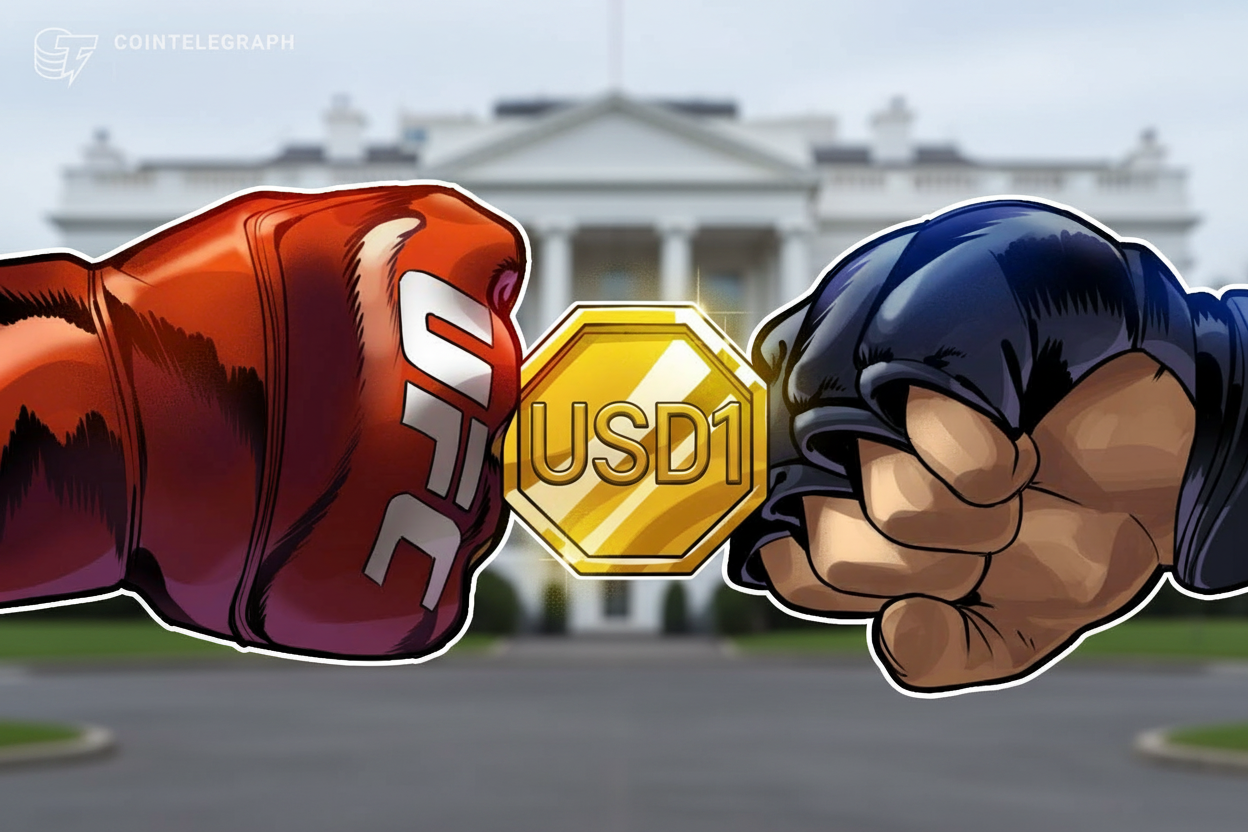
In a move that has sent ripples across the political, financial, and sporting landscapes, a crypto company associated with former President Donald Trump has announced its intention to back UFC event bonuses with its proprietary USD1 stablecoin. This unprecedented convergence of high-stakes sports, digital currency, and a polarizing political figure immediately drew sharp criticism, with a spokesperson for the Democratic National Committee decrying the initiative as “an opportunity to use the power of the presidency to make [Trump] and his family even richer.” As Senior Crypto Analysts, it is imperative to dissect this development, examining its implications for the crypto market, regulatory environment, and the broader intersection of politics and finance.
The Unveiling: Trump's Deepening Crypto Foothold
Donald Trump's previous engagements in crypto, such as NFT collections, now escalate with a company linked to him launching the USD1 stablecoin to back UFC bonuses. This move signals a deeper commitment to the blockchain ecosystem, lending significant, albeit controversial, weight to USD1, whose corporate structure remains under scrutiny.
Deconstructing USD1: A New Stablecoin on the Block?
The success and stability of any stablecoin hinge on its backing, transparency, and liquidity. USD1, positioned to back UFC bonuses, immediately invites questions that seasoned crypto investors and regulators typically ask. Is it fully collateralized 1:1 with USD? What assets comprise its reserves, and are they regularly audited by independent third parties? The stability and integrity of such a coin are paramount, especially when associated with high-profile payouts and political figures. Historically, stablecoins have faced intense scrutiny regarding their reserves, with past controversies highlighting the dangers of insufficient or opaque backing. For USD1 to gain widespread trust, transparency and robust asset management are crucial. Its politically-tied nature could either accelerate adoption among specific demographics or trigger heightened regulatory skepticism and public distrust.
UFC: A Strategic Arena for Crypto Adoption
The choice of the Ultimate Fighting Championship (UFC) as the platform for USD1 integration is strategically astute. UFC boasts a massive global fanbase, particularly among younger, tech-savvy demographics who are often more receptive to new technologies like cryptocurrency. By offering event bonuses in USD1, the initiative aims to introduce a new class of users – fighters, their teams, and potentially fans – to the concept of stablecoins. This direct utility could serve as a powerful marketing tool, normalizing the use of digital currencies in everyday transactions and high-value payouts. However, practicalities such as redemption mechanisms, accessible and low-fee fiat conversions are crucial; any friction could undermine perceived benefits and satisfaction.
The Political Cage Match: Ethics, Influence, and the DNC's Stance
The DNC's condemnation is not merely political rhetoric; it taps into profound ethical and regulatory concerns surrounding the commingling of political influence and private financial ventures. The core accusation – using the “power of the presidency” to enrich himself and his family – suggests a potential conflict of interest, especially if Trump were to re-enter office. Such an arrangement could raise questions about regulatory favoritism, market manipulation, or the weaponization of economic policy for personal gain. This scenario challenges governance norms of separating public service from personal profiteering. The crypto industry, already navigating complex regulations, may face heightened scrutiny if politically-charged ventures proliferate, potentially both mainstreaming crypto and making it a political flashpoint.
Broader Implications for the Crypto Ecosystem
This development carries dual implications for the broader crypto ecosystem. On one hand, the involvement of a former President, irrespective of personal sentiment, undeniably brings massive mainstream attention to stablecoins and blockchain, forcing conversations about digital assets into wider public discourse and potentially accelerating adoption. Conversely, it politicizes a sector striving for legitimacy and neutrality. The association of a stablecoin with a political figure could undermine the decentralization ethos and invite regulatory intervention driven by political influence and transparency concerns, beyond market stability.
Challenges and the Path Forward
The path ahead for USD1 and Trump’s crypto ventures is fraught with challenges. Regulatory bodies globally are already grappling with how to classify and oversee stablecoins, with calls for robust frameworks akin to traditional financial institutions. The political dimension introduced by Trump's involvement will undoubtedly intensify this scrutiny. Trust will be a paramount factor; building and maintaining it will require unparalleled transparency regarding USD1’s backing, operational integrity, and adherence to evolving compliance standards. Furthermore, the market will judge USD1 not just on its technical merits but also on the political stability and public perception of its associated figures. Its long-term viability hinges on transcending political framing to prove itself a reliable, transparent, and liquid digital asset.
Conclusion: A New Chapter in Crypto's Complex Narrative
The announcement that a Trump-affiliated crypto company will back UFC bonuses with USD1 stablecoins marks a watershed moment, intertwining the volatile worlds of politics, professional sports, and digital finance. While it promises to thrust stablecoins further into the mainstream consciousness, it simultaneously ignites critical debates about ethical governance, political influence, and the integrity of the nascent crypto market. As Senior Crypto Analysts, we observe a complex narrative unfolding, where the potential for innovation and widespread adoption clashes with concerns over transparency, regulatory oversight, and the fundamental separation of public duty from private gain. The success or failure of USD1, as both a financial instrument and a case study, will offer invaluable lessons for stablecoins and crypto's integration into global commerce and politics.