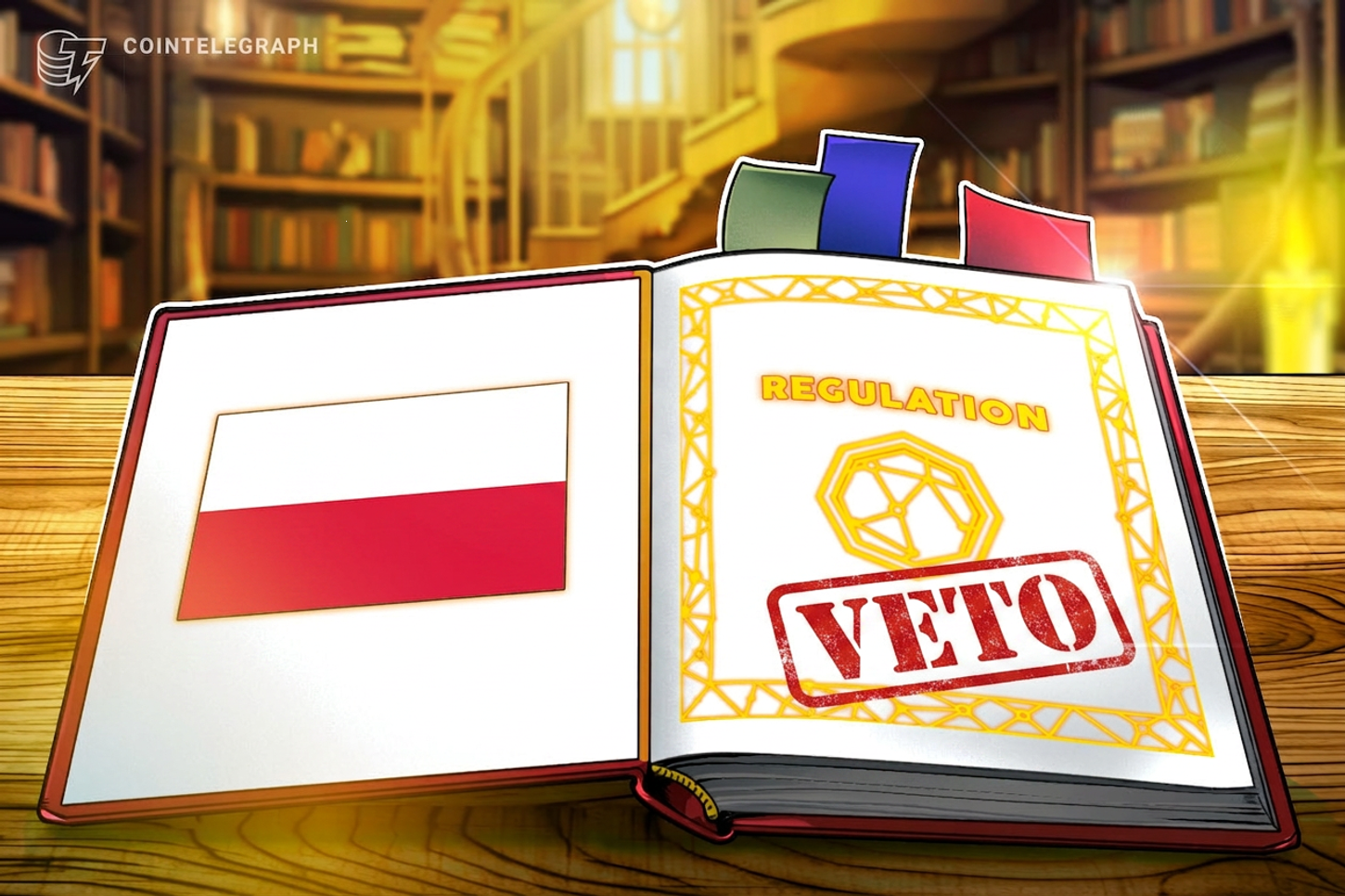
Poland's Crypto Ambitions Stalled: Veto Upheld Amid Widening Zondacrypto Scandal
Poland's digital asset landscape has hit a significant roadblock. In a move reverberating through the European crypto community, Polish lawmakers have failed to overturn a presidential veto on crucial crypto legislation. This legislative gridlock arrives at a particularly sensitive time, coinciding with the escalating investigation into Zondacrypto, a prominent Polish exchange, and the subsequent bankruptcy filing of its Estonian operator. The confluence of these events paints a concerning picture for crypto adoption and regulation within one of the EU's larger economies, underscoring the delicate balance between fostering innovation and ensuring robust consumer protection.
The Presidential Veto: A Crisis of Confidence
The presidential veto, which effectively kills the proposed crypto bill, signals a profound lack of confidence in the current regulatory environment or the specifics of the proposed legislation. The timing unequivocally links it to the unfolding Zondacrypto scandal. It is highly probable that the president's decision was influenced by a perceived inadequacy in the bill's provisions to safeguard investors against the very risks exemplified by Zondacrypto's troubles. Lawmakers' inability to garner the necessary majority to override the veto suggests either a split within the political establishment regarding crypto regulation or a shared apprehension about rushing through legislation without fully addressing recent market turbulence and alleged malfeasance. This political stalemate leaves Poland's crypto sector in prolonged regulatory uncertainty.
Zondacrypto Scandal: A Cautionary Tale Unfolding
The Zondacrypto scandal serves as a stark reminder of the vulnerabilities inherent in unregulated or under-regulated crypto markets. Once a leading Polish cryptocurrency exchange, Zondacrypto now finds itself embroiled in a widening investigation, with its Estonian operating entity having declared bankruptcy. Details emerging from the investigation suggest potential mismanagement, liquidity issues, or even more serious allegations, sending shockwaves through the Polish crypto community. This incident has undoubtedly fueled public and political skepticism towards digital assets, transforming what might have been a proactive regulatory effort into a defensive posture. For many, Zondacrypto’s troubles validate calls for stringent oversight, inadvertently hindering progress on more nuanced, innovation-friendly frameworks and potentially tainting the entire asset class.
Regulatory Vacuum and its Implications
The upheld veto plunges Poland's crypto sector deeper into a regulatory vacuum at a critical juncture. While the European Union's landmark Markets in Crypto-Assets (MiCA) regulation is set to provide a comprehensive framework across the bloc, national legislation often complements or precedes these broader directives, allowing for tailored approaches. Without a national bill, Polish crypto businesses and investors are left operating under a patchwork of existing financial regulations, often ill-suited for digital assets. This creates an an uneven playing field, potentially stifling domestic innovation as companies may seek more predictable regulatory environments abroad. Furthermore, the absence of clear guidelines can expose consumers to greater risks, paradoxically achieving the opposite of what the veto might have intended, by not providing specific protections where they are most needed.
Economic Ramifications and Investor Confidence
The immediate economic ramifications of this legislative setback are likely negative. Regulatory uncertainty typically deters investment and innovation. Domestic crypto startups and established businesses in Poland may face increased difficulty in securing funding, attracting talent, and scaling operations without a clear legal framework. This could lead to a 'brain drain' or 'capital flight' as entrepreneurs and investors gravitate towards jurisdictions with more defined and supportive regulatory landscapes. For individual investors, the lack of dedicated consumer protection laws, especially against the backdrop of the Zondacrypto scandal, could erode confidence, potentially leading to reduced participation in the Polish crypto market. The perception of a hostile or unpredictable regulatory environment is a significant barrier to mainstream adoption and economic growth.
Poland within the Broader EU Context
Poland's situation stands out somewhat against the backdrop of MiCA implementation. While MiCA aims to harmonize crypto regulation across the EU, national governments retain some scope to regulate aspects not explicitly covered. The Polish veto, therefore, represents a unique national resistance or extreme caution, perhaps delaying its full embrace of the digital asset economy compared to more forward-leaning EU members. This divergence highlights the ongoing challenge of achieving a truly unified approach to crypto regulation, even within a single market. Other EU nations will likely observe Poland's experience closely, using it as a case study for the political and public relations challenges inherent in regulating a rapidly evolving sector, especially when high-profile scandals emerge.
Lessons Learned and The Path Forward
The Polish experience offers several crucial lessons. Firstly, high-profile scandals like Zondacrypto's can severely derail legislative efforts, underscoring the paramount importance of robust consumer protection from the outset. Secondly, piecemeal or reactive legislation is often perceived as inadequate; a comprehensive, forward-looking approach balancing innovation with risk management is essential. For Poland, the path forward will likely involve a period of reassessment. A new crypto bill, perhaps more conservative or with stronger consumer safeguards, might be proposed, but it will face an uphill battle to regain political consensus and public trust. The industry, too, must foster self-regulation, transparency, and best practices to demonstrate its commitment to integrity.
Conclusion
The upheld veto of Poland's crypto bill, inextricably linked to the Zondacrypto scandal, marks a significant setback for the nation's digital asset ambitions. It leaves Polish crypto businesses and investors grappling with uncertainty and a regulatory void, potentially hindering innovation and economic growth. While consumer protection is commendable, stalling legislation entirely risks leaving the market vulnerable and pushing legitimate activity underground or offshore. As the EU moves towards a harmonized regulatory environment with MiCA, Poland's struggle serves as a potent reminder of the complex interplay between technological advancement, market integrity, political will, and public perception in shaping the future of finance. The challenge now lies in crafting a regulatory framework that restores confidence, fosters responsible innovation, and genuinely protects all stakeholders.