Morgan Stanley Deepens Crypto Commitment with Ether and Solana ETPs, Ushering in a New Era of Institutional Access
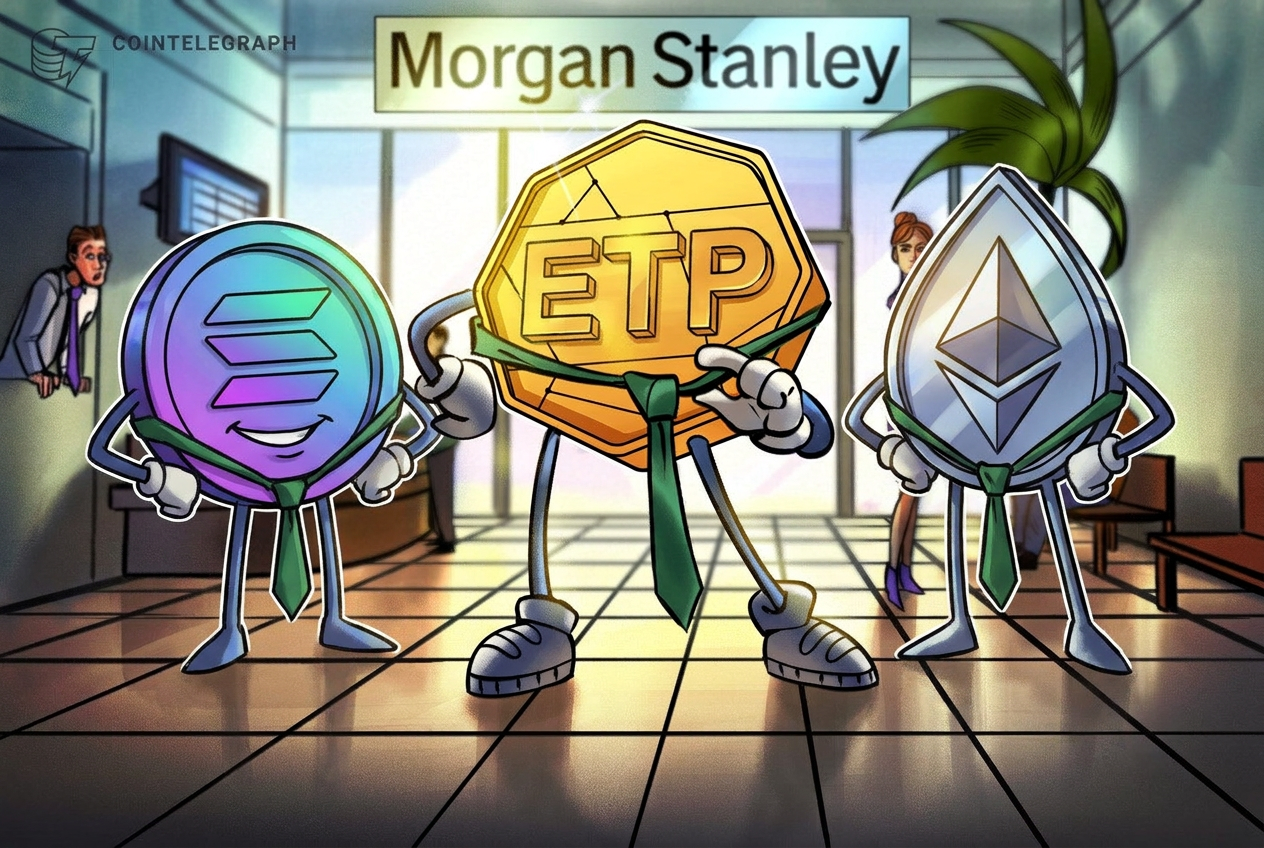
In a resounding affirmation of the burgeoning institutional interest in digital assets, financial titan Morgan Stanley has significantly expanded its cryptocurrency offerings, announcing the launch of new Exchange-Traded Products (ETPs) tracking Ether (ETH) and Solana (SOL). This strategic move, which notably includes staking rewards for investors, builds upon the firm’s earlier foray into Bitcoin funds and marks a pivotal moment in the mainstream adoption of altcoins within traditional finance.
For years, the narrative surrounding institutional crypto adoption largely revolved around Bitcoin, hailed as "digital gold" and a hedge against inflation. While Bitcoin remains a cornerstone, Morgan Stanley's latest offering signals a maturation of this institutional perspective, acknowledging the distinct value propositions and technological innovation inherent in other leading cryptocurrencies. As a Senior Crypto Analyst, I view this development not merely as an expansion of product lines but as a profound validation of the multi-chain future and the increasing sophistication of institutional investment strategies in the digital asset space.
Beyond Bitcoin: A Strategic Embrace of Smart Contract Platforms
The inclusion of Ether and Solana is particularly significant. Ether, the native cryptocurrency of the Ethereum blockchain, is the undisputed leader in smart contract platforms, powering decentralized finance (DeFi), NFTs, and a vast ecosystem of decentralized applications (dApps). Its transition to a Proof-of-Stake (PoS) consensus mechanism with "The Merge" and subsequent upgrades has not only made it more energy-efficient but also introduced the concept of staking yield, which Morgan Stanley has shrewdly integrated into its ETPs. For institutional investors, Ether offers exposure to the foundational layer of the Web3 economy, a high-growth sector brimming with innovation and potential.
Solana's inclusion, on the other hand, speaks volumes about its remarkable resurgence and growing institutional confidence despite past challenges. Often dubbed an "Ethereum killer" due to its high transaction throughput and low fees, Solana has cultivated a vibrant ecosystem of dApps, particularly in gaming, DeFi, and decentralized physical infrastructure networks (DePIN). Its institutional validation by a firm like Morgan Stanley is a powerful endorsement, suggesting that the market sees beyond the FUD (fear, uncertainty, and doubt) and recognizes Solana's technological prowess and long-term potential as a scalable blockchain solution. This move could encourage more large-scale capital to flow into Solana, providing greater liquidity and stability to its ecosystem.
The Allure of Staking Rewards: A Game Changer for ETPs
A standout feature of these new ETPs is the incorporation of staking rewards. Staking, a mechanism fundamental to Proof-of-Stake networks like Ethereum and Solana, allows token holders to earn passive income by locking up their assets to support network operations. By offering staking rewards, Morgan Stanley is not just providing passive exposure to these assets but also enabling investors to capture the inherent yield generated by the underlying blockchain protocols. This is a crucial differentiator from many traditional asset classes and even earlier crypto ETPs, making these products inherently more attractive to long-term holders and yield-seeking institutions.
This innovation could redefine how traditional investors approach digital assets, moving beyond speculative trading to a more fundamental appreciation of network participation and yield generation. It also bridges a gap between the decentralized finance world, where staking is common, and the regulated institutional environment, offering a compliant and secure way for clients to benefit from these opportunities without the complexities of direct blockchain interaction.
Broader Market Implications and the Road Ahead
Morgan Stanley's move is likely to reverberate throughout the traditional finance landscape. It sets a precedent for other major financial institutions to diversify their crypto offerings beyond Bitcoin, potentially leading to a wave of similar ETPs for other established altcoins with strong fundamentals and growing ecosystems. This increased institutional participation could usher in greater market stability, liquidity, and ultimately, mainstream acceptance for digital assets.
The implications extend to the broader regulatory environment as well. ETPs provide a regulated and accessible wrapper for digital assets, making them more palatable for institutions bound by strict compliance frameworks. As more traditional players enter the space through such vehicles, it could further pressure regulators to provide clearer guidelines, fostering a more mature and predictable market.
Navigating the Nuances and Future Outlook
While this expansion is overwhelmingly positive, it's crucial to acknowledge the inherent nuances and risks. Digital asset markets remain volatile, and while ETPs mitigate some operational risks by providing a regulated wrapper, they do not insulate investors from market price fluctuations. Regulatory clarity, particularly regarding staking yields and the classification of various digital assets, continues to evolve globally.
Nevertheless, Morgan Stanley's deepened commitment is a powerful testament to the irreversible trajectory of digital assets. It underscores the growing consensus that cryptocurrencies, particularly those powering smart contract platforms, are not just speculative curiosities but integral components of the future financial infrastructure. As a Senior Crypto Analyst, I anticipate this move will accelerate the convergence of traditional finance and the decentralized world, paving the way for even more innovative products and sophisticated investment strategies in the years to come. The era of institutional altcoin embrace has truly begun.