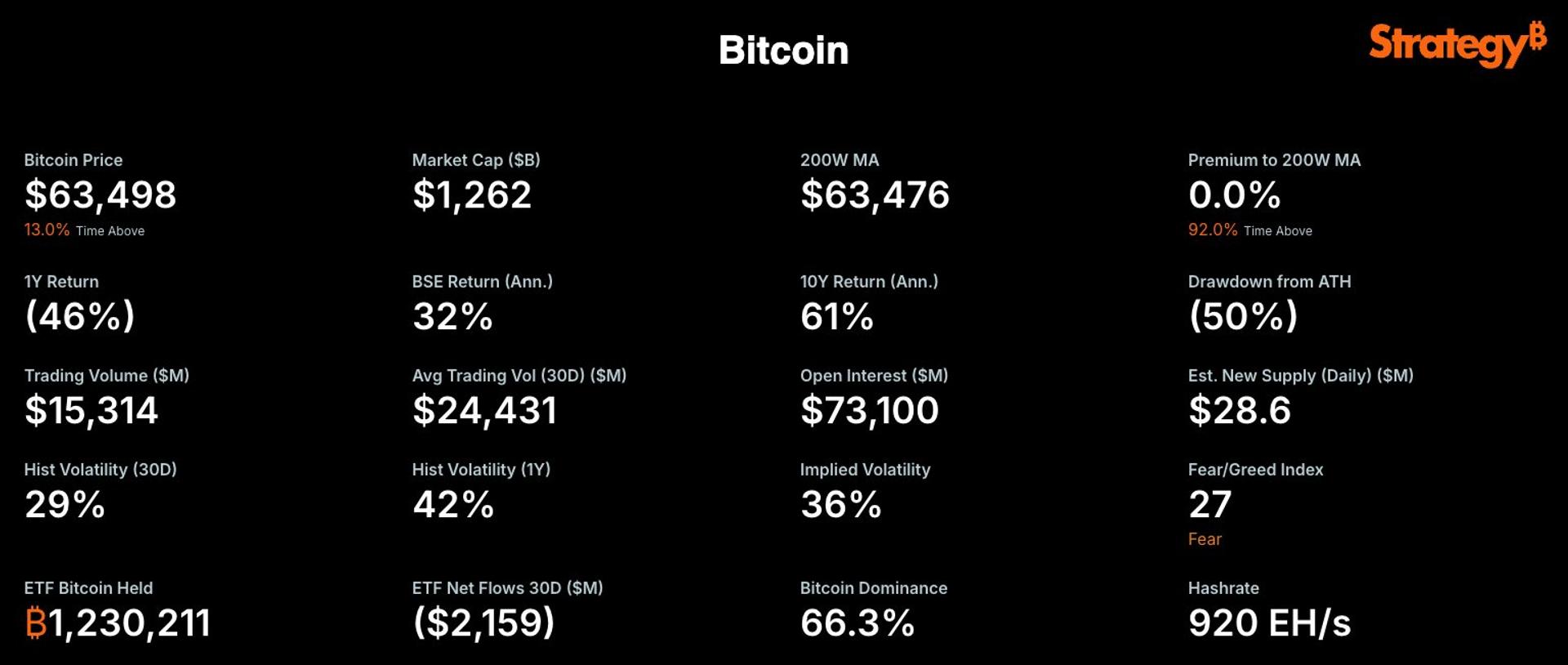
MicroStrategy's Precision Play: Tracking Bitcoin's Pivotal 200-Week Moving Average
In the high-stakes world of cryptocurrency investment, few figures command as much attention as Michael Saylor, the visionary behind MicroStrategy. Renowned for his unwavering conviction in Bitcoin (BTC) as a superior store of value and his company's aggressive accumulation strategy, Saylor's every move is meticulously scrutinized by markets. The latest revelation—that MicroStrategy is now closely monitoring Bitcoin’s 200-week moving average (200W MA)—is not merely a technical footnote; it signals a sophisticated evolution in their long-term strategy, potentially setting a new precedent for institutional engagement with digital assets.
The 200-week moving average is a cornerstone of technical analysis, particularly for identifying long-term trend reversals and robust support levels across traditional and emerging markets. For Bitcoin, this specific average has historically acted as a crucial barometer, often delineating generational buying opportunities during bear markets and serving as a critical psychological and structural foundation for subsequent bull runs. MicroStrategy’s explicit focus on this metric underscores a more nuanced, data-driven layer to their already steadfast 'HODL' philosophy, blending deep conviction with strategic entry and holding points.
The Oracle of Long-Term Support: Understanding the 200-Week MA
To grasp the significance of MicroStrategy’s current tracking, one must first appreciate the power of the 200-week moving average. Mathematically, it represents the average closing price of an asset over the past 200 weeks (approximately four years). Its slow-moving nature filters out short-term volatility, providing a clear picture of the underlying long-term trend. In traditional finance, assets that remain above their 200W MA are generally considered to be in a long-term uptrend, while dips to or below it often signal capitulation phases or deep value opportunities.
For Bitcoin, the 200W MA has attained near-mythical status. It has repeatedly served as the ultimate bottom signal during every major bear market in Bitcoin’s history, with only brief and often dramatic breaches. Historically, periods where Bitcoin's price has touched or briefly dipped below this line have proven to be the most lucrative accumulation zones for patient investors, preceding parabolic surges in value.
A Glimpse into History: Bitcoin's Respect for the 200W MA
The historical data unequivocally supports the 200W MA's critical role for Bitcoin:
- 2015 Bear Market: Following the Mt. Gox collapse, Bitcoin found strong support near its 200W MA, establishing a base for the epic 2017 bull run.
- 2018-2019 Bear Market: After reaching nearly $20,000, Bitcoin retreated significantly, eventually bottoming out around its 200W MA before staging a recovery.
- March 2020 COVID Crash: The swift, dramatic market sell-off saw Bitcoin briefly 'wick' below its 200W MA, only to snap back above it with remarkable speed, demonstrating its robust psychological and technical support.
- 2022 Bear Market: This period was arguably the most challenging for Bitcoin’s relationship with its 200W MA. For the first time for a sustained period, BTC spent several months *below* this key level, creating significant angst among investors. However, the eventual reclamation of this level was a powerful signal, suggesting a potential end to the deepest phase of the bear market and setting the stage for recovery.
Each interaction reinforces the indicator's importance as a reliable, albeit not infallible, long-term support.
MicroStrategy’s Strategic Refinement and Market Implications
Michael Saylor and MicroStrategy’s initial Bitcoin strategy was built on conviction: acquire as much BTC as possible, viewing it as a long-term hedge against inflation and a superior treasury reserve asset. Their tracking of the 200W MA introduces a layer of tactical precision. It suggests that while their conviction remains absolute, their execution may become more optimized, potentially timing future purchases or, at the very least, using this level to validate their existing holdings and resist panic selling during severe drawdowns.
For the broader crypto market, MicroStrategy's explicit focus on the 200W MA carries significant weight:
- Institutional Validation: It further legitimizes technical analysis as a tool for large-scale institutional investors, encouraging others to look beyond mere price action and into underlying structural support levels.
- Sentiment Anchor: When a major institutional player publicly acknowledges and tracks such a pivotal indicator, it naturally becomes a more significant focal point for retail investors and other institutions, potentially consolidating market sentiment around this level.
- Risk Management Framework: While Saylor is famously bullish, even the most bullish strategies benefit from risk management. The 200W MA offers a quantitative framework for assessing deep value and understanding when price deviations might represent extreme market capitulation rather than fundamental weakness.
A Balanced Perspective: Beyond the Indicator
While the 200W MA is a formidable indicator, it is crucial to remember that no single metric guarantees future performance. Macroeconomic headwinds, unexpected regulatory shifts, or unforeseen black swan events can always temporarily override technical signals. Bitcoin’s performance during the 2022 bear market, where it spent a considerable period below the 200W MA, serves as a reminder that market conditions can sometimes push beyond historical precedents.
Nevertheless, MicroStrategy’s adoption of the 200W MA as a primary tracking metric is highly instructive. It signals a maturation in institutional crypto investment strategies, moving beyond simple accumulation to incorporate robust, time-tested technical analysis. This blend of conviction and analytical rigor positions MicroStrategy not just as a Bitcoin holder, but as a sophisticated market participant whose actions will undoubtedly continue to shape the narrative and direction of the digital asset space.
Conclusion: A New Benchmark for Bitcoin Strategy
Michael Saylor's MicroStrategy tracking Bitcoin's 200-week moving average elevates this key support level to unprecedented institutional prominence. It's a clear indication that even the most fervent Bitcoin maximalists are leveraging sophisticated technical tools to navigate market cycles. As Bitcoin continues its journey towards mainstream adoption, MicroStrategy's strategic focus on the 200W MA provides a compelling blueprint for how institutions can approach long-term accumulation and risk assessment in the volatile, yet immensely promising, world of digital assets. For investors, this move reaffirms the indicator's significance, transforming it from a mere line on a chart into a potential benchmark for future Bitcoin strategy.