Saylor Turns Up Heat: A Critical Juncture for Bitcoin's Protocol Integrity
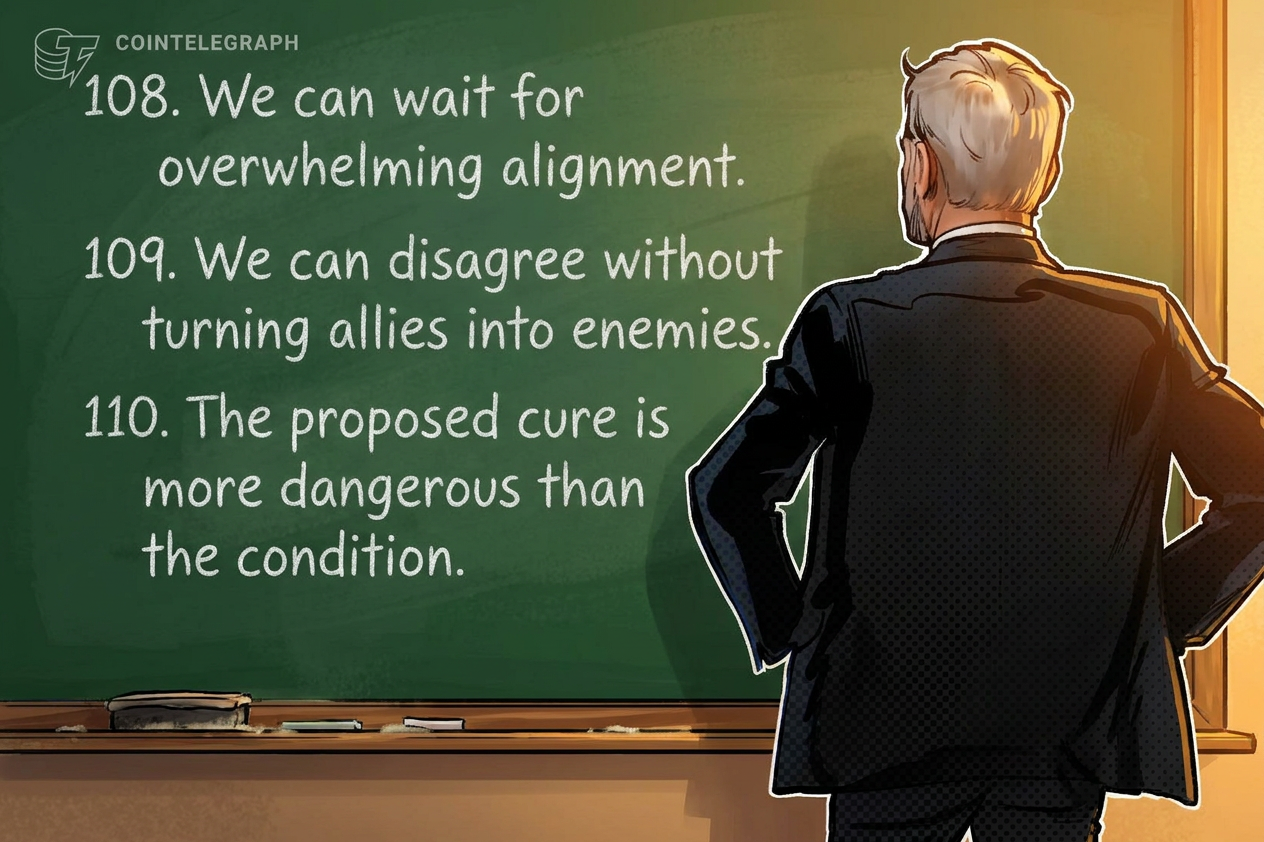
Michael Saylor, the prominent Bitcoin maximalist and CEO of MicroStrategy, has once again positioned himself at the epicentre of a significant crypto debate. Known for his unwavering conviction in Bitcoin's long-term value and his company's substantial BTC treasury, Saylor has now voiced formidable opposition to a proposed Bitcoin Improvement Proposal (BIP-110). While acknowledging shared objectives with the proponents, Saylor emphatically rejects the proposed 'temporary fork' as a remedy, reportedly citing '110 reasons' for his stance. This public declaration from one of Bitcoin's most influential institutional voices signals a critical juncture for the network's ongoing evolution and its core tenets of immutability and decentralization.
Unpacking BIP-110: A 'Temporary Fork' and Its Implications
To understand the weight of Saylor's objections, it's crucial to grasp the nature of BIP-110. While specific details of the proposal remain under wraps in the provided context, the terminology 'temporary fork' and 'remedy' strongly suggest that BIP-110 aims to address a perceived issue within the Bitcoin protocol – perhaps a bug, a security vulnerability, or a contention point in its consensus mechanism. A fork, in blockchain parlance, signifies a split in the network's ledger, often leading to two separate chains. A 'temporary' fork implies a deviation from the main chain for a specific period to implement a fix or upgrade, with an eventual plan to merge back or dissolve the temporary chain.
Historically, Bitcoin's philosophy has prioritised stability and resistance to change, making any proposal involving a fork inherently controversial. Soft forks, which are backward-compatible, are generally less disruptive. Hard forks, however, demand all participants to upgrade their software, and if not universally adopted, can lead to permanent chain splits and significant network instability. A 'temporary fork' treads a delicate line, potentially introducing complexities even greater than a permanent hard fork, due to the additional challenges of coordinating a return to the original state or a new unified chain.
Saylor's '110 Reasons': Beyond Technical Disagreement
Saylor's reported '110 reasons' transcend mere technical quibbles; they likely represent a profound philosophical challenge to the precedent set by a temporary fork. As a staunch advocate for Bitcoin as a pristine, unalterable form of digital money, Saylor views any manipulation of its core protocol with extreme caution. His opposition, while sharing the overarching goals of network improvement, targets the chosen method: a temporary fork. This implies concerns regarding:
- Erosion of Immutability: Bitcoin's core value proposition lies in its unchangeable ledger. Even a 'temporary' alteration could be perceived as weakening this fundamental characteristic, setting a precedent for future interventions.
- Centralization Risks: Who determines the necessity of such a fork? Who controls its implementation and the criteria for returning to the main chain? Such decisions inherently carry the risk of concentrating power, a direct antithesis to Bitcoin's decentralized ethos.
- Technical Volatility and Complexity: Introducing a temporary fork, managing its lifespan, and ensuring a seamless return or transition introduces a myriad of technical risks, including potential bugs, security exploits, and the nightmare scenario of a permanent, unintended chain split.
- Market Confidence: Any significant protocol-level debate, especially one involving a fork, can shake investor confidence, introduce price volatility, and cloud Bitcoin's narrative as a reliable store of value.
The Weight of Institutional Influence: MicroStrategy's Stance
As the CEO of a publicly traded company that holds over 200,000 BTC, Michael Saylor's voice carries immense weight within the cryptocurrency ecosystem and beyond. His opposition to BIP-110 is not merely a personal opinion but represents a significant institutional stake. This amplifies the debate, forcing a more rigorous examination of the proposal and its potential consequences. Other institutional players, closely observing MicroStrategy's pioneering Bitcoin strategy, will undoubtedly be watching this unfolding discussion with keen interest. Saylor's stance could potentially galvanize broader opposition to BIP-110, influencing the trajectory of its adoption within the developer and mining communities.
Navigating the Path Forward: Consensus in a Decentralized World
The conflict surrounding BIP-110 highlights the inherent challenges of governance and change in a decentralized network like Bitcoin. While innovation and adaptation are crucial for any technology, Bitcoin's strength derives from its robust consensus mechanism and its resistance to easy modification. The '110 reasons' cited by Saylor will likely fuel extensive debate across forums, mailing lists, and social media, forcing proponents of BIP-110 to present an exceptionally compelling case for their 'remedy' to overcome such formidable institutional and philosophical resistance.
Ultimately, the fate of BIP-110 will serve as another litmus test for Bitcoin's resilience, its capacity for self-governance, and its unwavering commitment to the principles that have underpinned its rise as a global financial asset. Saylor's outspoken opposition ensures that the discussion around this proposed temporary fork will be thorough, contentious, and deeply scrutinizing, shaping not just this particular proposal but potentially the future evolution of the Bitcoin protocol itself.