Unprecedented Bitcoin Movement: A Deep Dive into 210,000 BTC Shifting Wallets
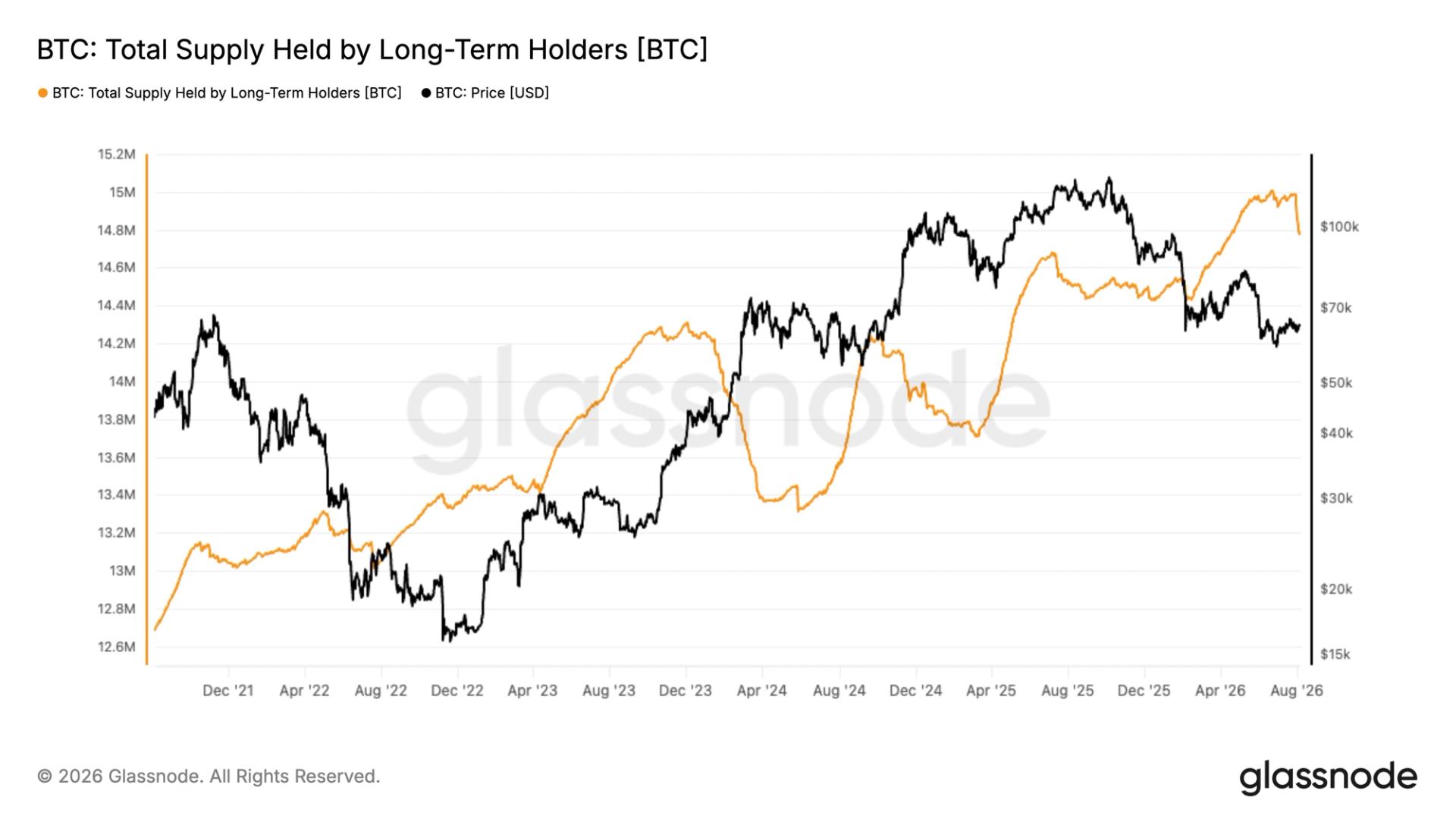
In a week that has captured the intense scrutiny of the crypto community and on-chain analysts alike, a staggering 210,000 Bitcoin – valued at over $14 billion at current market prices – has dramatically shifted from long-term holder (LTH) wallets. This monumental movement, representing approximately 1% of Bitcoin's total circulating supply, has immediately ignited widespread speculation regarding its underlying causes and potential market implications. While the sheer scale alone is enough to warrant attention, the emerging narrative hinting at a 'Coldcard fallout' alongside a predominant view of a 'shift in custody rather than conventional selling' demands a comprehensive, senior-level analysis.
As a senior crypto analyst, my initial assessment points to a complex interplay of security consciousness, evolving institutional practices, and the continuous maturation of the Bitcoin ecosystem. The defining question at hand is whether this mass migration signals impending market volatility due to sell-offs, or if it represents a more benign, albeit significant, re-strategizing of asset custody by sophisticated holders.
The On-Chain Fingerprints: What Long-Term Holders Tell Us
The movement of Bitcoin from 'long-term holder' wallets carries particular weight. These are coins that have remained dormant for extended periods, typically over 155 days, often signifying strong conviction from holders who are less susceptible to short-term market fluctuations. When such significant quantities move, it's rarely a trivial event. On-chain metrics that track dormancy, coin age distribution, and wallet activity are crucial here. The fact that these coins have stirred from their long slumber immediately flags the event as notable, but the *destination* of these coins is what truly dictates the market interpretation.
Preliminary on-chain forensics suggest that a substantial portion of these 210,000 BTC has not flowed directly into known exchange deposit addresses for immediate liquidation. Instead, many transfers appear to be to new, previously inactive addresses, often with robust multisig configurations, or to wallets associated with established institutional custodians. This pattern strongly supports the 'custody shift' hypothesis over a broad-scale selling event.
The 'Coldcard Fallout' Hypothesis: Unpacking the Speculation
The mention of 'Coldcard fallout' in conjunction with these movements adds a layer of intrigue. Coldcard is a highly regarded hardware wallet, renowned for its security features and appeal to advanced Bitcoin users and maximalists. If 'fallout' implies a direct compromise or a newly discovered vulnerability, it would be a catastrophic event for the self-custody ethos and would almost certainly lead to panicked selling. However, the current data does not align with a widespread breach where funds are being siphoned away without the owners' intent.
More plausibly, 'Coldcard fallout' could refer to a reaction to:
- **Hypothetical Security Advisories:** Private or semi-private advisories about potential attack vectors that, while perhaps not directly exploiting Coldcard, highlight general best practices or vulnerabilities in setups around hardware wallets.
- **User-Initiated Upgrades:** Long-term holders, particularly those with significant wealth, periodically upgrade their security apparatus. This could involve migrating funds from older hardware wallet models to newer, more secure versions, or transitioning to more complex multisignature setups or dedicated institutional custody solutions prompted by general security awareness or evolving threats.
- **General Security Concerns:** In an era of increasing sophisticated hacks and state-sponsored cyber threats, even the most secure wallets can prompt proactive migrations. Users might be reacting to broader industry-wide security events (unrelated to Coldcard directly) by enhancing their own operational security, which involves moving funds to fresh, newly secured addresses.
Alternative Explanations: Beyond Coldcard
While the Coldcard narrative is compelling, other significant factors could contribute to such a large-scale movement:
- **Institutional Rebalancing and Custody Shifts:** Large institutional players, family offices, or corporate treasuries that hold Bitcoin often engage in periodic rebalancing, consolidation of funds, or shifts between different cold storage providers or internal custody solutions. This is a standard operational procedure for managing large asset portfolios and would manifest as significant on-chain movements without necessarily indicating a sale.
- **Over-the-Counter (OTC) Deals:** Very large block trades of Bitcoin often occur off-exchange via OTC desks. In such scenarios, funds move directly from the seller's wallet to the buyer's wallet, often an institutional cold storage, without impacting open market liquidity directly. These look exactly like custody shifts on-chain.
- **Exchange Wallet Consolidation:** While the source implies LTH wallets, it's possible some older, less active exchange cold storage wallets could be undergoing consolidation as part of an operational overhaul.
- **Private Key Management Changes:** For ultra-high-net-worth individuals or groups, changes in multisig signers, inheritance planning, or dissolution of trusts could necessitate moving funds to new addresses.
Market Implications: A Bullish Lean
If the predominant interpretation holds – that this is primarily a custody shift rather than a mass sell-off – the market implications lean towards a neutral-to-bullish outlook.
- **Reduced Selling Pressure:** The most immediate positive impact is the absence of substantial selling pressure. If 210,000 BTC were suddenly dumped on exchanges, it would undoubtedly trigger a significant price downturn. The current on-chain signals alleviate this immediate concern.
- **Enhanced Security and Maturity:** A shift towards more robust self-custody or institutional-grade custody solutions by long-term holders suggests a maturation of the ecosystem. It indicates a heightened awareness of security and a long-term commitment to holding Bitcoin, rather than exiting the market.
- **Continued Illiquidity:** If these coins move from one form of cold storage to another, they remain off the liquid market, preserving Bitcoin's scarce supply dynamics.
Conclusion: Vigilance Amidst Evolving Custody Practices
The movement of 210,000 Bitcoin from long-term holder wallets is undeniably a significant event. While the 'Coldcard fallout' speculation adds a layer of intrigue, current on-chain evidence strongly points towards a mass custody shift driven by enhanced security measures, institutional rebalancing, or large OTC transactions, rather than a conventional selling spree. This perspective suggests a robust and maturing ecosystem where sophisticated participants are optimizing their asset security and management strategies.
Investors should continue to monitor these wallets for subsequent activity. Should these newly active addresses begin to transfer funds to exchange hot wallets in significant quantities, the narrative would shift dramatically towards a more bearish outlook. For now, however, this monumental migration appears to be a testament to the growing professionalism and security consciousness within the Bitcoin space, reinforcing the long-term conviction of its most dedicated holders.