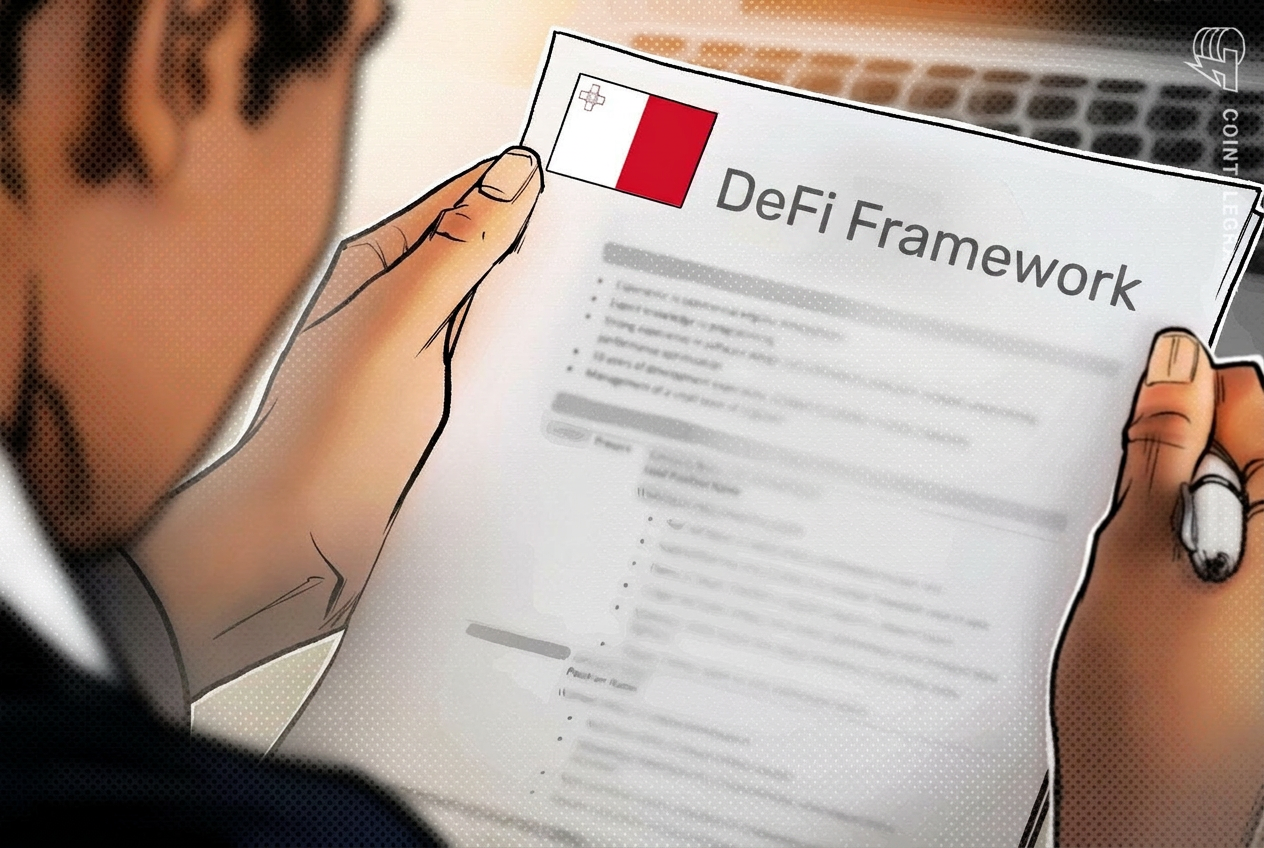
Malta's Proactive Pivot: Reclaiming its Blockchain Crown with DeFi Regulation
In a significant move that underscores the evolving landscape of global crypto regulation, Malta, once a trailblazer and then a cautionary tale in the blockchain space, is again asserting its influence. The Maltese regulator has announced its intention to consult the industry on a comprehensive legal framework for Decentralized Autonomous Organizations (DAOs) and other software-governed entities, explicitly acknowledging that many DeFi projects operate under a veneer of decentralization while retaining centralized control. This proactive step, framed within a MiCA-era understanding, signals a clear intent to bring clarity and accountability to the often-opaque world of decentralized finance.
Malta's journey with blockchain technology has been unique. In 2018, it famously proclaimed itself 'The Blockchain Island,' enacting pioneering legislation like the Virtual Financial Assets (VFA) Act. However, this early enthusiasm was soon tempered by challenges, including being grey-listed by the Financial Action Task Force (FATF) due to shortcomings in its anti-money laundering (AML) regime. Learning from these experiences, the nation is now adopting a more measured, compliant-first approach, aiming to build a robust framework that aligns with international standards and, crucially, prepares for the EU's landmark Markets in Crypto-Assets (MiCA) regulation.
Unpacking the 'Decentralization Illusion' and the DAO Dilemma
At the heart of Malta's proposed rulebook lies a critical observation: the 'decentralization illusion.' Regulators globally have grappled with the definition and practical implications of decentralization in the context of DeFi. While the ethos of DeFi champions censorship resistance and permissionless innovation, many projects, particularly in their nascent stages, are controlled by core development teams, venture capital investors, or concentrated token holders. These centralized points of control introduce significant risks, including potential for manipulation, lack of accountability, and single points of failure, directly contradicting the core tenets of decentralization.
Malta's framework aims to tackle this head-on by likely requiring a degree of demonstrable decentralization or, failing that, bringing projects under a clearer regulatory umbrella. This is particularly pertinent for DAOs, which are central to many DeFi protocols. DAOs represent a novel organizational structure, allowing groups to govern themselves through code and collective token holder votes. However, their lack of clear legal personality, often ambiguous liability structures, and the potential for governance capture have posed significant challenges for traditional legal systems. By proposing a rulebook that covers DAOs, Malta is attempting to provide a much-needed legal identity and operational clarity for these entities, potentially setting a precedent for other jurisdictions.
The MiCA-Era Framework and its Ambitions
The reference to a 'MiCA-era framework' is crucial. MiCA, set to fully apply across the European Union by late 2024, provides a harmonized regulatory regime for crypto-asset services and issuers. While MiCA covers aspects like stablecoins, crypto-asset service providers (CASPs), and asset-referenced tokens, it largely sidestepped the complexities of truly decentralized DeFi protocols and DAOs. Malta's initiative appears to be an attempt to fill this regulatory gap, creating a framework that is complementary to MiCA but extends its principles to the more nebulous corners of DeFi. This approach could position Malta as a leader in comprehensive Web3 regulation within Europe, potentially influencing future iterations of EU law or inspiring similar national frameworks.
The regulator's call for industry feedback is a positive sign. Crafting effective regulation for rapidly evolving technological paradigms like DeFi requires deep technical understanding and practical insights from those building in the space. An open dialogue between regulators and innovators can lead to balanced rules that protect consumers and prevent illicit activities without stifling innovation. This collaborative approach is essential for developing a framework that is both robust and flexible enough to adapt to future developments in the DeFi ecosystem.
Navigating Industry Feedback and Future Challenges
The feedback process will undoubtedly highlight several key challenges. One will be the precise definition of 'decentralization' for regulatory purposes. What objective metrics will be used? How will projects demonstrate sufficient decentralization to be exempted from certain requirements? Another challenge lies in jurisdictional reach. DeFi protocols are global by nature, operating without national borders. How can a national framework effectively regulate entities whose participants and operations span multiple jurisdictions? There will also be concerns about potential over-regulation, which could inadvertently drive innovation away from Malta or even the EU. Balancing consumer protection, financial stability, and the imperative for technological advancement will be a delicate act.
For DeFi projects, this could mean a forced re-evaluation of their operational structures and governance models. Projects that genuinely aspire to decentralization may find Malta's framework offers a clear path to compliance and legitimacy, potentially attracting institutional capital and broader adoption. Those that are centralized in practice but decentralized in name may face increased scrutiny, requiring them to either genuinely decentralize or accept the regulatory obligations that come with their actual operational structure. This move by Malta could catalyze a broader trend towards more transparent and accountable DeFi ecosystems.
Global Implications and a Path Forward
Malta's proposal is not just about its own regulatory landscape; it carries significant global implications. As jurisdictions worldwide grapple with how to regulate DeFi and DAOs, Malta's framework could serve as an important case study. Its success or challenges will be closely watched by other regulators, potentially informing future approaches in major financial hubs. By actively seeking to define and regulate DAOs, Malta is contributing to the broader legal evolution required for Web3 technologies to integrate safely and effectively with the traditional financial system.
Ultimately, this initiative marks another crucial step in the maturation of the crypto industry. It signals a shift from regulatory ambiguity to a future where even the most innovative and seemingly borderless financial protocols are brought under a framework of law. For Malta, it's an opportunity to re-establish itself as a forward-thinking, compliant jurisdiction for digital assets. For the DeFi space, it's a call to greater transparency, accountability, and ultimately, a more sustainable path to mainstream adoption.