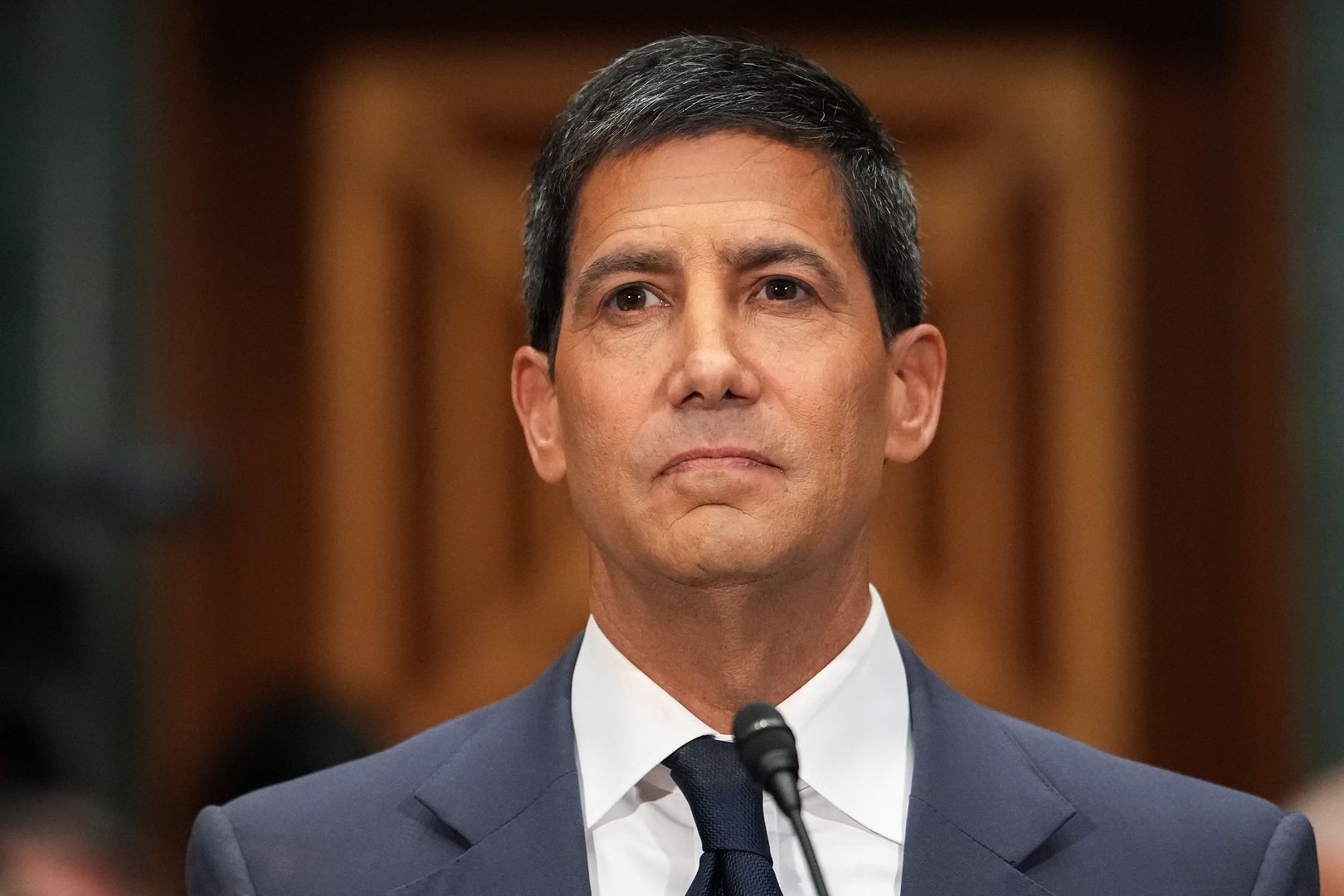
Warsh’s Jackson Hole Speech: A Potential Paradigm Shift for Monetary Policy and Scarce Assets
The annual Jackson Hole Economic Symposium is often more than just a gathering of central bankers and economists; it's a crucible where the future direction of global monetary policy is frequently forged. This year, the focus intensifies around comments from figures like Kevin Warsh, whose insights could signal a profound pivot for the Federal Reserve. Specifically, Warsh’s potential discussion on Fed support for Treasury buybacks isn't just an obscure financial detail – it's a macroeconomic earthquake in the making with monumental implications for traditional safe havens like gold, and perhaps even more so, for the burgeoning digital scarcity asset: Bitcoin.
As a Senior Crypto Analyst, my perspective is rooted in understanding how shifts in monetary policy translate into capital flows and redefine the value propositions of different asset classes. Should the Fed signal an openness to directly support Treasury buybacks, it would represent a significant expansion of its interventionist toolkit, pushing beyond traditional quantitative easing (QE) and potentially ushering in an era of sustained financial repression. This isn’t merely about managing short-term liquidity; it’s about fundamentally reshaping long-term yield curves and, by extension, the perceived risk and return of every asset in the global financial system.
Decoding the Mechanism: Fed Support for Treasury Buybacks
To grasp the magnitude of this, let's unpack what Fed support for Treasury buybacks entails. The U.S. Treasury might opt to buy back its own debt, typically to manage its maturity profile or enhance market liquidity. However, the critical element here is the Fed’s support. This could manifest in several ways: the Fed might commit to purchasing long-term bonds from the open market, thereby indirectly facilitating the Treasury’s ability to conduct buybacks without disrupting the market; or, more explicitly, it could signal its readiness to absorb the supply shifts caused by such operations. The underlying motive would likely be to suppress long-term yields, making government borrowing cheaper, and potentially inflating away the national debt over time.
Historically, the Fed’s interventions, from interest rate cuts to multiple rounds of QE, have aimed to stimulate economic activity by lowering borrowing costs and injecting liquidity. Supporting Treasury buybacks would be a sophisticated form of yield curve control, a strategy seen in various forms in Japan and during the WWII era in the U.S. It signals a deeply entrenched commitment to keeping borrowing costs low, regardless of inflationary pressures or market demand. For investors, this is a clear sign that the era of 'easy money' is far from over; it's merely evolving into more sophisticated and potentially permanent forms of financial engineering.
Gold’s Enduring Appeal in an Era of Financial Repression
Gold, the quintessential inflation hedge and safe-haven asset, is poised to benefit significantly from such a policy shift. When central banks actively suppress long-term yields, they effectively reduce the real return on 'risk-free' government bonds. This makes holding non-yielding assets like gold comparatively more attractive. Furthermore, any policy that hints at monetary debasement – whether through explicit money printing or via subtle yield curve manipulation – reinforces gold's traditional role as a store of value divorced from sovereign credit risk.
The historical precedent is clear: periods of aggressive monetary expansion and low to negative real interest rates have typically been bullish for gold. If the Fed explicitly commits to managing the long end of the yield curve, it implies a reduced likelihood of interest rates rising significantly, even in the face of inflation. This scenario systematically erodes the purchasing power of fiat currencies over time, driving investors towards assets that are perceived to maintain their value independently, positioning gold for a renewed surge in demand.
Bitcoin: The Digital Phoenix Amidst Fiat’s Fiery Trial
While gold's reaction is somewhat predictable, Bitcoin's response to such a fundamental shift in Fed policy could be even more profound. Bitcoin has increasingly cemented its narrative as 'digital gold' – a scarce, decentralized, and censorship-resistant asset with a fixed supply cap of 21 million coins. In an environment where traditional sovereign debt yields are artificially suppressed, and the integrity of fiat currencies is implicitly questioned, Bitcoin’s value proposition shines brighter than ever.
A policy signaling indefinite yield suppression and potential monetary debasement directly validates Bitcoin’s core thesis. Investors, facing dwindling real returns in bonds and potentially overvalued equities, will seek alternative stores of value. Bitcoin offers an unprecedented combination of scarcity and global accessibility, making it an ideal candidate for capital fleeing depreciating fiat. Furthermore, institutions that have already begun to allocate to Bitcoin as a hedge against inflation and monetary expansion will likely accelerate their adoption, viewing Warsh's potential signals as further confirmation of Bitcoin's critical role in a diversified, future-proof portfolio. The younger generation, especially, already predisposed to digital assets, might see such Fed actions as a clarion call to opt-out of traditional financial systems and into decentralized alternatives.
Long-Term Yields and the Search for Authentic Value
The direct impact on long-term yields would be a sustained depression, potentially leading to a flattening or even inversion of the yield curve. While this makes government borrowing cheaper, it also distorts market signals, penalizes savers, and incentivizes excessive risk-taking in other asset classes. The 'search for yield' would intensify dramatically, pushing capital into equities, real estate, and crucially, alternative assets like Bitcoin that offer a perceived hedge against this financial repression.
In conclusion, Kevin Warsh's Jackson Hole speech could be far more than just academic discourse. A strong signal for Fed support of Treasury buybacks would not merely adjust financial plumbing; it would fundamentally alter the macroeconomic landscape. It would cement a future of prolonged financial repression, making scarce assets like gold and, more powerfully, Bitcoin, increasingly indispensable components of a resilient investment strategy. As a Senior Crypto Analyst, I view this as a pivotal moment, potentially accelerating the mainstream adoption of Bitcoin as a primary store of value in a world grappling with the systemic debasement of traditional currencies.