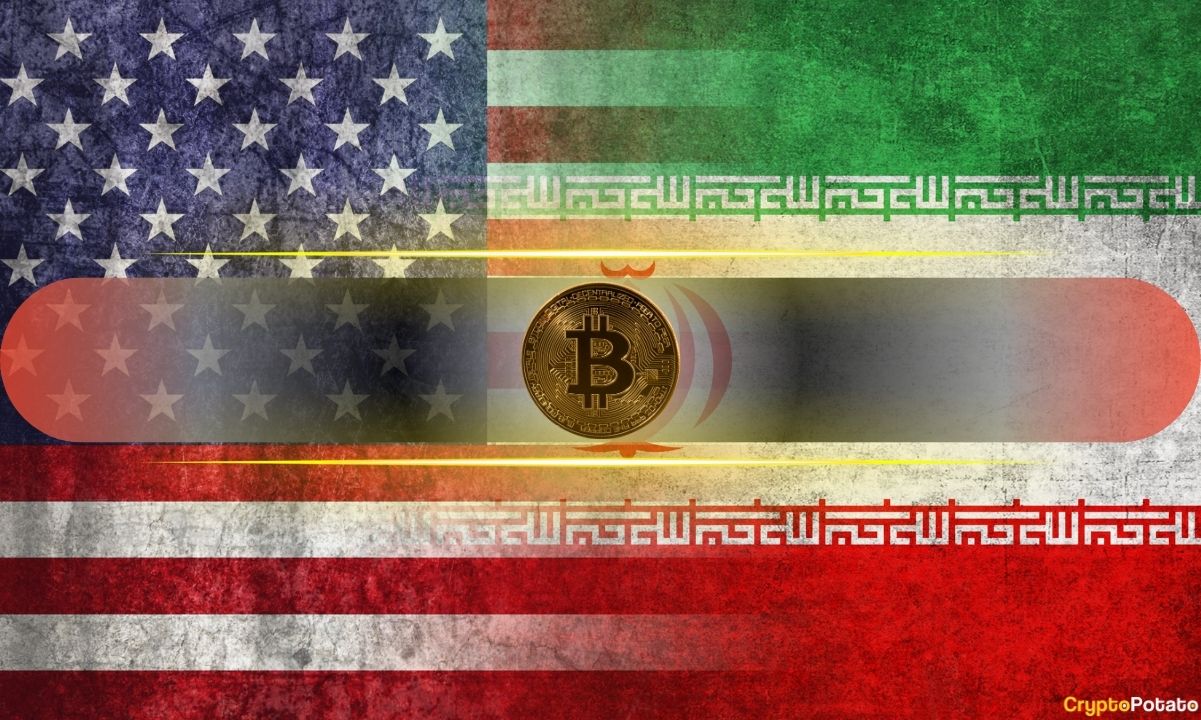
Bitcoin's Geopolitical Barometer: A New Era of Sensitivity
In a compelling demonstration of its increasing sensitivity to global macroeconomic and geopolitical developments, Bitcoin (BTC) recently staged a robust price rebound following signals of de-escalation in tensions between the United States and Iran. The catalyst came directly from Washington, with President Trump's statements hinting at the possibility of a deal with Iran and the imminent reopening of the strategically vital Strait of Hormuz. This swift market reaction underscores a crucial evolution in Bitcoin's journey: from a niche, uncorrelated asset to a digital asset deeply intertwined with the broader global economic and political landscape.
For years, crypto analysts and investors have debated Bitcoin's true nature – is it a risk-on speculative asset, a safe-haven akin to digital gold, or something entirely unique? The recent events surrounding US-Iran relations provide valuable data points, suggesting that Bitcoin's price action is not a monolithic response but rather a nuanced interplay of these narratives, often swinging based on the specific context of the geopolitical event. The immediate aftermath of Trump's comments saw BTC's price rebound, reinforcing the idea that global stability, particularly involving key energy and trade arteries like the Strait of Hormuz, often translates into renewed investor confidence across asset classes, including cryptocurrencies.
The Strait of Hormuz: A Global Economic Lifeline
The Strait of Hormuz holds immense strategic importance, serving as the world's most critical oil transit chokepoint. Approximately one-fifth of the world's total petroleum liquids consumption, or about 21 million barrels per day, passes through this narrow waterway. Any threat or disruption to shipping in the Strait sends immediate shockwaves through global energy markets, driving up oil prices and injecting significant uncertainty into the global economy. This uncertainty typically prompts a flight to safety in traditional markets, boosting demand for assets like gold, while potentially unsettling risk-on assets.
Against this backdrop of escalating tensions earlier in the year, which included drone incidents, tanker attacks, and reciprocal threats, markets braced for impact. Bitcoin, at times, demonstrated an initial dip, reflecting broader market anxiety, only to rebound as some investors sought uncorrelated alternatives. However, the latest development – the prospect of de-escalation and the assurance of open shipping lanes – had a distinctly positive impact. Trump's declaration that he "called off" strikes and that the Strait "will be open soon" signaled a significant reduction in immediate conflict risk, alleviating pressure on global supply chains and fostering a more optimistic economic outlook.
Bitcoin's Reaction: A Blend of Narratives
The Bitcoin market's response to these positive geopolitical signals was palpable. Prices, which had shown some choppiness amidst the prior geopolitical uncertainty, quickly firmed up and moved higher. This rebound can be interpreted through a dual lens, reflecting Bitcoin's complex market psychology:
Firstly, the **Risk-On Rebound**: A de-escalation of geopolitical tensions reduces systemic risk. When the probability of conflict in a vital region decreases, the broader market breathes a sigh of relief. This typically translates into a renewed appetite for risk assets, as investor confidence in global economic stability improves. Bitcoin, still largely perceived as a higher-beta asset within the broader financial ecosystem, often benefits disproportionately from such risk-on sentiment. As fears of trade disruptions and higher energy costs subside, capital tends to flow back into growth-oriented and innovative assets, a category Bitcoin firmly occupies.
Secondly, the **Validation of Economic Interconnectedness**: While often touted as 'digital gold' due to its scarcity and decentralization, Bitcoin's recent price action also highlights its growing interconnectedness with the real economy. The assurance of smooth global trade, facilitated by an open Strait of Hormuz, underpins economic activity worldwide. A robust global economy provides a more fertile ground for technological innovation and adoption, which are key drivers for the long-term value proposition of cryptocurrencies. This event suggests that positive macro developments can act as powerful tailwinds for Bitcoin, rather than solely relying on its safe-haven narrative during crises.
Looking Ahead: Crypto's Evolving Role in Global Finance
As a senior crypto analyst, I believe this incident serves as a critical reminder of Bitcoin's evolving maturity. No longer an obscure digital novelty, it is increasingly reacting to the same global forces that move traditional financial markets. Institutional adoption, the proliferation of regulated investment vehicles, and heightened media attention have all contributed to integrating Bitcoin more deeply into the global financial consciousness.
However, it is crucial to temper expectations with realism. Geopolitical situations remain inherently fluid, and temporary de-escalations can quickly reverse. Furthermore, Bitcoin's price trajectory is influenced by a multitude of factors beyond geopolitics, including regulatory developments, technological advancements within the blockchain ecosystem, network effects, and broader market sentiment within the crypto space itself, such as halving cycles and DeFi trends. Nevertheless, the correlation observed in this instance provides compelling evidence that monitoring global political temperatures is now an indispensable part of comprehensive Bitcoin analysis.
The ability of Bitcoin to not only weather but also respond positively to a reduction in geopolitical risk, particularly concerning critical economic arteries, solidifies its position as a significant asset in the modern financial playbook. While its journey to becoming a universally accepted safe haven or reserve asset is ongoing, its increasing sensitivity to and positive reaction to global stability signals its growing role as a crucial indicator, and beneficiary, of a more peaceful and prosperous global economic environment. Investors and analysts alike must increasingly incorporate geopolitical intelligence into their assessments of the digital asset market.