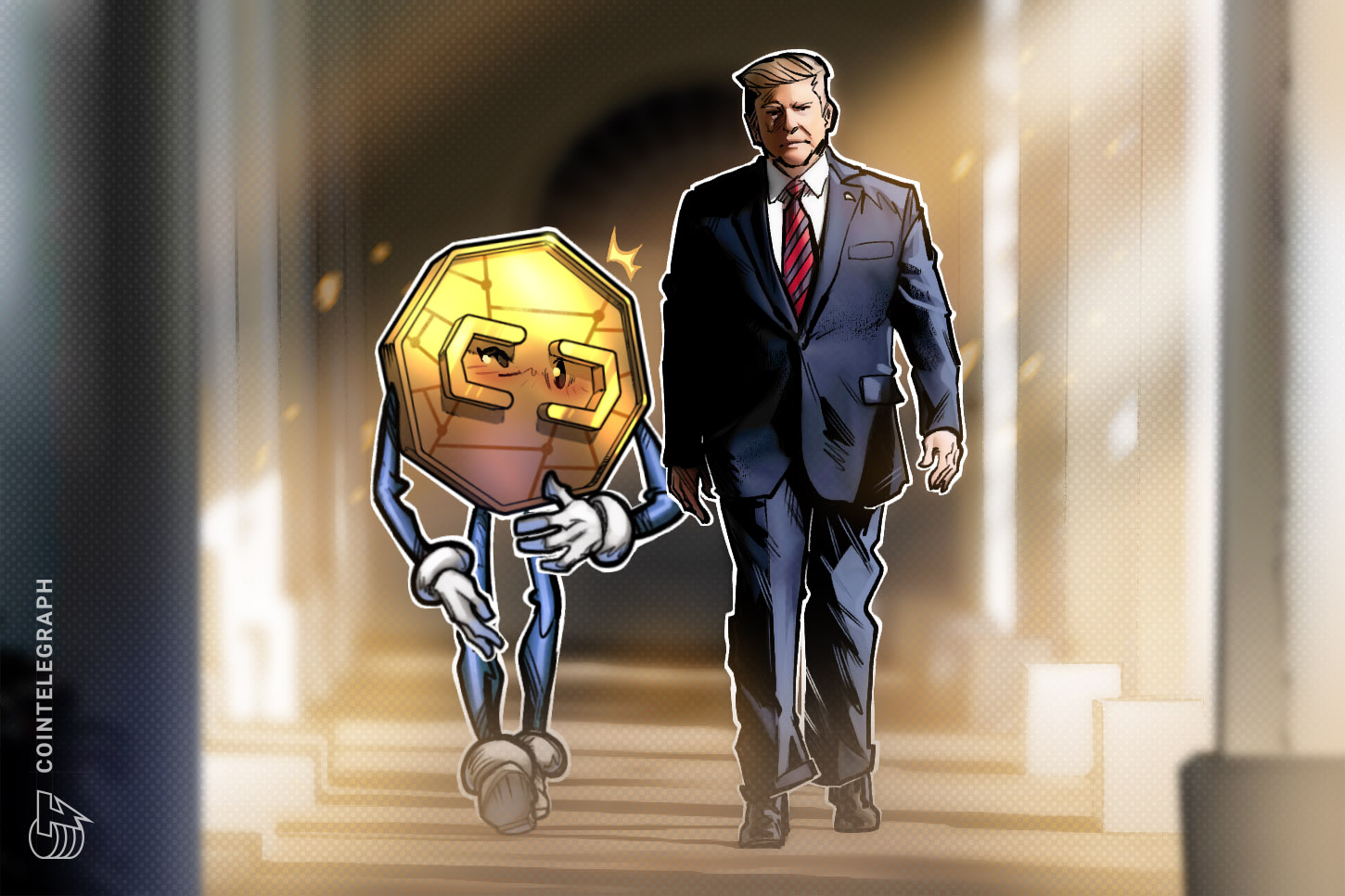
The Unmistakable Pivot: Political Calculus Driving Crypto Adoption
The political landscape surrounding cryptocurrency has been irrevocably altered. Former U.S. President Donald Trump, once a vocal skeptic who famously labeled Bitcoin a “scam,” has now publicly declared himself a “big crypto guy,” admitting this strategic pivot is “a little bit for politics.” As a Senior Crypto Analyst, this admission is not merely a passing comment; it represents a watershed moment, underscoring the undeniable political maturation of the digital asset industry and its growing influence on the electoral stage.
Trump’s transformation from crypto detractor to advocate is a masterclass in political opportunism, reflecting a calculated response to the burgeoning crypto voter bloc and the immense fundraising potential within the ecosystem. His original stance in 2019 mirrored a widespread skepticism among traditional financial and political elites. However, as the crypto market cap swelled into trillions, millions of Americans invested, and a distinct pro-crypto lobbying force emerged, the political imperative to engage became undeniable. This shift is less about a newfound ideological conviction and more about pragmatic electioneering, positioning himself distinctly against what many in the crypto community perceive as an adversarial stance from the current Biden administration and regulatory bodies like the SEC.
The Crypto Vote: A New Electoral Battleground
The emergence of the “crypto vote” is no longer a fringe concept but a tangible force in U.S. elections. Polling data increasingly indicates a significant portion of the electorate, particularly younger and tech-savvy demographics, holds investments in digital assets and cares deeply about the regulatory environment. For a candidate like Trump, who thrives on mobilizing dedicated bases and disrupting conventional narratives, tapping into this demographic represents a significant opportunity.
His embrace of crypto allows him to differentiate himself from President Biden, whose administration has been criticized for a lack of clear guidance and what some see as an 'enforcement-first' approach. By framing himself as the pro-crypto champion, Trump aims to attract voters disillusioned with regulatory uncertainty and those who champion financial innovation and individual sovereignty in digital finance. This narrative is further bolstered by his recent statements supporting crypto mining and expressing a desire for the U.S. to be a leader in the space – a stark contrast to his earlier condemnations.
Implications for Regulation and Market Sentiment
From a regulatory perspective, Trump’s declared support could have profound implications should he return to the White House. A pro-crypto administration could signal a dramatic shift away from aggressive enforcement actions by agencies like the SEC and CFTC towards a more harmonized, innovation-friendly regulatory framework. This could involve pushing for clearer legislative definitions for digital assets, establishing designated regulatory bodies, or even pursuing executive orders to clarify jurisdictional boundaries and encourage domestic blockchain development.
Such a policy shift would likely be met with enthusiasm by market participants, potentially ushering in a new era of institutional adoption and reducing the 'brain drain' of crypto innovation to more welcoming jurisdictions. The market's reaction to political rhetoric is increasingly evident; positive comments from influential figures often lead to rallies, reflecting investor confidence in a more stable and supportive operating environment. This political endorsement also provides a powerful form of mainstream legitimization, helping to dismantle lingering perceptions of crypto as solely a speculative or illicit tool.
Sincerity vs. Strategy: Does it Matter?
The core question for many remains: Is Trump's conversion genuine, or is it purely a strategic gambit? His admission, “a little bit for politics,” provides a direct answer. However, for the crypto industry, the sincerity of the belief may be secondary to the outcome. If a politically motivated embrace leads to more favorable policies, increased clarity, and a more robust domestic crypto ecosystem, many would argue the 'why' becomes less critical than the 'what.'
What this signals is that cryptocurrency has successfully crossed the chasm from niche tech experiment to a mainstream political issue. It has enough users, enough capital, and enough organized lobbying power to compel even the most entrenched political figures to reconsider their stances. This evolution mirrors the early days of the internet, where policymakers initially struggled to comprehend its implications but eventually recognized its transformative power and adapted.
The Road Ahead: Navigating a Politicized Crypto Future
As we look forward, the politicization of crypto is set to intensify. Candidates across the spectrum will be pressed to articulate their positions, recognizing that a significant portion of the electorate is paying attention. Trump's pivot is not an isolated incident but part of a broader trend where digital assets are becoming a key policy plank.
While the promises of political campaigns should always be viewed with a degree of skepticism, the very fact that a figure like Donald Trump feels compelled to champion crypto marks an indelible turning point. It suggests that regardless of who occupies the White House, the conversation around digital assets has fundamentally shifted towards one of national strategic importance, economic innovation, and voter engagement. The challenge for the crypto industry now lies in holding politicians accountable for their promises and working collaboratively to shape a regulatory future that fosters both innovation and investor protection.