A Strategic Exodus: The Bitcoin Miner's Bold AI Leap
In a move that has sent ripples through both the cryptocurrency and artificial intelligence sectors, a prominent Bitcoin mining operation has announced a strategic pivot, abandoning one of its key mining sites to embark on a lucrative, multi-billion dollar deal within the burgeoning AI compute market. This shift, projected to generate over $1.2 billion in revenue with the potential to exceed $3 billion through contract extensions and expanded capacity, represents more than just a company-specific strategic decision; it heralds a potential paradigm shift for the Bitcoin mining industry and underscores the ravenous demand for AI infrastructure.
As a Senior Crypto Analyst, I view this development not merely as a diversification effort but as a profound re-evaluation of core competencies and market opportunities. It highlights the growing pressure on traditional Bitcoin mining margins and the irresistible pull of the AI boom, which promises more stable and potentially higher returns for those with the right infrastructure.
The Economic Imperative: Why Miners Are Looking Beyond Bitcoin
The decision to jettison a Bitcoin mining site, even a profitable one, for an AI contract of this magnitude is a testament to the evolving economic landscape. Bitcoin mining has always been a high-stakes game, characterized by escalating difficulty, intense competition, and volatile energy prices. The halving events, which periodically cut block rewards in half, continuously pressure miners to enhance efficiency, secure cheaper energy, or increase scale just to maintain profitability. Post-halving cycles, especially, often weed out less efficient operators.
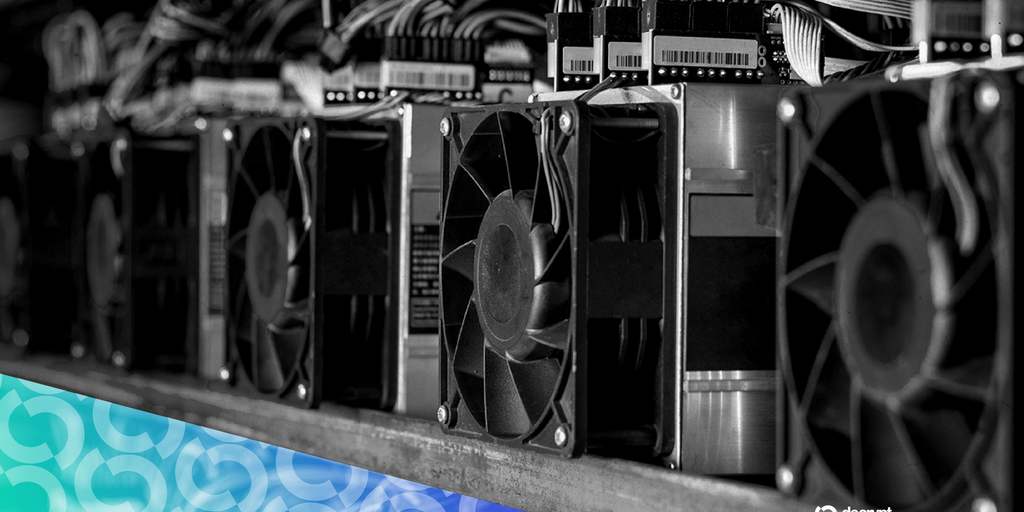
Conversely, the demand for high-performance computing (HPC) power for AI development is exploding. Generative AI, large language models (LLMs), and complex machine learning algorithms require colossal amounts of computational horsepower, driving an insatiable appetite for GPUs and data center capacity. This demand creates a robust, often contract-based revenue stream far less susceptible to daily market swings than the price of Bitcoin. Miners, with their established infrastructure—power procurement, large-scale data centers, cooling systems, and operational expertise in managing vast arrays of computing hardware—are uniquely positioned to capitalize on this AI gold rush. Their existing sites are essentially ready-made HPC facilities, requiring only a swap of specialized ASIC miners for powerful GPUs.
Implications for the Bitcoin Mining Landscape: A Hashrate Exodus?
This high-profile pivot raises critical questions about the future trajectory of the Bitcoin mining industry. Is this an isolated incident, or the vanguard of a broader trend? If more major players follow suit, we could witness a significant reallocation of capital and infrastructure away from Bitcoin mining and towards AI compute provision. Such a trend could have several implications:
- Hashrate Dynamics: A sustained exodus of miners could lead to a temporary dip in Bitcoin's global hashrate, potentially making mining less competitive for remaining participants until difficulty adjustments recalibrate. However, Bitcoin's resilience and adaptive difficulty mechanism have historically absorbed such shifts.
- Consolidation: Smaller, less capitalized miners might find it increasingly difficult to compete if larger entities can secure more lucrative AI deals, potentially leading to further industry consolidation.
- Diversification as a Strategy: It may become standard practice for publicly traded mining companies to diversify their revenue streams, balancing the volatility of Bitcoin rewards with the stability of AI contracts. This could fundamentally alter how investors view crypto mining stocks.
Ultimately, while some infrastructure may be repurposed, the core incentive to mine Bitcoin will always remain tied to its price and the network's security model. However, the economic calculus for *who* mines it and *how* they structure their operations is clearly evolving.
The AI Sector's New Infrastructure Frontier
For the AI industry, the entry of former Bitcoin miners as compute providers is a welcome development. The current bottleneck in AI development isn't innovation; it's often the scarcity and cost of available compute power. Traditional data center providers are struggling to keep pace with demand, and GPU supply chains are strained.
Miners bring immediate, large-scale capacity online. They have access to significant power resources, often in regions with competitive electricity rates, which is crucial for the energy-intensive task of training AI models. Their expertise in managing vast quantities of hardware, optimizing power consumption, and maintaining uptime translates directly to the needs of AI clients. This influx of new, specialized infrastructure providers could help alleviate the compute crunch, drive down costs for AI startups and enterprises, and accelerate innovation across the board.
Financial Resilience and Future Outlook
From a financial perspective, the reported $1.2 billion in guaranteed revenue, with an upside potential beyond $3 billion, dwarfs typical annual revenues for many mid-to-large-cap Bitcoin miners. This guaranteed income stream offers a level of financial stability and predictability that is often elusive in the highly volatile crypto market. Such a deal could fundamentally re-rate the company's valuation, shifting it from a 'crypto stock' reliant on Bitcoin price fluctuations to a diversified 'AI infrastructure play' with more stable earnings projections.
This strategic maneuver is a potent reminder that the digital infrastructure space is dynamic. The underlying technologies—blockchain and AI—may seem distinct, but their fundamental reliance on high-performance computing creates a compelling intersection. Companies that can strategically pivot and repurpose their assets to meet the most pressing demands of the digital economy are those most likely to thrive in the long run.
In conclusion, this bold move by a Bitcoin miner is a microcosm of broader trends. It signifies the immense pressure and enticing opportunities at the confluence of digital assets and AI. While Bitcoin mining will undoubtedly persist and evolve, we are likely witnessing the dawn of a new era where crypto infrastructure providers diversify into, and potentially dominate, significant segments of the rapidly expanding AI compute market. Investors and industry observers alike should pay close attention; the lines between these seemingly disparate tech sectors are blurring fast.