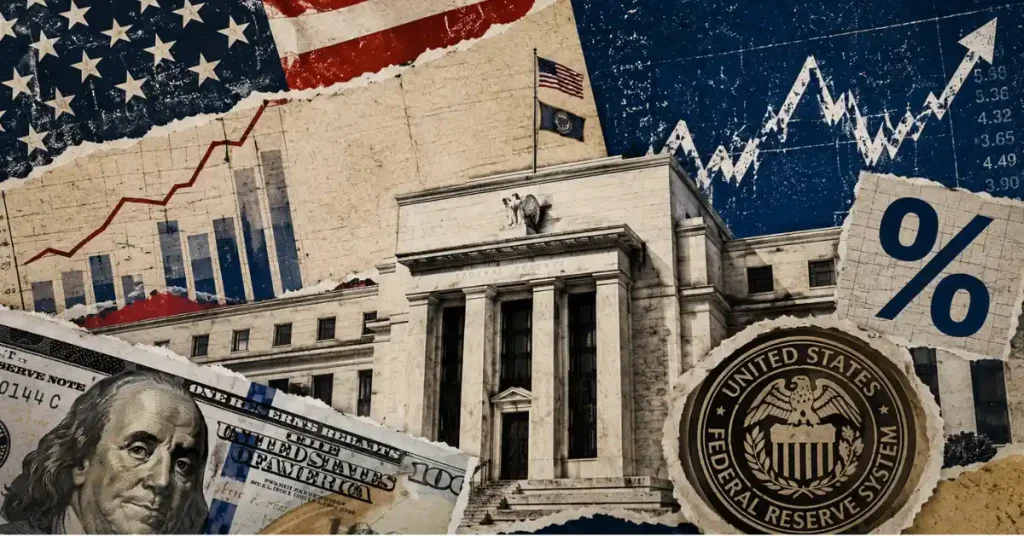
The Looming September FOMC: A Macro Reckoning for Crypto?
The financial world is abuzz, and the cryptocurrency market watches with bated breath as the Federal Reserve’s crucial September 15-16 Federal Open Market Committee (FOMC) meeting draws near. What was once a whisper of possibility has now amplified into a resounding probability: a significant interest rate hike. Following Fed chair Kevin Warsh's impactful speech at Jackson Hole, market pricing for a September rate hike skyrocketed from approximately 33% to a commanding 66%. This dramatic shift signals a tightening monetary policy landscape, which historically carries profound implications across all asset classes, including the notoriously volatile world of digital assets.
As senior crypto analysts, it is imperative that we dissect these macroeconomic developments, understanding their potential ripple effects on Bitcoin, Ethereum, and the broader altcoin ecosystem. The narrative often dictates that central bank tightening spells headwinds for risk assets. Our task is to move beyond the superficial and delve into the mechanisms through which the Fed's decisions could shape the immediate future and long-term trajectory of the crypto market.
Understanding the Fed's Mandate and the Rationale for Rate Hikes
To comprehend the impact, one must first grasp the Fed's primary objectives: maintaining maximum employment and stable prices (i.e., controlling inflation). In periods of surging inflation, which has been a persistent global challenge, the Fed's primary tool is to raise interest rates. Higher rates increase the cost of borrowing for consumers and businesses, thereby dampening demand, slowing economic activity, and ultimately, aiming to bring inflation back down to target levels. While the immediate goal is price stability, the collateral effect is often a reduction in overall market liquidity and a shift in investor sentiment.
The significant jump in rate hike odds following 'Warsh's' speech suggests that the market has interpreted his remarks as a strong indication of the Fed's hawkish stance. This hawkish pivot is often a precursor to a 'risk-off' environment, where investors tend to move away from speculative or volatile assets towards more stable, income-generating investments.
Traditional Markets vs. Crypto: A Shared Fate?
Historically, rate hikes tend to cool down traditional equity markets. Higher borrowing costs can squeeze corporate profits, while more attractive yields on fixed-income instruments like government bonds can divert capital away from stocks. Furthermore, a stronger U.S. Dollar, often a byproduct of higher interest rates, can put pressure on assets priced in other currencies and also on commodities. While cryptocurrencies were once heralded as a complete hedge against traditional financial systems, recent cycles have demonstrated an increasing correlation with major equity indices, particularly the tech-heavy Nasdaq. This growing correlation suggests that crypto, for now, remains largely categorized as a risk-on asset by institutional and a significant portion of retail investors.
Therefore, any significant turbulence in traditional financial markets due to Fed policy is likely to create corresponding waves in the crypto space. The question is not if, but how severely, and what unique characteristics of the crypto market might offer either resilience or exacerbate vulnerability.
The Direct Crypto Implications: Liquidity, Risk Appetite, and Opportunity Cost
Several key mechanisms will dictate the crypto market’s reaction to a Fed rate hike:
- Liquidity Squeeze: Higher interest rates, coupled with potential quantitative tightening (QT), reduce the overall money supply in the financial system. Less 'easy money' means less capital available to flow into speculative assets like cryptocurrencies. This reduction in liquidity can lead to downward pressure on prices, as capital becomes scarcer and more expensive.
- Shift in Risk Appetite: Crypto assets, particularly altcoins, are often seen as high-beta investments – assets that are more volatile and carry higher risk but also promise higher potential returns. In a 'risk-off' environment driven by rising rates and economic uncertainty, investors tend to de-risk portfolios, shedding volatile assets in favor of perceived safer havens or assets with guaranteed yields.
- Stronger Dollar & Opportunity Cost: As interest rates climb, the U.S. Dollar typically strengthens. Since most major cryptocurrencies are priced against the USD, a stronger dollar can make crypto appear more expensive to international buyers and exert downward pressure on prices. Furthermore, higher rates mean that traditional, less risky investments like U.S. Treasury bonds or even high-yield savings accounts start offering more attractive returns. This creates an 'opportunity cost' for investors who might previously have allocated capital to crypto solely for yield or speculative growth, now finding competitive, lower-risk options in traditional finance.
- Leverage and Debt: The crypto market has a significant amount of leveraged trading. Higher interest rates translate to increased borrowing costs for traders and institutions employing leverage, potentially leading to deleveraging events or margin calls if asset prices drop, exacerbating downward spirals.
While Bitcoin might show some resilience due to its 'digital gold' narrative and increasing institutional adoption, it is by no means immune. Altcoins, often with lower market caps and greater reliance on speculative sentiment, are likely to feel the pinch more acutely.
Navigating the Storm: Strategies for Crypto Investors
For savvy crypto investors and enthusiasts, the September FOMC meeting demands heightened vigilance and a well-considered strategy. It is critical to:
- Monitor Macro Indicators: Pay close attention to inflation data, employment figures, and future Fed speeches. These will offer clues about the trajectory of monetary policy.
- Re-evaluate Risk Exposure: Consider reducing leverage and rebalancing portfolios towards more established, fundamentally sound assets within the crypto space, or even increasing stablecoin holdings as a temporary safe harbor.
- Focus on Long-Term Fundamentals: Dips caused by macro-economic factors can present accumulation opportunities for projects with strong technology, adoption, and a clear problem-solving utility. The underlying innovation of blockchain technology persists regardless of interest rate decisions.
- Prepare for Volatility: Expect increased price swings. Market reactions can be sharp and swift, often driven by algorithms reacting to Fed announcements.
Conclusion: A Defining Moment for Digital Assets
The surging odds of a Fed rate hike ahead of the September FOMC meeting represent a significant macroeconomic headwind for the cryptocurrency market. While the digital asset space has demonstrated remarkable resilience and innovation, it is not impervious to the gravitational pull of global monetary policy. The decisions made by the Federal Reserve will undoubtedly shape investor sentiment, liquidity flows, and risk appetite across both traditional and decentralized finance. For crypto participants, understanding these dynamics, adapting investment strategies, and maintaining a long-term perspective on the fundamental value proposition of digital assets will be paramount in navigating what promises to be a defining period.
Featured News Partner: Coinpedia News