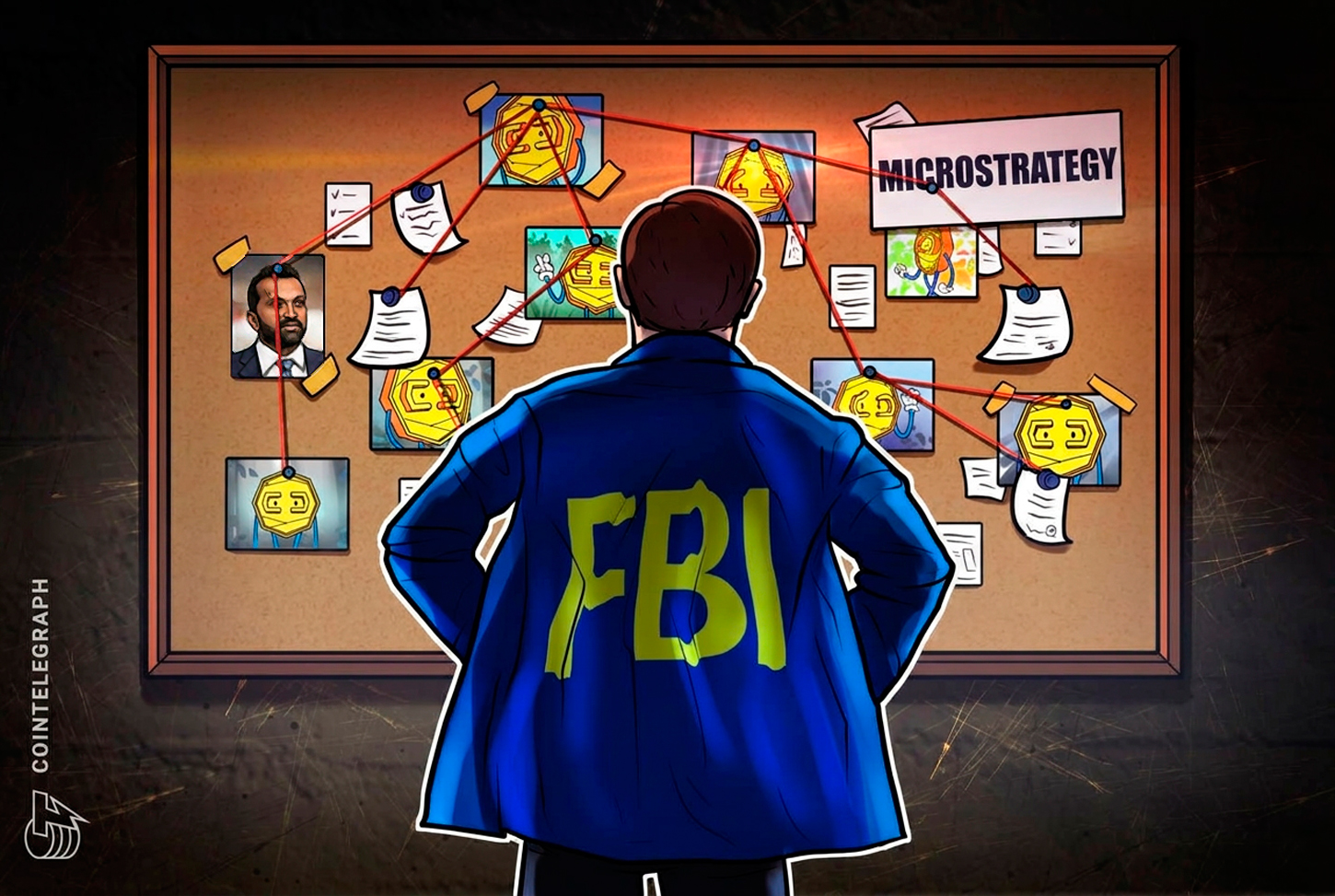
FBI Director's Late Stock Disclosure Ignites Transparency Debate
A recent report has brought to light that the Director of the Federal Bureau of Investigation (FBI) disclosed holdings in Strategy, a prominent US government contractor, months after the official deadline. This revelation, involving an investment valued between $100,001 and $250,000, has immediately triggered questions concerning transparency, potential conflicts of interest, and the rigorous ethical standards expected of high-ranking public officials. While Kash Patel, a figure associated with the matter, asserted that “no current conflict exists” regarding his own holdings, the late reporting itself casts a shadow, prompting a closer examination of the intersection between private financial interests and public duty.
Strategy: A Government Contractor Under Scrutiny
Strategy’s identity as a registered US government contractor is central to understanding the gravity of this disclosure. Companies operating in this capacity are frequently involved in projects and contracts with various federal agencies, potentially including those that the FBI may investigate or collaborate with. The Director's ownership of a significant stake in such a firm, regardless of intent, inherently creates a complex landscape where financial interests could theoretically converge with official responsibilities. The very nature of Strategy’s business model necessitates a heightened level of transparency from any public official holding its stock, especially one at the helm of a critical law enforcement agency. The potential for even an indirect benefit or perceived influence makes the timely and accurate disclosure of such holdings absolutely paramount.
Delayed Disclosure: A Breach of Public Trust and Transparency
The core of the controversy lies in the fact that the disclosure was made "months after the deadline." Financial disclosure requirements for senior government officials are not mere bureaucratic formalities; they are foundational pillars of accountability and public trust. These regulations are designed to preemptively identify and mitigate potential conflicts of interest, ensuring that personal financial gains do not influence official decision-making. A delayed disclosure, regardless of the ultimate finding of a conflict, undermines the very spirit of these rules. It can erode public confidence, fostering suspicion that information was withheld for reasons beyond simple oversight. For an institution like the FBI, whose credibility rests heavily on its impartiality and integrity, such delays are particularly damaging, potentially feeding narratives of a lack of accountability at the highest levels. The timeliness of these disclosures is as crucial as the content itself.
Kash Patel's "No Conflict" Claim: A Necessary but Insufficient Defense
Kash Patel's declaration that “no current conflict exists” regarding his own Strategy holdings, alongside the FBI Director’s, attempts to defuse the situation. While an explicit, active conflict might not be immediately apparent, the standard for public officials often extends beyond merely "current" or "active" conflicts. The "appearance of a conflict" is equally critical. For instance, if Strategy were to be involved in an FBI investigation, or if the FBI were to make procurement decisions that could affect Strategy, the Director's financial interest, even if passive, could create an undeniable ethical dilemma. Furthermore, the onus is typically on the official to *prove* the absence of conflict, not merely assert it, and timely disclosure is the primary mechanism for demonstrating this commitment to transparency. The claim, while important, does not negate the fundamental issue of the late filing and the questions it naturally raises.
Navigating the Ethical Minefield: Conflict of Interest Implications
The potential for a conflict of interest stemming from this situation is multifaceted. Firstly, there’s the direct financial incentive: any action, or inaction, by the FBI that could impact Strategy’s business or stock value could directly benefit the Director. While conscious manipulation is a serious accusation and not implied, the *perception* of such influence can be equally damaging. Secondly, the FBI, as a vast intelligence and law enforcement agency, interacts with countless entities, including government contractors. The Director’s position affords immense influence over various operations, procurements, and even regulatory interpretations that could indirectly or directly affect companies like Strategy. Even if the Director recuses himself from specific decisions, the broader organizational knowledge of his financial stake could subtly influence subordinates or create an environment where decisions are made with an unconscious bias. The inherent power dynamic of the office makes any undisclosed or late-disclosed financial tie to a government contractor a profound concern, demanding rigorous scrutiny to uphold the ethical bedrock of public service.
Adherence to Standards: The Mandate for Public Officials
Federal law, specifically the Ethics in Government Act of 1978 and subsequent amendments, mandates strict financial disclosure rules for high-ranking officials. These rules are designed to prevent even the *potential* for corruption or undue influence. Late disclosures, while not always leading to criminal charges, can result in civil penalties, ethics investigations, or severe reputational damage. The mechanisms for addressing such lapses typically involve the relevant ethics office, which would review the circumstances surrounding the late disclosure, assess whether an actual conflict existed, and recommend appropriate action. This incident serves as a stark reminder of the rigorous standards public officials must uphold and the constant vigilance required to maintain public trust in the integrity of government institutions. Compliance is not optional; it is a fundamental duty.
Beyond the Individual: Impact on Institutional Integrity
The ramifications of this late disclosure extend far beyond the individual FBI Director. They touch upon the collective integrity and trustworthiness of the FBI and, by extension, the entire federal government. In an era where public skepticism towards institutions is already high, incidents that suggest a lack of transparency or potential ethical lapses can significantly erode what little trust remains. For the FBI, an agency whose effectiveness relies heavily on public cooperation and belief in its impartiality, maintaining an unblemished ethical record is paramount. This episode underscores the critical importance of not only having robust disclosure rules but also ensuring their scrupulous and timely enforcement to safeguard democratic principles and institutional legitimacy. The public's faith in its government demands unwavering adherence to these principles.
Conclusion: A Call for Renewed Scrutiny and Unwavering Transparency
The late disclosure of the FBI Director's Strategy holdings presents a complex challenge, forcing a critical examination of ethical boundaries for public servants. While Kash Patel's assertion of "no current conflict" offers one perspective, the fundamental issue remains the breach of established disclosure timelines. This incident highlights the imperative for unwavering adherence to transparency rules, not just to prevent actual conflicts of interest, but to preserve the vital appearance of impartiality and integrity. As the public rightly demands accountability from its leaders, this situation calls for thorough review, clear communication, and a reaffirmation of the highest ethical standards that underpin public service. The strength of our institutions depends on nothing less than absolute transparency from those entrusted with leading them, ensuring that trust, once broken, can be rebuilt through demonstrable commitment to ethical governance.