A Watershed Moment for Institutional Crypto and RWA Tokenization
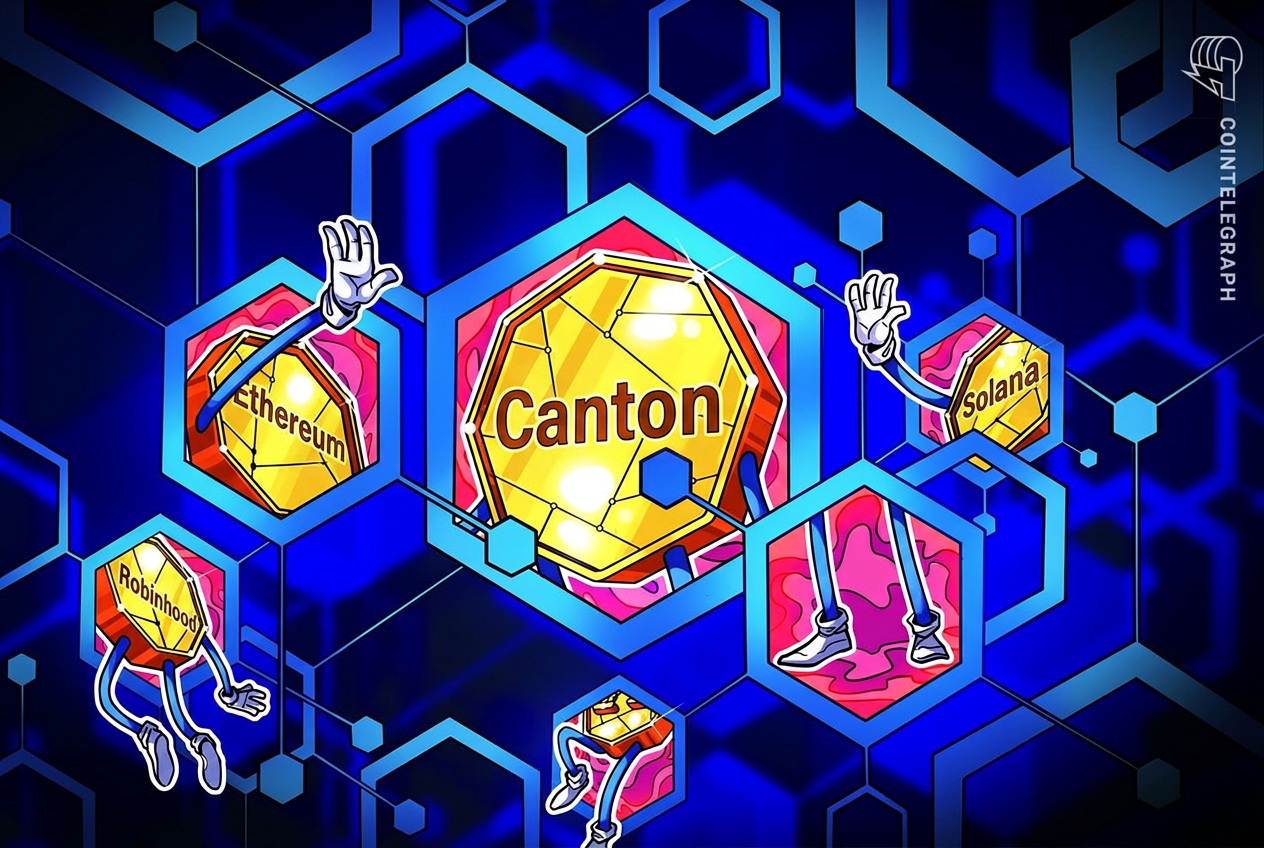
In a landmark development set to redefine the landscape of institutional digital assets, FalconX, a leading prime broker for digital assets, and Interstice, a pioneering cross-chain swap engine, have announced a critical integration. Their collaborative effort now connects Canton Network's sophisticated institutional tokenized-asset markets with the vibrant, diverse ecosystems of major public blockchains: Ethereum, Solana, and the increasingly influential Robinhood Chain. This strategic move is far more than a technical integration; it represents a profound leap towards a truly interconnected, liquid, and efficient global financial system, blurring the lines between traditional finance (TradFi) and decentralized finance (DeFi).
As a Senior Crypto Analyst, I view this announcement as a pivotal moment, signaling the maturing interoperability solutions necessary for widespread institutional adoption of blockchain technology. The implications span liquidity, capital efficiency, market accessibility, and the acceleration of the real-world asset (RWA) tokenization narrative.
Canton Network: The Institutional Cornerstone
To fully grasp the magnitude of this integration, one must first understand the Canton Network. Designed specifically for institutional-grade applications, Canton is a permissioned blockchain network built to facilitate complex, multi-party atomic transactions across various financial institutions. Its architecture emphasizes privacy, compliance, and deterministic settlement, addressing the stringent requirements of regulated entities for tokenized securities, funds, and other financial instruments. While Canton offers an unparalleled environment for institutional collaboration and innovation, its inherent permissioned nature traditionally meant its liquidity and asset velocity were confined within its ecosystem. This isolation, while ensuring control and compliance, also limited the broader utility and composability of the tokenized assets housed within it.
The challenge has always been how to unlock the value and liquidity of these institutional assets without compromising the security, privacy, and regulatory integrity that Canton provides. This is precisely where the FalconX and Interstice collaboration delivers a game-changing solution.
Interstice's Non-Custodial Bridge: A Conduit for Capital
At the heart of this transformative connection lies Interstice's non-custodial cross-chain swap engine. The term "non-custodial" is paramount here, as it signifies a critical trust minimization factor for institutions. Unlike traditional bridges that often require assets to be locked in a multi-sig or smart contract controlled by a third party, a non-custodial engine facilitates swaps and transfers without taking possession of the underlying assets. This architecture significantly reduces counterparty risk, a perennial concern for institutional participants, and enhances the security profile of cross-chain movements.
The engine effectively acts as a secure, efficient conduit, enabling tokenized assets originating from Canton to seamlessly flow into public blockchain environments. This isn't just about moving tokens; it's about making them liquid, tradable, and composable within the broader DeFi ecosystem, thereby unlocking their full potential and allowing institutions to tap into the deep liquidity pools of public chains. FalconX's involvement, as a trusted prime broker, provides the necessary institutional rails, security, and market access, cementing the credibility and operational robustness of this new pathway.
Connecting the Ecosystems: Ethereum, Solana, and Robinhood Chain
The choice of public blockchains for this initial integration speaks volumes about the strategic vision behind this initiative:
-
Ethereum: As the undisputed leader in decentralized finance, Ethereum offers unparalleled liquidity, a vast ecosystem of DApps, and a robust developer community. Bringing Canton assets to Ethereum opens them up to a multitude of DeFi protocols for lending, borrowing, and advanced trading strategies, significantly enhancing capital efficiency for institutions.
-
Solana: Known for its high throughput and low transaction costs, Solana provides an excellent alternative for high-frequency trading and applications requiring rapid finality. Its growing institutional adoption makes it a logical choice for enabling fast, cost-effective transfers and swaps of tokenized assets.
-
Robinhood Chain: This is a particularly intriguing addition. While details on "Robinhood Chain" might refer to a specific Robinhood-developed L2 or a chain heavily integrated into their platform, its inclusion signals a strategic intent to bridge institutional assets to a massive retail user base. This could pave the way for fractional ownership of institutional-grade tokenized assets, democratizing access to traditionally exclusive investment opportunities, or enabling innovative retail-facing products built upon underlying institutional liquidity.
Implications: A Catalyst for RWA DeFi and Global Liquidity
This integration carries profound implications:
-
Unlocking Institutional Liquidity: By connecting Canton to public chains, previously siloed institutional assets can now participate in broader markets, addressing the persistent challenge of liquidity fragmentation in the tokenized RWA space.
-
Accelerating RWA Tokenization: The ability to seamlessly move and trade tokenized assets across permissioned and permissionless environments removes a significant barrier to entry for institutions contemplating RWA tokenization. This could catalyze a massive inflow of traditional assets onto blockchain rails.
-
Enhanced Capital Efficiency: Institutions can now leverage their tokenized assets more effectively, using them as collateral in DeFi, participating in yield-generating strategies, or facilitating faster, cheaper cross-border settlements.
-
Towards a Hybrid Financial System: This solution exemplifies the growing trend of hybrid models, where the best features of TradFi (compliance, privacy, security) and DeFi (liquidity, composability, efficiency) are synergistically combined.
-
Retail Access to Institutional Assets: The Robinhood Chain connection holds the potential to bring regulated, institutional-grade assets to a wider retail audience, potentially via fractionalized tokens or structured products, driving mass adoption.
Challenges and Future Outlook
While immensely promising, such a monumental shift is not without its challenges. The security of cross-chain bridges, even non-custodial ones, remains a paramount concern. Smart contract audits, robust oracle mechanisms, and continuous monitoring will be crucial. Regulatory clarity around the cross-border and cross-chain movement of tokenized securities will also need to evolve in tandem with technological advancements.
Nevertheless, the FalconX and Interstice collaboration marks a significant stride towards fulfilling the promise of blockchain technology – a truly global, efficient, and accessible financial system. It paves the way for a future where traditional financial assets are no longer confined by geographical or technological barriers but instead thrive within interconnected digital markets. This is not just an upgrade; it's a foundational shift for institutional finance in the digital age.