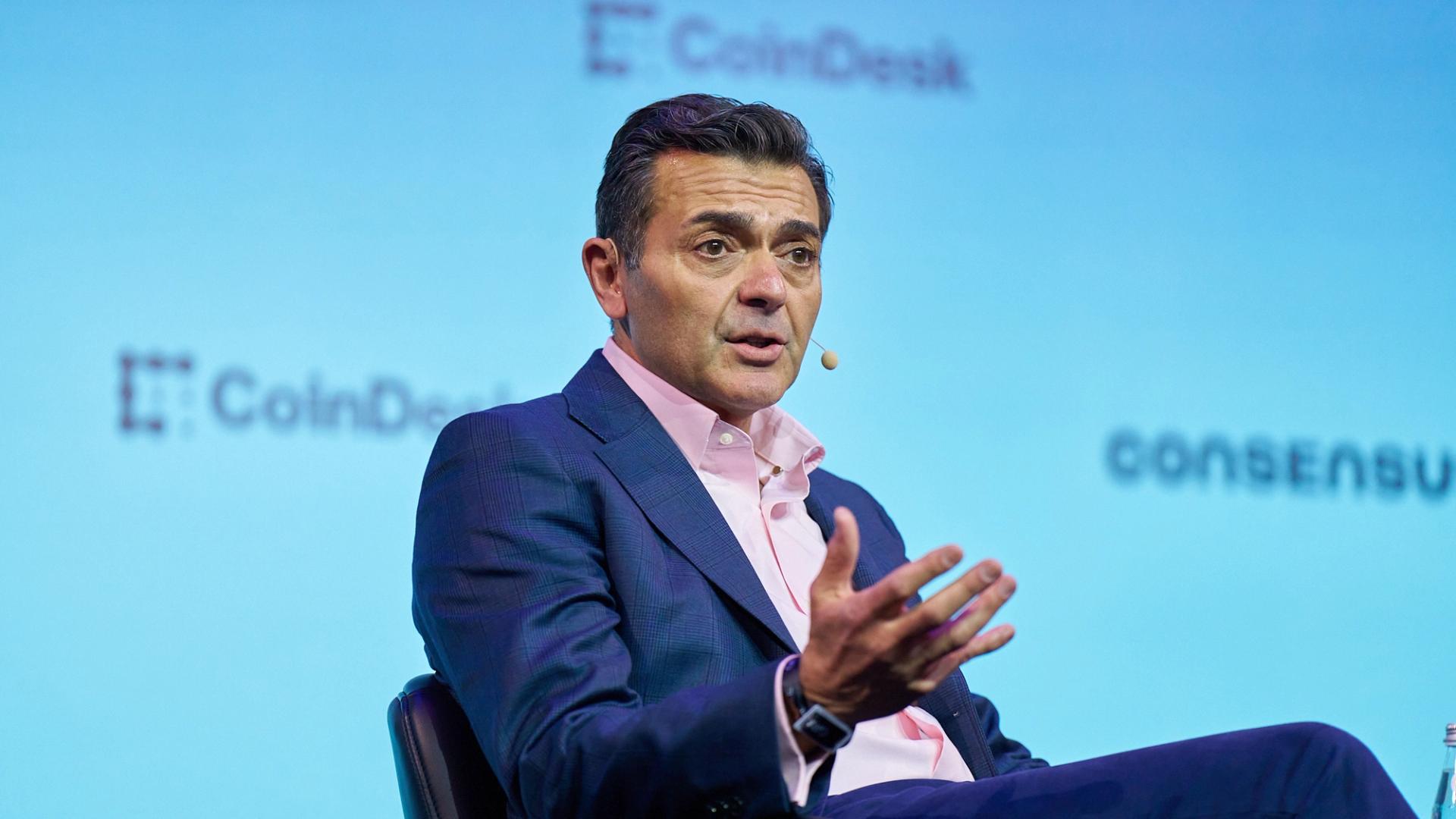
A Watershed Moment for Wall Street and Blockchain
The Depository Trust & Clearing Corporation (DTCC), the linchpin of post-trade market infrastructure for the global financial markets, has officially moved tokenized securities into live production trading. This isn't merely another pilot program or a sandbox experiment; it's a monumental leap, signaling a profound and irreversible shift in how Wall Street operates. The DTCC's decision to integrate blockchain technology for critical financial operations marks a watershed moment, potentially redefining the bedrock infrastructure of capital markets and accelerating the mainstream adoption of digital assets within traditional finance.
For decades, the DTCC has stood as the central clearinghouse for equities and other securities in the U.S., processing trillions of dollars in transactions daily. Its function is to reduce risk, increase efficiency, and provide market transparency. By embracing tokenized securities in a live environment, the DTCC is not just experimenting with a new technology; it is actively demonstrating a commitment to modernizing the very plumbing of Wall Street, moving towards a future that promises unparalleled efficiency, transparency, and resilience.
Understanding the Significance of Tokenized Securities
At its core, a tokenized security is a digital representation of a traditional asset, such as a stock, bond, or fund, issued and managed on a blockchain. This digital wrapper imbues traditional assets with the inherent advantages of blockchain technology: programmability, immutability, atomic settlement, and fractional ownership. Until now, the post-trade lifecycle — clearance, settlement, and custody — has been a multi-day process fraught with intermediaries, manual reconciliation, and inherent counterparty risks. The move to tokenized securities, especially through a central entity like DTCC, aims to dismantle these inefficiencies.
The DTCC's initiative, likely leveraging private or permissioned blockchain networks, demonstrates a pathway to real-time gross settlement (RTGS) or near-instantaneous settlement (T+0). This drastically reduces settlement risk, as the transfer of assets and payment can occur simultaneously and irrevocably. Furthermore, by consolidating record-keeping onto a distributed ledger, the need for numerous intermediaries and redundant reconciliation processes can be significantly diminished, leading to substantial cost savings and operational streamlining for financial institutions.
Reshaping Wall Street's Backend: Efficiency, Transparency, and Risk Reduction
As a Senior Crypto Analyst, I view this development as a profound validation of blockchain's enterprise-grade capabilities, extending far beyond cryptocurrencies. The implications for Wall Street's backend infrastructure are transformative:
- Enhanced Efficiency: The current multi-day settlement cycle (T+2 in the U.S.) introduces capital lock-up and market risk. Tokenization, when combined with blockchain, allows for near-instantaneous, atomic settlement, freeing up capital faster and optimizing liquidity across the financial system.
- Reduced Operational Costs: By automating many manual processes, reducing reconciliation efforts, and potentially streamlining regulatory reporting through transparent, immutable ledgers, financial institutions can anticipate significant cost reductions.
- Increased Transparency: A shared, immutable ledger provides a single source of truth for all participants, enhancing transparency and simplifying auditing and compliance checks.
- Mitigated Risk: Atomic settlement eliminates counterparty risk, as assets and payments are exchanged simultaneously. The immutability of the blockchain also reduces the risk of fraud or manipulation.
- Programmability: Tokenized securities can embed complex business logic directly into the asset, enabling automated corporate actions, dividend distribution, and compliance checks, further reducing manual intervention.
Challenges and the Path Forward
While the DTCC's move is a monumental step, the road ahead is not without its challenges. The integration of blockchain into existing, deeply entrenched legacy systems is complex, requiring careful interoperability solutions. Regulatory frameworks, while evolving, need further clarity and harmonization across jurisdictions to support the widespread adoption of tokenized securities. Furthermore, the scalability and security of these permissioned blockchain networks must continuously meet the rigorous demands of global financial markets, handling immense transaction volumes with ironclad security.
Moreover, questions of industry-wide standardization, digital identity management, and the legal finality of on-chain transactions remain critical areas requiring ongoing collaboration between financial institutions, technology providers, and regulators. The DTCC's leadership in this space will be crucial in setting best practices and fostering an environment conducive to innovation.
A Glimpse into the Future of Finance
This development signifies a definitive convergence of traditional finance (TradFi) and the emerging world of digital assets. It positions blockchain not as a disruptive fringe technology but as a foundational layer for the next generation of financial infrastructure. Institutional adoption of tokenization, spearheaded by giants like the DTCC, will likely pave the way for a more integrated, efficient, and resilient global financial system.
We are witnessing the early stages of a profound transformation, where the speed and innovation of blockchain technology meet the stability and regulatory rigor of established financial markets. The DTCC's live production trades are not just a technical achievement; they are a strong declaration that the future of Wall Street's infrastructure will be built on the principles of decentralization, transparency, and programmability inherent in blockchain. This milestone will undoubtedly catalyze further investment and innovation, pushing the financial industry towards a truly digital future.