Remixpoint's Strategic Reshuffle: A Microcosm of Institutional Crypto Evolution
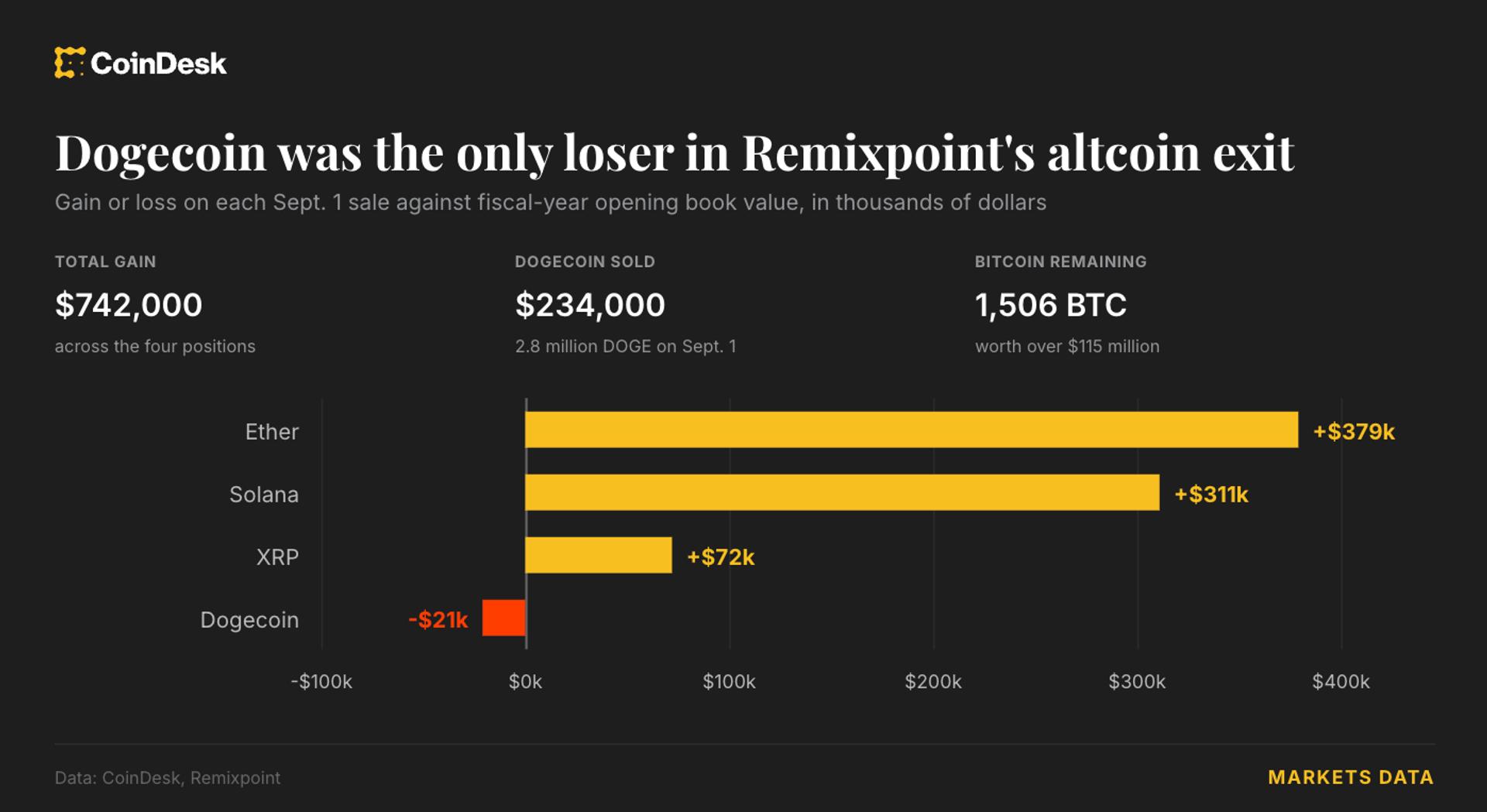
In a move that offers a potent snapshot of evolving institutional sentiment within the crypto landscape, Japan-listed firm Remixpoint has completed a significant reshuffling of its digital asset portfolio. While booking healthy gains on prominent altcoins such as Ethereum (ETH), Solana (SOL), and XRP, the firm's strategic pivot notably saw Dogecoin (DOGE) sold at a loss relative to its fiscal-year opening value. This deliberate consolidation of holdings into Bitcoin (BTC) underscores a maturing approach to crypto investment, prioritizing established value and foundational assets over speculative, meme-driven plays.
Remixpoint, a company with diverse interests including an energy business and a crypto exchange (BITPOINT Japan), operates within a highly regulated environment. Its actions, therefore, often serve as a bellwether for how more traditional financial entities are viewing and integrating digital assets. The decision to offload specific altcoins – particularly a meme coin like Dogecoin – while cementing conviction in Bitcoin, provides invaluable insights into institutional risk assessment, valuation methodologies, and long-term strategic positioning in the volatile crypto markets.
Dogecoin's Peculiar Underperformance: A Red Flag for Institutional Portfolios
The most striking revelation from Remixpoint's portfolio adjustment is Dogecoin's status as the sole losing bet. While the broader market has seen significant rallies in various altcoins, DOGE's inability to maintain or increase its value for an institutional holder like Remixpoint highlights a fundamental divergence in perception. Dogecoin, born as a joke, has primarily derived its value from viral social media trends, celebrity endorsements (most notably from Elon Musk), and speculative retail interest rather than inherent technological utility or a robust development ecosystem.
For an institution, the lack of a clear use case, limited developer activity compared to its peers, and its extreme price sensitivity to external, non-fundamental factors make it an inherently risky proposition. The decision to sell DOGE below its entry point suggests that Remixpoint's analysts likely concluded that the meme coin's risk-reward profile no longer aligned with their strategic objectives, even amidst a generally bullish market for other altcoins. This move serves as a stark reminder that institutional capital often seeks demonstrable value and sustainability, aspects where pure meme coins typically fall short.
The Altcoin Divide: Utility and Ecosystems Over Pure Speculation
In contrast to Dogecoin's performance, Remixpoint's gains on Ethereum, Solana, and XRP illustrate a more nuanced and selective approach to altcoin exposure. These assets, despite their own periods of volatility, possess distinct value propositions and robust ecosystems that appeal to institutional investors:
- Ethereum (ETH): As the dominant smart contract platform, Ethereum underpins a vast decentralized finance (DeFi) ecosystem, NFTs, and a thriving developer community. Its ongoing technical upgrades (e.g., The Merge, sharding) demonstrate a clear path towards scalability and efficiency, making it a cornerstone for Web3 development.
- Solana (SOL): Renowned for its high throughput and low transaction costs, Solana has emerged as a formidable competitor in the Layer 1 space, attracting significant developer talent and DApp deployment across DeFi, gaming, and NFTs. Its technological advancements offer a compelling case for future growth.
- XRP: Despite historical regulatory challenges, XRP maintains a niche in cross-border payments, offering fast and low-cost transactions. Its enterprise focus and established partnerships continue to attract interest from institutions looking to optimize global payment flows.
The ability of Remixpoint to generate profits from these assets, even as they trim their altcoin exposure, indicates a sophisticated understanding of which projects offer genuine utility, innovation, and potential for long-term value accretion versus those driven purely by hype.
Bitcoin's Enduring Appeal: The Institutional Bedrock
The ultimate concentration of Remixpoint's crypto holdings into Bitcoin reinforces BTC's role as the undisputed “digital gold” and the preferred foundational asset for institutional portfolios. Bitcoin's scarcity, decentralized nature, unparalleled security, and status as the first and most liquid cryptocurrency make it a compelling store of value, especially in an environment of macroeconomic uncertainty.
For a regulated firm like Remixpoint, the strategic pivot to Bitcoin is likely driven by several factors: its comparatively lower volatility than most altcoins, increasing institutional adoption (e.g., spot ETFs in the US), global recognition, and its position as the de facto entry point for traditional finance into the crypto space. It represents a de-risking strategy, shifting from more speculative altcoin plays to the most established and robust asset in the digital economy. This move aligns with a broader trend of institutions seeking stability and long-term capital preservation within their digital asset allocations.
Broader Market Implications and Future Outlook
Remixpoint's strategic divestment and consolidation speak volumes about the evolving maturity of institutional crypto investment. It suggests a more discerning market where fundamental value, technological utility, and a clear path to adoption are increasingly prioritized over transient speculative narratives. While retail investors may continue to find opportunities in meme coins, regulated firms are clearly demonstrating a preference for assets that offer robust underlying technology and a defensible value proposition.
This trend could lead to a further bifurcation in the crypto market: a solidifying 'blue-chip' tier led by Bitcoin and select utility-focused altcoins, and a more speculative 'high-risk, high-reward' tier for assets like Dogecoin. As the crypto market continues to professionalize, we can expect more institutions to adopt similar strategies, carefully pruning their portfolios to optimize for long-term growth and stability, with Bitcoin firmly at the core of their digital asset allocations.