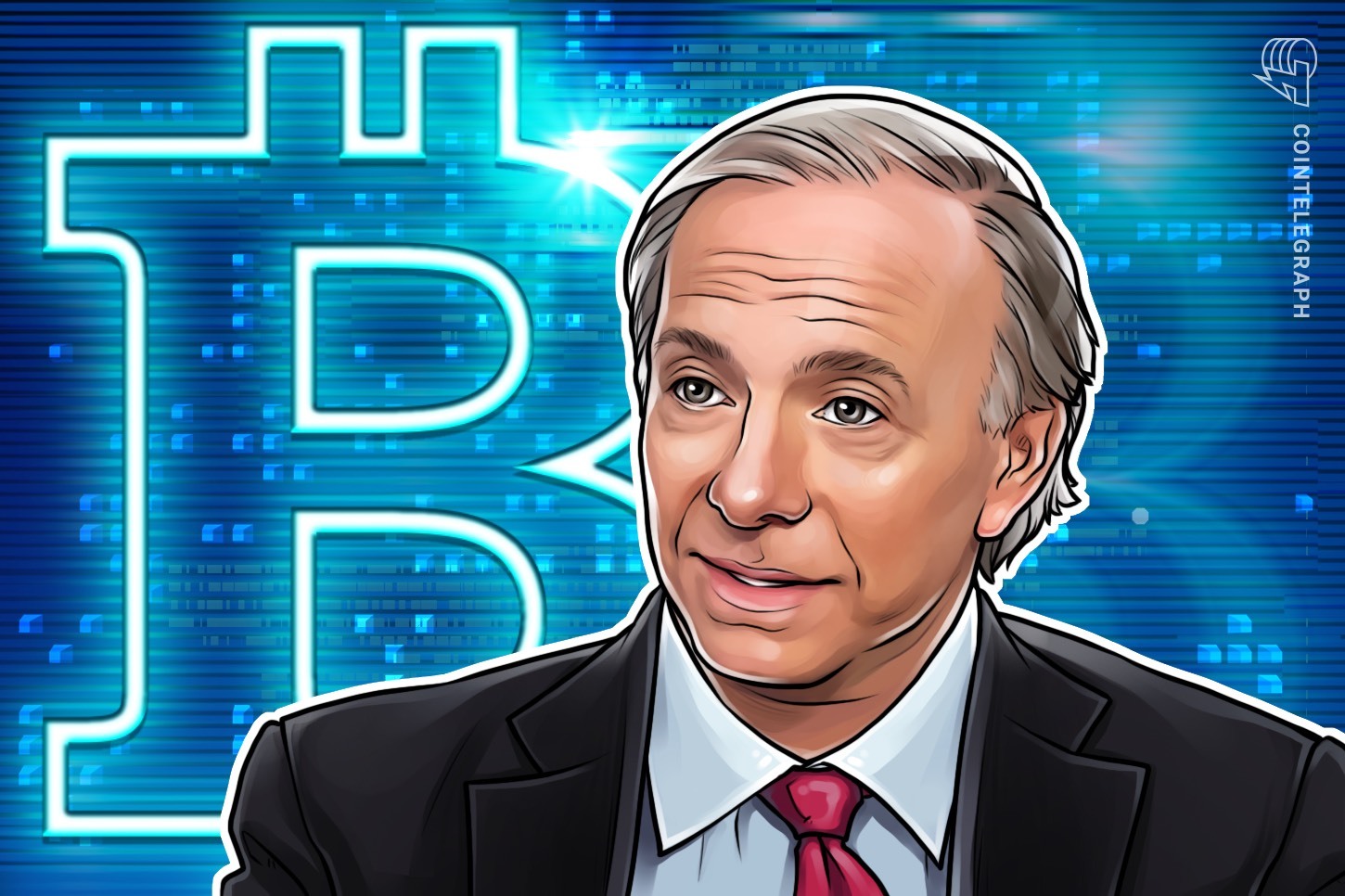
Ray Dalio's Pivotal Endorsement: A Sign of Shifting Tides
In a move that underscores the growing apprehension within traditional finance circles regarding global economic stability, hedge fund titan Ray Dalio has publicly recommended investors allocate 'a bit' of their portfolios to Bitcoin, alongside gold. The founder of Bridgewater Associates, with an estimated net worth exceeding $15 billion, positioned these assets as crucial hedges against a potential debt crisis and the pervasive debasement of fiat currencies. This isn't merely a casual observation; it's a profound statement from a figure synonymous with macro-economic foresight and disciplined portfolio strategy, signaling a significant evolution in how mainstream financial elites perceive digital assets.
Dalio's recommendation arrives amidst a backdrop of escalating national debts, unprecedented monetary easing, and persistent inflationary pressures across major economies. His long-held philosophy of diversification and hedging against 'money printing' has traditionally centered on gold. His latest pronouncement, however, explicitly elevates Bitcoin into this exclusive category of alternative assets, suggesting a fundamental re-evaluation of its role in a robust investment framework. As a Senior Crypto Analyst, I view this as a powerful legitimizing force for Bitcoin, particularly coming from someone whose insights have shaped global investment strategies for decades.
The Debt Crisis Thesis: Why Traditional Bonds are Failing
Dalio’s core argument rests on the impending fragility of government bonds, historically considered the bedrock of conservative portfolios. He contends that massive government spending and quantitative easing have inflated debt levels to unsustainable highs, forcing central banks to maintain artificially low interest rates. This environment, in turn, makes holding cash or low-yielding bonds a losing proposition, as their real returns are eroded by inflation, effectively acting as a 'tax' on savers. In his words, 'cash is trash' when central banks are actively trying to devalue currency to manage debt burdens.
For Dalio, the solution lies in diversifying away from these traditional 'safe' assets and into stores of value that cannot be arbitrarily inflated by sovereign entities. Gold has served this role for millennia, acting as a natural counter to fiat currency debasement. Bitcoin, in this modern context, presents a similar, albeit digital, proposition. Its fixed supply cap of 21 million coins and decentralized nature protect it from the monetary policy interventions that plague traditional currencies, making it an attractive digital alternative in an increasingly uncertain economic landscape.
Bitcoin and Gold: A Complementary Duo for a Diversified Portfolio
While both Bitcoin and gold offer protection against fiat devaluation, their characteristics are distinctly different, making them complementary rather than competitive in Dalio's view. Gold benefits from its historical pedigree, universal acceptance, and physical tangibility, appealing to investors seeking a timeless hedge. Bitcoin, conversely, represents the cutting edge of financial innovation, offering superior portability, divisibility, and an immutable digital ledger. Its younger age and higher volatility are often cited as risks, yet its rapid adoption and burgeoning ecosystem showcase its potential for significant long-term growth and eventual stability.
The hedge fund guru's advice to buy 'a bit' of Bitcoin is particularly telling. It acknowledges Bitcoin's volatility and relative nascency compared to gold, yet still recognizes its unique advantages. This measured approach aligns with sound risk management principles, suggesting a small, albeit meaningful, allocation that can provide asymmetric upside potential while minimizing overall portfolio risk. For sophisticated investors, this isn't about going 'all-in' but rather about incorporating a strategic hedge that future-proofs their wealth against systemic financial risks.
The Institutional Awakening: Dalio's Influence on Mainstream Adoption
Dalio's public pivot on Bitcoin is not an isolated event; it's part of a broader trend of institutional awakening to digital assets. When a figure of his stature, who previously expressed skepticism, openly advocates for Bitcoin, it sends a powerful signal across the traditional finance world. This legitimization helps de-risk Bitcoin in the eyes of other conservative investors, fund managers, and even corporate treasuries. It facilitates crucial conversations within investment committees that might otherwise dismiss cryptocurrencies as speculative or niche.
We have already witnessed an influx of institutional capital into Bitcoin and the broader crypto market, driven by similar concerns about inflation and the search for uncorrelated assets. Dalio’s latest remarks will undoubtedly accelerate this trend, prompting more comprehensive due diligence and eventual allocations from family offices, endowments, and pension funds. This shift isn't just about price appreciation; it's about the fundamental integration of digital assets into the global financial architecture.
Navigating the Future: Implications for Investors
For investors, Dalio’s message is clear: the traditional playbook needs updating. Relying solely on conventional asset classes, particularly bonds, in an era of potential debt crises and rampant money printing, is increasingly perilous. Diversification is paramount, and innovative assets like Bitcoin are no longer fringe investments but essential components of a forward-looking strategy.
As a Senior Crypto Analyst, my advice resonates with Dalio's prudence: while Bitcoin offers unprecedented opportunity, it demands careful consideration of portfolio weighting, risk tolerance, and long-term vision. The 'bit' he suggests is a starting point, a recognition of Bitcoin's growing role as a hedge and store of value in an evolving global economy. Investors should research diligently, understand the underlying technology, and view Bitcoin not just as a speculative play, but as a strategic asset class critical for navigating the macroeconomic challenges that Dalio so presciently highlights. The future of finance will undoubtedly feature digital assets prominently, and Dalio's latest insights provide a powerful blueprint for preparing for that reality.