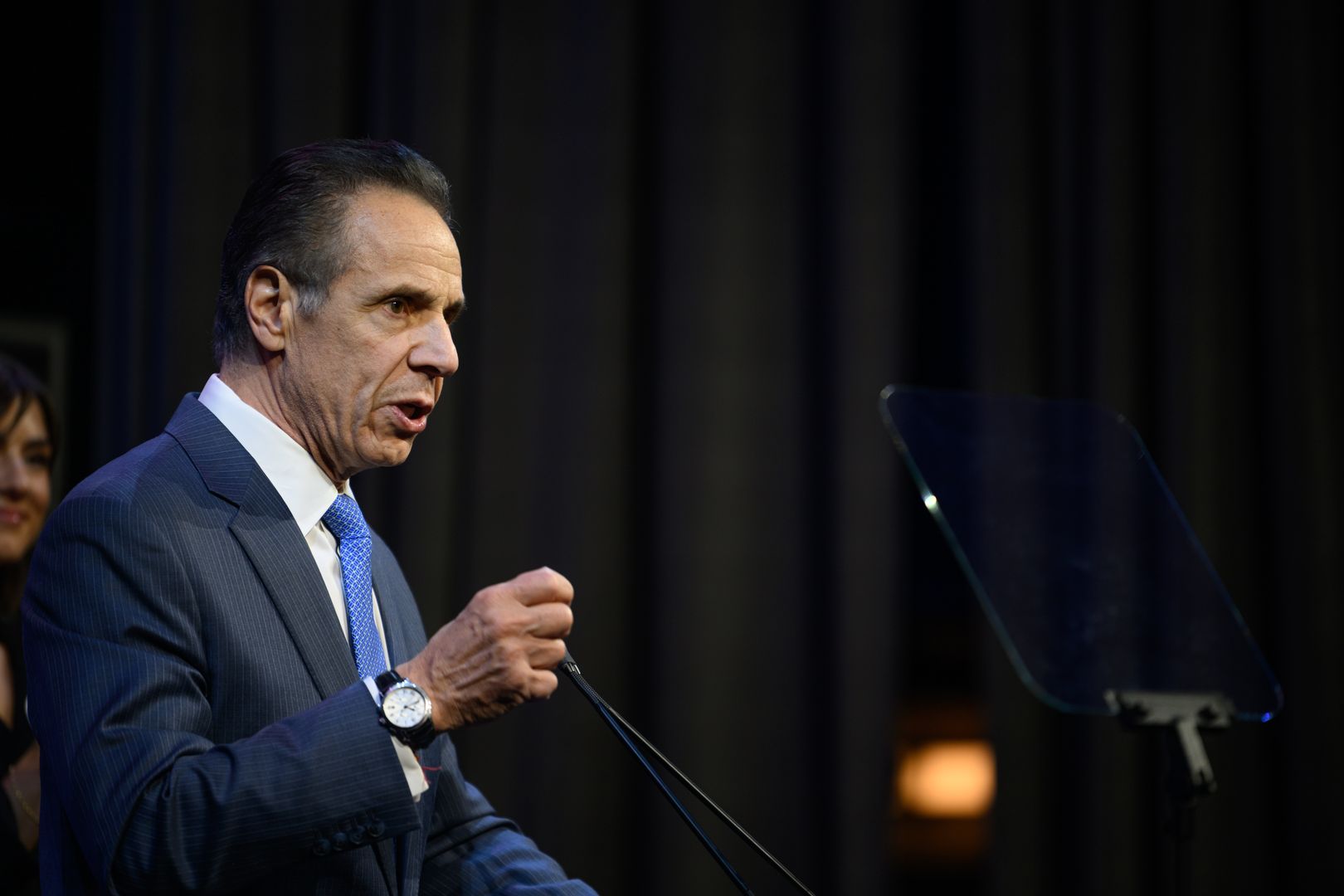
Former New York Governor Andrew Cuomo has issued a stark warning to U.S. policymakers: the nation risks falling significantly behind in the burgeoning digital asset space without immediate and decisive action on regulatory clarity. His recent remarks, specifically advocating for the passage of the CLARITY Act, underscore a growing chorus of voices from traditional finance, politics, and the crypto industry itself, all echoing the urgent need for a comprehensive framework to integrate cryptocurrencies with traditional markets.
Cuomo's Clarion Call: The Urgency of Regulatory Clarity
“It has to pass,” Cuomo stated unequivocally, referring to the CLARITY Act. This isn't merely a political endorsement; it's a recognition of the strategic imperative facing the United States. For years, the U.S. has grappled with a fragmented and often contradictory approach to digital asset regulation, fostering an environment of uncertainty that stifles innovation and deters institutional participation. Cuomo’s intervention, given his background in governance and deep understanding of New York’s role as a global financial hub, adds significant weight to the argument that a lack of clear rules isn't just an inconvenience—it's an existential threat to America’s leadership in the global economy.
The sentiment that the U.S. is "falling behind" is not new, but it is gaining critical momentum as other jurisdictions forge ahead with bespoke regulatory frameworks. While the U.S. Treasury, SEC, and CFTC engage in a multi-agency tug-of-war over jurisdiction, nations like the European Union (with its landmark MiCA regulation), the UAE, Singapore, and the UK are actively developing and implementing comprehensive rules. These frameworks are designed not just to mitigate risks but, crucially, to foster innovation and attract crypto businesses and investment. The current U.S. strategy of "regulation by enforcement" has created a chilling effect, prompting many promising startups and established players to consider relocating or expanding operations overseas.
Deconstructing the CLARITY Act and Its Promise
At the heart of Cuomo's warning lies the CLARITY Act – a proposed piece of legislation designed to provide much-needed definitional guidance for digital assets. The acronym CLARITY itself – broadly interpreted as seeking "Clarity for Digital Assets Regulatory Imbalance" – speaks to its core mission: to resolve the longstanding jurisdictional ambiguity between the Securities and Exchange Commission (SEC) and the Commodity Futures Trading Commission (CFTC). Currently, many digital assets exist in a legal grey area, with the SEC asserting jurisdiction over most tokens as unregistered securities, while the CFTC views certain prominent cryptocurrencies, like Bitcoin and Ethereum, as commodities. This fundamental disagreement creates immense operational hurdles for businesses, investors, and developers alike.
A primary objective of the CLARITY Act is to establish clear criteria for distinguishing between digital assets that constitute securities and those that are commodities or other types of assets. By providing a statutory definition and perhaps a new regulatory framework or assigning clear oversight to one agency (or a new hybrid body), the Act aims to eliminate the current regulatory arbitrage and give innovators a predictable legal environment. This clarity is not merely academic; it’s fundamental to enabling the "linking crypto and traditional markets." Without it, traditional financial institutions, bound by stringent compliance requirements, are hesitant to fully embrace digital assets, fearing unknown liabilities and regulatory blowback.
The Stakes: Why Integration Matters for U.S. Competitiveness
The integration of crypto and traditional markets is not just about institutional profit or market expansion; it’s about the future of financial infrastructure. Blockchain technology, the underpinning of cryptocurrencies, offers unprecedented efficiencies in settlement, clearing, and asset tokenization. If the U.S. fails to provide a legal and regulatory structure that facilitates this integration, it risks ceding its long-held dominance in global finance. Capital will flow to jurisdictions that offer certainty, talent will migrate, and the foundational innovations of Web3 will blossom elsewhere.
From an investor protection standpoint, clarity is equally crucial. The current opaque environment makes it difficult for retail and institutional investors to understand the risks and protections associated with various digital assets. A clear regulatory framework would not only foster trust but also enable the development of regulated products and services that offer robust safeguards, reducing instances of fraud and market manipulation. It would allow for the robust development of spot market ETFs, regulated lending platforms, and other financial instruments that can responsibly bridge the gap between nascent crypto markets and mature traditional ones.
Challenges and the Path Forward
Despite the growing consensus on the need for action, passing comprehensive crypto legislation like the CLARITY Act faces significant hurdles. The political landscape is deeply polarized, and reaching bipartisan agreement on complex financial regulation is notoriously difficult. Furthermore, powerful lobbying interests from both traditional finance and established crypto players often have differing visions for the future regulatory structure. There’s also the inherent complexity of the technology itself, which often outpaces legislators' understanding and rulemaking capabilities.
As a Senior Crypto Analyst, my perspective is that Cuomo’s warning is not an overstatement but a timely reminder of a critical juncture. The U.S. cannot afford to continue with its piecemeal approach. What's needed is not just a definition for digital assets but a holistic vision that encompasses consumer protection, market integrity, financial stability, and fostering innovation. The CLARITY Act represents a significant step in this direction, but its passage will require a concerted effort from policymakers to rise above partisan divides and recognize the long-term economic implications for the nation.
The window of opportunity for the U.S. to establish itself as a global leader in digital asset innovation is rapidly closing. The longer legislative paralysis persists, the more entrenched alternative regulatory regimes will become, potentially locking the U.S. into a permanent disadvantage. Cuomo’s call should serve as a wake-up call, urging lawmakers to prioritize thoughtful, forward-looking regulation that can secure America’s future in the digital economy.