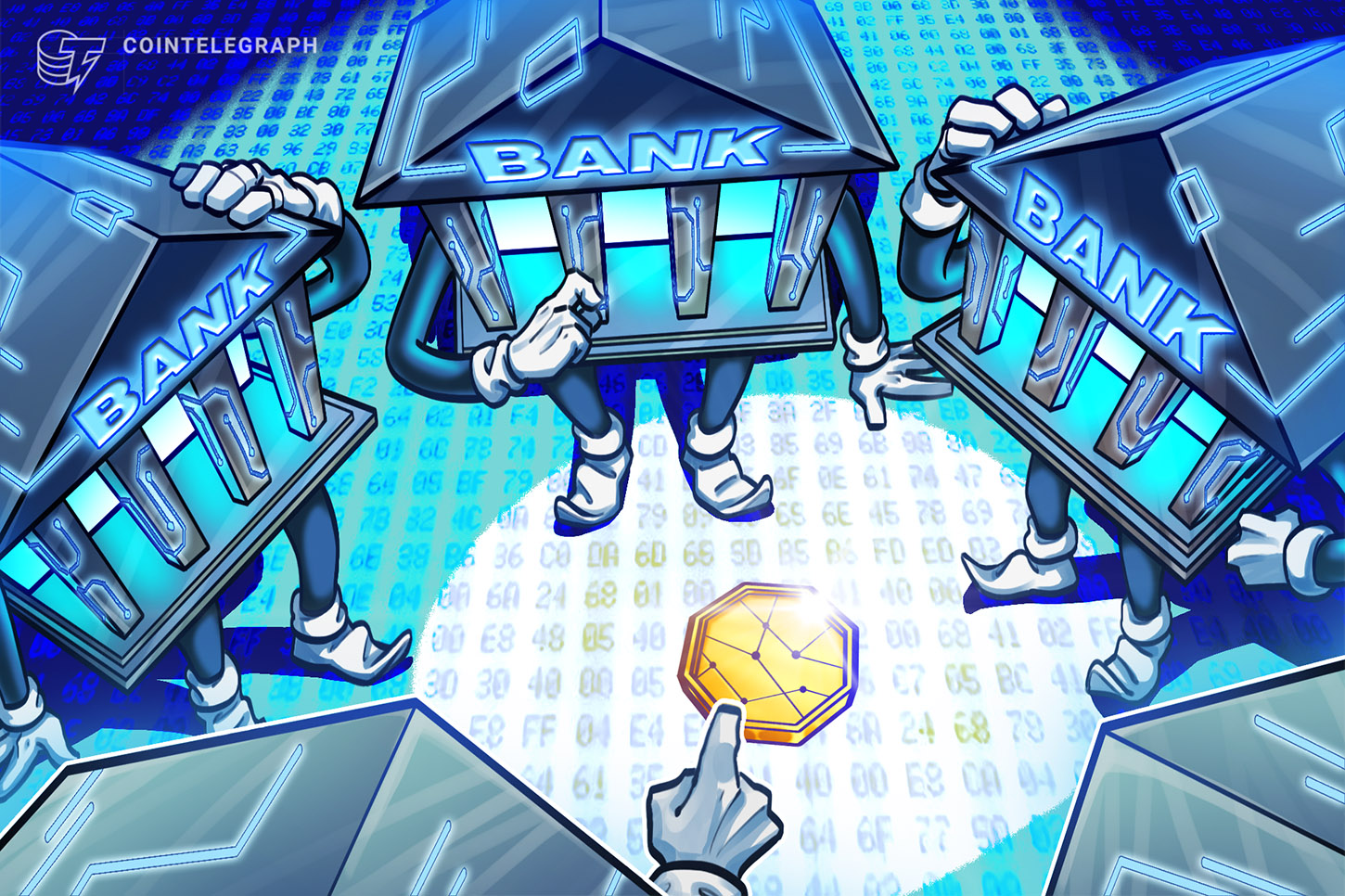
The Shifting Sands of Crypto Profitability: A Banking Paradigm Emerges
For years, the crypto industry has proudly championed decentralization, disintermediation, and a radical departure from traditional finance. Yet, a nuanced and undeniably significant shift is underway. As highlighted by the recent discourse, crypto's biggest businesses are increasingly looking less like rebellious tech startups and more like established financial institutions. The core profit drivers are evolving, converging with time-honored banking models centered around stablecoin reserves, tokenized funds, Treasury income, and sophisticated balance sheet management. This convergence signals not just a maturation of the digital asset space but a fundamental re-evaluation of its operational and strategic blueprint.
Stablecoins: The New Frontier for Interest-Bearing Deposits
At the heart of this transformation lies the stablecoin ecosystem. Stablecoins, designed to maintain a stable value against a fiat currency like the US dollar, have become the de facto reserve currency of the crypto world. Issuers of these digital assets, such as Circle (USDC) and Tether (USDT), back their tokens with vast reserves, predominantly held in highly liquid, low-risk assets like U.S. Treasury bills, short-term government bonds, and cash equivalents. The yield generated from these underlying assets is substantial, particularly in an environment of elevated interest rates. This mechanism mirrors the traditional banking model where deposits (stablecoin holdings) are leveraged to acquire interest-bearing assets, with the spread forming a significant portion of the issuer's profit. As global interest rates remain buoyant, the 'risk-free' yield on stablecoin reserves has transformed from a modest income stream into a primary profit engine, enticing more firms to explore stablecoin issuance or management as a core business.
Tokenized Funds: Bridging DeFi and TradFi Wealth Management
Beyond stablecoins, the concept of 'tokenized funds' represents another powerful vector of convergence. Crypto firms are no longer just dealing in native digital assets; they are actively digitizing traditional financial instruments. This trend involves converting shares of money market funds, government bonds, or even real estate into blockchain-based tokens. Major players, from traditional finance behemoths like BlackRock with its BUIDL fund to crypto-native entities like Ondo Finance, are pioneering this space. By tokenizing these assets, crypto platforms can offer their users fractional ownership, instant settlement, and 24/7 trading – benefits typically associated with the crypto world – while providing exposure to the stable, regulated yields of traditional finance. This effectively positions crypto firms as digital asset managers, offering services akin to wealth management divisions of traditional banks, catering to a sophisticated investor base seeking yield and liquidity without necessarily delving into the volatility of cryptocurrencies like Bitcoin or Ethereum.
Treasury Income and Strategic Balance Sheet Management
The practice of managing a corporate treasury, a cornerstone of traditional banking, is rapidly being adopted and refined within the crypto industry. Crypto companies, holding significant capital in various digital and fiat assets, are increasingly optimizing their balance sheets for yield and risk management. This involves strategically deploying operational capital into safe, short-term instruments to generate 'treasury income,' much like a bank's treasury department. Firms are actively managing their exposure to interest rate fluctuations, credit risk, and liquidity demands. They are building sophisticated internal systems to analyze market conditions, forecast cash flows, and make informed decisions about where to park their capital for maximum return with acceptable risk. This shift from simply holding assets to actively managing them for profit underscores a growing financial sophistication within the crypto sector, moving it firmly into the realm of structured finance.
Regulatory Implications and the 'Shadow Banking' Debate
This evolving landscape presents a double-edged sword. On one hand, it legitimizes the crypto industry, attracting institutional capital and fostering greater stability. On the other hand, it inevitably draws the gaze of regulators. As crypto firms increasingly resemble financial intermediaries, offering deposit-like products (stablecoins), asset management services (tokenized funds), and balance sheet optimization, they enter what some might term a 'shadow banking' territory. Regulators are grappling with how to apply existing frameworks or create new ones for these hybrid entities. The concern is that if these unregulated, yet systemically important, crypto financial institutions falter, they could pose risks similar to those seen in traditional financial crises. The path forward will undoubtedly involve intense regulatory scrutiny, likely leading to a more formalized and supervised environment, blurring the lines further between crypto and conventional finance.
The Inevitable Convergence: A Future of Hybrid Financial Models
The convergence of crypto and banking isn't a speculative future; it's a present reality. The drivers – stablecoin reserves, tokenized funds, Treasury income, and sophisticated balance sheet management – are proven profit models borrowed from traditional finance. This evolution suggests that the future of finance may not be a complete overthrow of the old guard by the new, but rather a profound integration. We are witnessing the emergence of hybrid financial models that leverage the efficiency and innovation of blockchain technology while adopting the risk management and profit-generating strategies of established financial institutions. While some purists may lament the 'banking' of crypto, this pragmatic shift could ultimately pave the way for a more robust, resilient, and widely adopted digital financial ecosystem, albeit one that acknowledges and strategically incorporates the lessons learned from centuries of traditional banking.