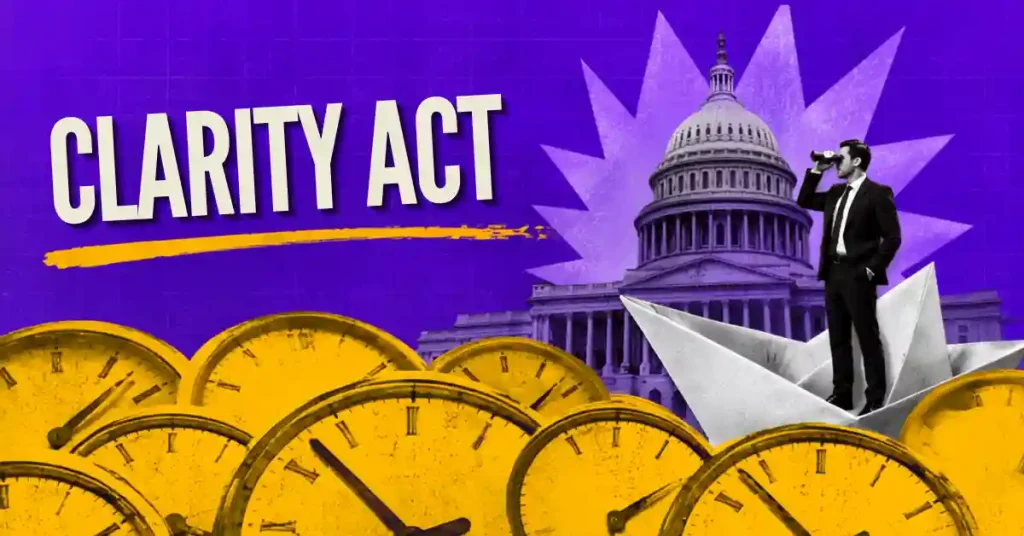
A Critical Setback for Crypto Regulatory Clarity
In a stark assessment that reverberated across the digital asset industry, Katherine Kirkpatrick Bos, Head of Legal at Chainlink, minced no words regarding the latest blow to the proposed Clarity Act. Following the House of Representatives' decision to cancel the final two weeks of its September legislative schedule, Kirkpatrick Bos declared the move 'devastating for Clarity.' This sentiment underscores a growing frustration within the crypto sector as efforts to establish a clear regulatory framework in the United States continue to face significant hurdles, threatening innovation and market stability.
The legislative calendar in Washington D.C. operates on tight deadlines, especially as Congress approaches election cycles and recess periods. The abrupt cancellation of legislative weeks effectively shrinks the already narrow window for major bills like the Clarity Act to advance. For a piece of legislation designed to bring much-needed legal certainty to an industry operating in a persistent gray area, such a delay is not merely inconvenient; it is, as Kirkpatrick Bos suggests, genuinely devastating. It pushes the prospect of meaningful progress further into an uncertain future, potentially past the point where it can effectively address current market dynamics.
Understanding the Stakes: What is the Clarity Act?
At its core, the Clarity Act seeks to resolve fundamental questions surrounding the classification of digital assets in the U.S. – primarily, whether they should be deemed securities, commodities, or a new category altogether. The existing regulatory landscape, characterized by conflicting interpretations from agencies like the Securities and Exchange Commission (SEC) and the Commodity Futures Trading Commission (CFTC), has led to a 'regulation by enforcement' approach. This method involves agencies taking action against crypto firms for alleged violations of existing laws, rather than providing proactive, explicit guidelines for compliance.
The Clarity Act aimed to provide a statutory framework, delineating clearer jurisdictional lines and offering definitions that would allow legitimate crypto projects to operate without fear of retrospective enforcement actions. For innovators, investors, and consumers alike, its passage would represent a monumental step towards reducing legal ambiguities, fostering a predictable environment for growth, and enhancing consumer protection through transparent rules rather than reactive litigation. Its delay, therefore, leaves the industry exactly where it has been: in a perpetual state of uncertainty, vulnerable to enforcement actions, and hesitant to innovate within U.S. borders.
Implications for the Crypto Industry: Uncertainty Persists
The implications of this setback are far-reaching and multifaceted:
-
Stifled Innovation: Without clear rules, U.S. innovators are increasingly looking overseas. Companies that might otherwise build and grow within the U.S. are choosing jurisdictions with more favorable and predictable regulatory environments, leading to a potential 'brain drain' and loss of competitive edge for the American economy.
-
Investor Protection Remains Fuzzy: Paradoxically, the lack of clarity harms investor protection. When rules are vague, bad actors can exploit loopholes, and legitimate businesses struggle to provide the transparency that clear regulations would demand. Investors are left to navigate a market rife with FUD (fear, uncertainty, and doubt), often without the clear disclosures and protections that established financial markets provide.
-
Institutional Adoption Slows: Traditional financial institutions, which typically operate under stringent regulatory guidelines, remain hesitant to fully embrace digital assets without a robust legal framework. The Clarity Act's delay reinforces this caution, preventing the inflow of substantial capital and expertise that could further legitimize and mature the crypto market.
-
Continued 'Regulation by Enforcement': The status quo means the SEC, under Chairman Gensler, will likely continue its aggressive enforcement actions. While the agency asserts it is simply applying existing securities laws, the industry largely views this as an inadequate and harmful approach for novel technologies.
Chainlink's Unique Perspective and the Broader Landscape
As a decentralized oracle network, Chainlink plays a crucial role as foundational infrastructure for Web3, connecting smart contracts with real-world data and off-chain systems. For Chainlink, and indeed for all foundational protocols and decentralized applications (dApps) building on them, the clarity around token classification and operational legality is paramount. Ambiguity affects everything from developer confidence to integration partnerships and the ability to attract and retain talent. When an essential layer of the blockchain ecosystem expresses such grave concerns, it signals a systemic issue.
This delay isn't an isolated incident. It reflects a broader legislative struggle in Congress to coalesce around comprehensive crypto regulation. While other bills, such as the Financial Innovation and Technology for the 21st Century Act (FIT21) or stablecoin legislation, have shown promise, their paths forward are equally fraught with political division and legislative congestion. The inability of Congress to prioritize and pass these foundational bills highlights a concerning disconnect between the rapid pace of technological innovation and the slow grind of legislative action.
Is It Truly a 'Post-Clarity Era'? Navigating the Path Forward
When asked if the industry had entered a 'post-Clarity era,' Kirkpatrick Bos's immediate response of 'Devastating for Clarity' speaks volumes. While it might be premature to declare the demise of regulatory clarity efforts entirely, the current trajectory certainly signals a significant erosion of optimism. The window for legislative action before the next election cycle is shrinking, and with it, the likelihood of a comprehensive federal framework emerging in the near term.
So, what's next? The industry will likely double down on advocacy efforts, intensifying lobbying to educate lawmakers and push for future legislative opportunities. Companies may increasingly look to state-level regulations or even international jurisdictions for guidance and operational bases. The ongoing legal battles will continue to shape precedent through judicial interpretation, a slow and often inconsistent method of establishing law. Ultimately, the crypto industry must adapt to a prolonged period of regulatory ambiguity, continuing to innovate while navigating a challenging and uncertain legal landscape.
Conclusion: A Call for Urgency
Katherine Kirkpatrick Bos's 'devastating' assessment is a powerful wake-up call. The delay of the Clarity Act is more than just a procedural hiccup; it's a profound setback for an industry yearning for certainty, a blow to U.S. competitiveness, and a disservice to innovators and investors alike. As a senior crypto analyst, it's clear that the path to a robust, innovative, and secure digital asset market in the U.S. requires immediate and decisive legislative action. Without it, the promise of Web3 and decentralized technologies risks being realized elsewhere, leaving America behind in a critical technological revolution.
Featured News Partner: Coinpedia News