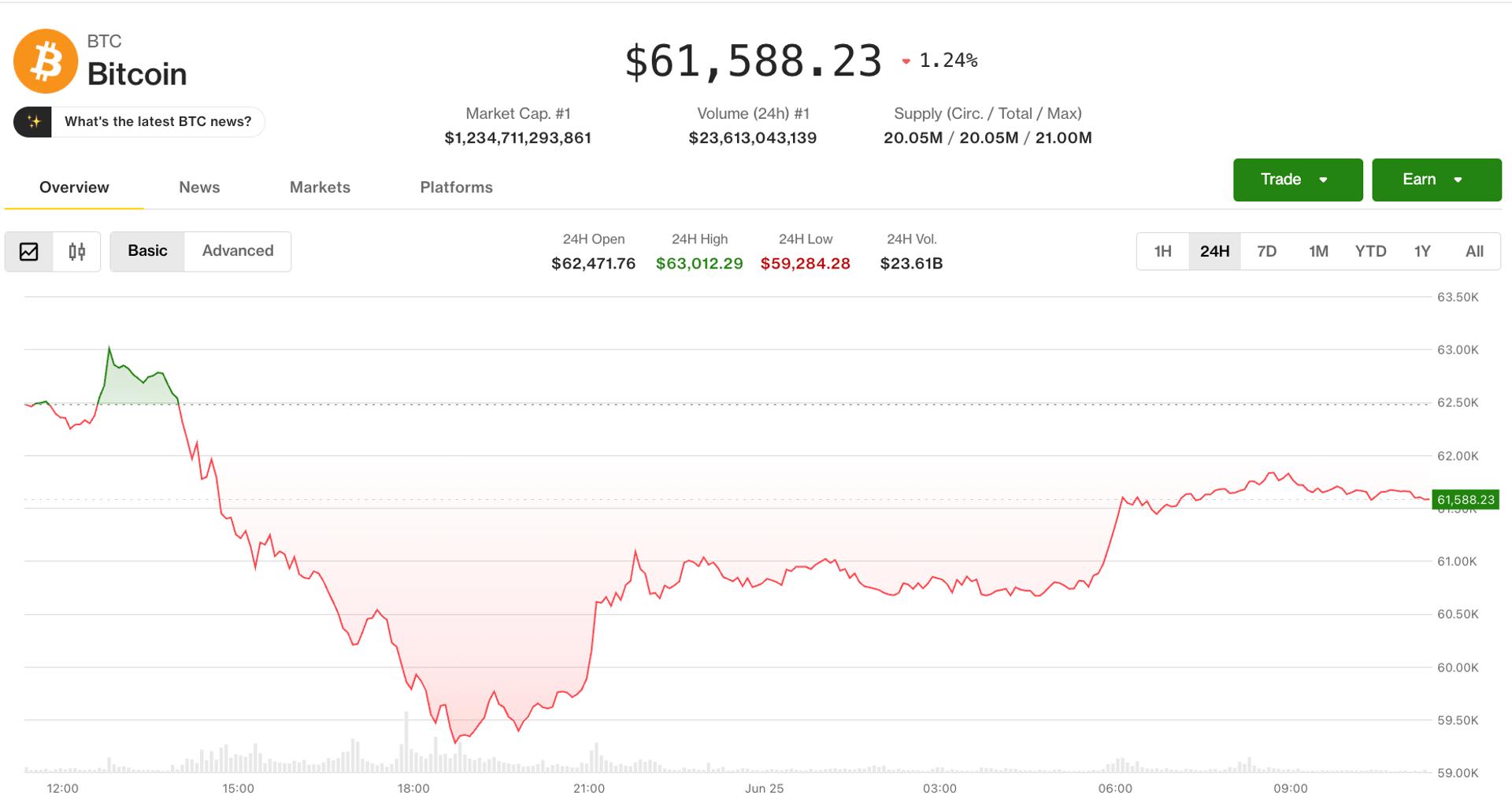
Crypto's Fleeting Bounce: Derivatives Scream Caution Amidst Equity-Driven Relief
The cryptocurrency market recently offered a glimmer of hope to beleaguered investors, with Bitcoin (BTC) and Ethereum (ETH) staging a noticeable relief rally, pulling themselves off multi-week lows. This uptick, largely mirroring a resurgence in U.S. equity markets, particularly tech stocks, provided a much-needed psychological boost. However, a deeper dive into the market's underlying mechanics reveals a more somber picture: persistent bearish signals emanating from derivatives markets and a telling negative Cumulative Volume Delta (CVD) suggest this rebound might be as fragile as it is fleeting. As Senior Crypto Analysts, our assessment indicates that while prices might be up, the fundamental market sentiment remains firmly rooted in caution, if not outright skepticism.
The Equity-Driven Lifeline: A Double-Edged Sword
The recent price action saw BTC reclaim the $27,000 mark and ETH push past $1,700, driven primarily by a broader appetite for risk assets following positive sentiment in traditional markets. This correlation, while familiar, highlights a crucial vulnerability. The crypto market's sensitivity to macro-economic indicators and the performance of U.S. equities—a trend that intensified through previous bear cycles—means that its rallies are often contingent on external factors rather than intrinsic strength. When global risk-on sentiment prevails, crypto benefits; when it falters, crypto often bears the brunt. This dependency suggests that the current rally is less a testament to newfound crypto demand and more a reflection of a transient shift in the broader financial landscape. The question then becomes: can crypto sustain this momentum if its foundations are external, or will it crumble once the macro tide inevitably turns?
Deciphering Bearish Derivatives Positioning
The derivatives market, a forward-looking barometer of investor sentiment, continues to flash amber and red. Across various instruments, the signs point to a pronounced lack of conviction among participants regarding a sustained uptrend:
- Futures Market Dynamics: Funding rates for perpetual futures, which represent the cost of holding a long position, have remained largely neutral or even dipped into negative territory at times. In a healthy rally, positive funding rates indicate strong demand for leverage on the long side. Their neutrality suggests that even as spot prices rise, short positions are not aggressively capitulating, and new long positions are not being opened with significant enthusiasm. Furthermore, the futures basis (the difference between futures prices and spot prices) has remained subdued, with some contracts even flirting with backwardation – a scenario where futures trade below spot, implying bearish expectations for future prices. This suggests that sophisticated traders are not betting on a continued ascent.
- Options Market Skew: Analysis of options open interest and implied volatility (IV) skew paints an even clearer picture. The demand for protective put options (bets on falling prices) continues to outpace that for call options (bets on rising prices). The IV for out-of-the-money (OTM) puts remains elevated relative to OTM calls, indicating that market participants are willing to pay a premium for downside protection. This persistent skew implies that despite the spot price recovery, many large players are either hedging existing long positions or outright betting on a future decline, reflecting deep-seated uncertainty and fear in the market.
This confluence of futures and options data strongly contradicts the apparent optimism of the spot price rally, suggesting that the 'smart money' is not buying into the narrative of a sustained recovery.
The Ominous Whisper of Negative Cumulative Volume Delta (CVD)
Perhaps one of the most telling indicators of the rally's fragility is the consistently negative Cumulative Volume Delta (CVD). CVD measures the net difference between market buy orders (aggressively lifting the ask) and market sell orders (aggressively hitting the bid). A negative CVD, even during a price ascent, signifies that aggressive selling pressure is outweighing aggressive buying pressure. In simpler terms, while prices may be moving up, a larger proportion of the volume contributing to that movement is coming from sellers initiating market orders, rather than buyers stepping in with conviction. This indicates a 'weak rally' where demand at current price levels is shallow, and price increases might be more a function of short covering or limited liquidity rather than genuine, sustained buying interest. The implication is profound: without true buying conviction, any upward movement is built on shaky ground and highly susceptible to reversal once selling pressure resumes or macro tailwinds dissipate.
Broader Market Headwinds and the Road Ahead
Beyond the derivatives data, several overarching macroeconomic factors continue to loom large, reinforcing the persistent bearish outlook. Global inflation concerns, the ongoing tightening monetary policies of central banks, and persistent regulatory uncertainties continue to cast a long shadow over risk assets, including cryptocurrencies. These headwinds provide a strong fundamental basis for the cautious positioning observed in derivatives markets.
For investors, this complex landscape demands a highly discerning approach. While the recent relief rally might tempt some to re-enter the market with gusto, the signals from derivatives and CVD serve as potent reminders of underlying structural weaknesses. A truly sustainable recovery would necessitate a significant shift in these metrics: funding rates turning consistently positive, options skew normalizing, and most crucially, a positive CVD indicating genuine, aggressive buying conviction. Until then, the current bounce should be viewed with extreme caution, and positions should be managed with robust risk mitigation strategies. The market has demonstrated its capacity for false dawns, and the current indicators suggest we may be experiencing yet another.
In conclusion, while the surface-level recovery of BTC and ETH has offered a temporary reprieve, the sophisticated insights from derivatives markets and volume delta analysis paint a picture of enduring fragility. The crypto market remains deeply influenced by broader economic currents, and until internal demand signals align with outward price movements, any rally is likely to be vulnerable to swift corrections. Investors are advised to remain vigilant and prioritize capital preservation over chasing fleeting gains.