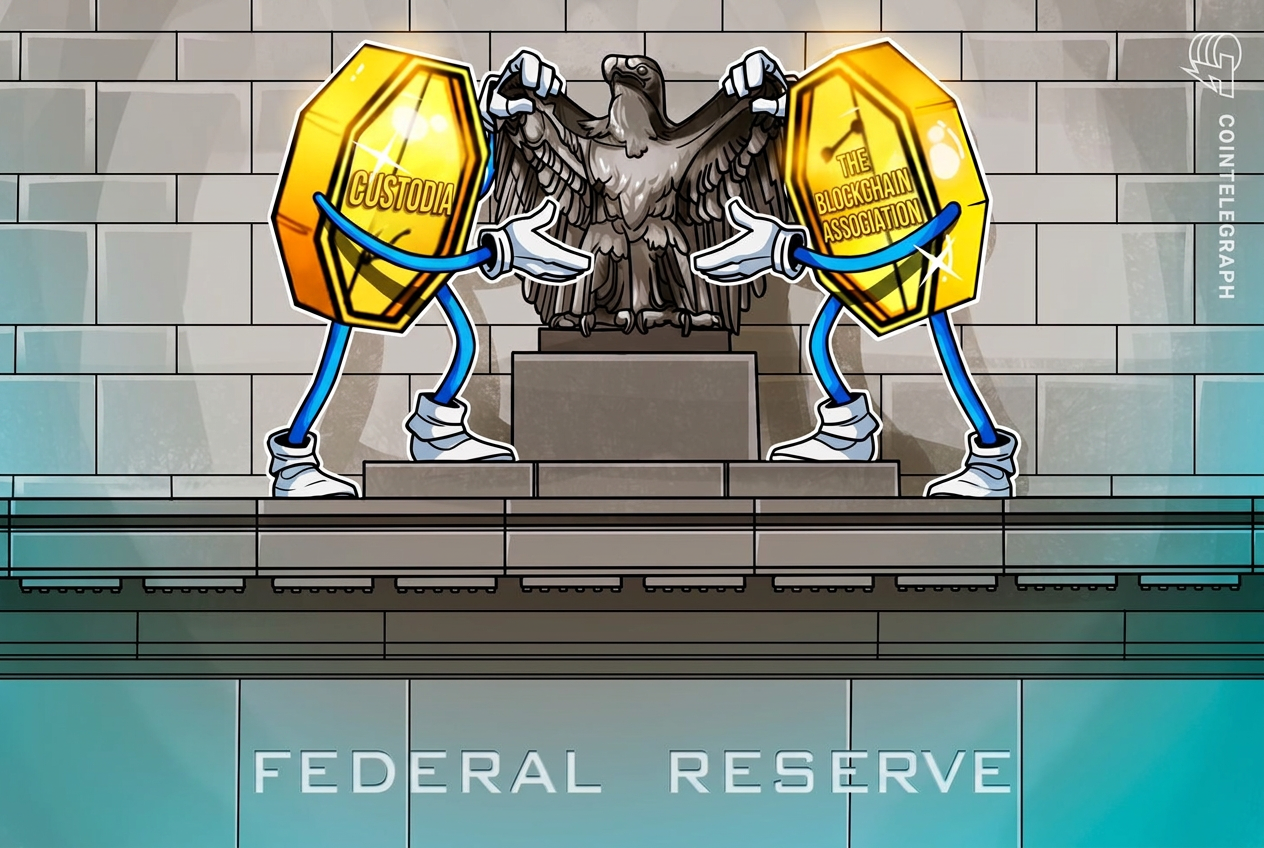
Crypto's Defining Battle: Blockchain Association Backs Custodia in Supreme Court Showdown Over Fed Access
In a legal battle poised to define the future integration of digital assets into the traditional financial system, the Blockchain Association, a prominent advocacy group, has publicly thrown its support behind Custodia Bank. The Wyoming-chartered special purpose depository institution (SPDI) is locked in a high-stakes Supreme Court dispute with the Federal Reserve over its prolonged denial of a master account – a critical gateway to the U.S. payment system. This intervention underscores the crypto sector's urgent demand for a level playing field and challenges the Fed's broad discretion to effectively gatekeep financial innovation.
The Genesis of the Conflict: Custodia's Quest for Direct Access
Custodia Bank, founded by Caitlin Long, was established to provide compliant banking services for digital asset businesses under a state charter specifically designed for such entities. In 2020, Custodia applied for a Federal Reserve master account, which grants direct access to the Fed's payment services like real-time gross settlement (RTGS) and automated clearing house (ACH) transactions. This access is standard for traditional banks and is crucial for efficient, low-cost operations, mitigating counterparty risk. Without it, crypto-native banks are forced to rely on correspondent banking, adding layers of cost and complexity.
Despite meeting established criteria for a state-chartered bank, the Federal Reserve Bank of Kansas City, after an unprecedented two-year delay, denied Custodia's application in January 2023. The stated reasons cited concerns about Custodia’s "novel business model" and associated risks. Custodia viewed this denial and the protracted timeline as arbitrary and an overreach of the Fed's authority, escalating the matter through the courts with an aim for Supreme Court review.
Challenging the Fed's "Broad Discretion"
The core of Custodia's legal challenge, supported by the Blockchain Association's amicus curiae (friend of the court) brief, disputes the Federal Reserve's assertion of unwarranted and overly broad discretion in denying master account access. The Federal Reserve Act does not explicitly grant the Fed power to deny eligible institutions based on subjective interpretations of business models, especially when state regulators have already deemed them compliant and sound. The Association argues that such unfettered discretion creates an unpredictable regulatory environment that actively stifles innovation, empowering a single federal entity to pick winners and losers in the financial sector. This risks marginalizing new technologies and business models crucial for the efficiency and resilience of the U.S. financial system, a concern particularly acute for the crypto industry, which often leads financial innovation but struggles for mainstream infrastructure access due to perceived novelty or regulatory hesitancy.
The Blockchain Association's Amicus Brief: A Call for Fair Play
The Blockchain Association's filing emphasizes several critical points. Firstly, it argues the Federal Reserve is legally obligated to provide master account access to eligible financial institutions, particularly those chartered by states that have explicitly legislated for innovative entities like SPDIs. The brief contends that the Fed's denial undermines federalism and state banking regulators' autonomy. Secondly, the Association highlights the economic consequences of denying direct access: forcing crypto-native banks into correspondent relationships inflates costs, introduces additional points of failure, and limits service scope, ultimately harming consumers and impeding U.S. leadership in digital assets. The brief posits that direct access, far from increasing risk, can enhance financial stability by reducing complex interdependencies. Finally, the amicus brief frames the issue as a matter of due process and administrative fairness. The extraordinary delay and arbitrary nature of Custodia's denial set a dangerous precedent, suggesting federal agencies can sideline innovative businesses without clear, consistent, and legally sound justifications, deterring investment and growth within the digital asset ecosystem.
Profound Implications for Crypto and Beyond
The outcome of Custodia's battle has far-reaching implications for the entire crypto industry and the broader U.S. financial landscape. A victory for Custodia would significantly open the door for other state-chartered crypto banks to gain direct access to the Fed, enabling more robust, secure, and compliant operations. This would pave the way for more efficient stablecoin issuance, clearer settlement pathways for tokenized assets, and ultimately, a more mature and integrated digital asset market. Conversely, a ruling favoring the Fed's broad discretion would solidify its position as a powerful gatekeeper, potentially cementing a two-tiered financial system where crypto firms struggle for legitimacy, further entrenching reliance on traditional intermediaries, slowing innovation, and potentially pushing crypto activities offshore.
Beyond crypto, this case tests the limits of federal agency power, balancing innovation with regulatory control. It spotlights the tension between established financial norms and disruptive new technologies. The Supreme Court's decision will not only shape how crypto-native institutions operate but also set a precedent for how future novel financial services are integrated into the U.S. economy.
The Path Ahead: Supreme Court Scrutiny Awaits
While initial proceedings were in district court, the unique jurisdictional arguments and fundamental questions about agency power mean the case is on a trajectory toward higher judicial review, likely reaching the Supreme Court. The highest court will weigh the statutory interpretation of the Federal Reserve Act against administrative procedures and the inherent powers of a central bank. The Blockchain Association's intervention elevates the case's public and legal profile, signaling to the judiciary that this is not merely a dispute between one bank and a federal agency, but a foundational conflict for an entire emerging industry.
As senior crypto analysts, we understand this isn't just about Custodia; it's about the very future of how digital assets are permitted to function within the U.S. financial framework. The industry watches with bated breath. The decision will serve as a crucial barometer of the U.S.'s willingness to embrace financial innovation while maintaining regulatory integrity. It’s a test of whether the traditional financial system can evolve to accommodate revolutionary technologies, or if gatekeeping will continue to stifle progress. The stakes couldn't be higher.