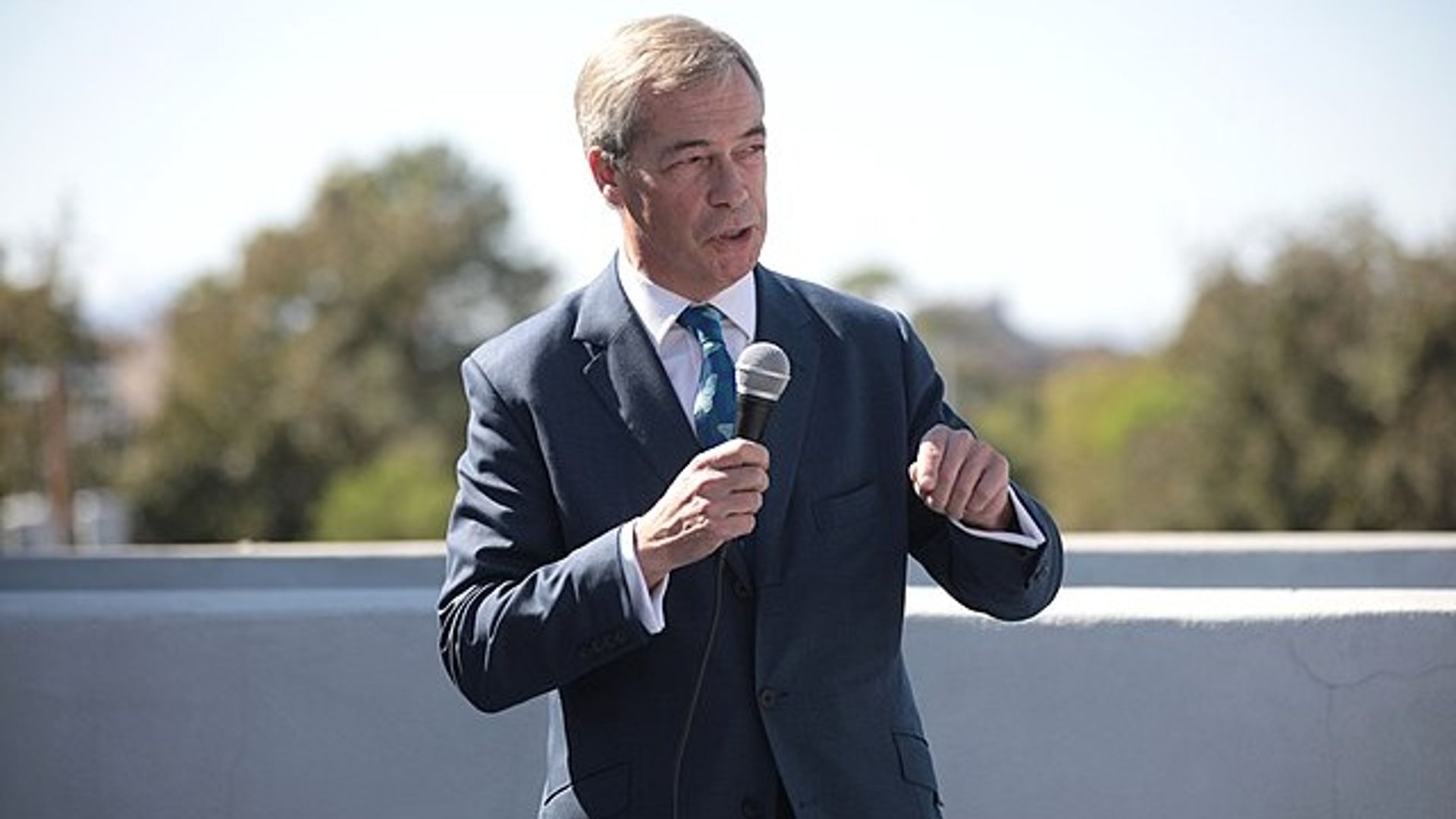
A Political Earthquake: Crypto Billions Descend on Reform UK
In a move that has sent shockwaves through Westminster and the global financial community, Nigel Farage’s Reform UK party has reportedly landed an astonishing $97 million in donations from two unnamed crypto billionaires within a mere 24-hour period. This colossal infusion of capital is not merely a significant funding boost; it represents the largest individual political donations in U.K. history, fundamentally altering the financial landscape of British politics and dramatically scaling up the crypto industry’s visible backing for a major party.
The sheer magnitude of this sum cannot be overstated. For a party like Reform UK, often perceived as a fringe player despite Farage's considerable personal profile, such a donation is transformative. It catapults them into an entirely new league of campaign financing, potentially allowing them to rival, or even surpass, the financial muscle of the established Conservative and Labour parties in the run-up to the next general election. This development forces political analysts, strategists, and voters alike to reassess Reform UK’s potential impact and Farage’s long-standing ambition to disrupt the two-party dominance.
The Allure of Reform: Why Crypto Billionaires Back Farage
The immediate question on everyone's lips is: why Reform UK, and why now? While the identity of the crypto billionaires remains undisclosed, their motivations can be inferred from the ideological alignment between the emerging digital asset class and Reform UK’s platform. Reform UK, under Farage, champions a blend of lower taxes, reduced state intervention, robust anti-immigration policies, and a skeptical stance on net-zero climate initiatives. These tenets often resonate with segments of the crypto elite who advocate for minimal government oversight, financial freedom, and disruptive innovation.
The crypto industry has matured significantly, evolving from a niche technological curiosity to a formidable economic force. As its global market cap swells, so too does its desire for political influence and a favorable regulatory environment. Donating to parties that promise a lighter touch on regulation, or even advocate for policies that could attract crypto businesses and talent, is a strategic play. Farage’s vocal criticisms of traditional institutions and his advocacy for radical change likely appeal to individuals who have built their fortunes by challenging conventional finance.
Historic Scale: Redefining UK Political Funding
The $97 million figure is not just large; it is historic. To put it into perspective, it eclipses previous records for individual donations in the UK, signaling a new era of ultra-wealthy individuals directly shaping the political discourse. Such a concentrated injection of wealth raises crucial questions about donor transparency, potential influence, and the democratic process itself. While legal, the scale of these donations invites scrutiny over the quid pro quo – what do these billionaires expect in return, and how might their financial leverage impact policy decisions should Reform UK gain significant traction?
This event also highlights a growing trend: the increasing role of new, often globally mobile, wealth in national politics. Unlike traditional industrialists or landed gentry, crypto billionaires often operate across jurisdictions, their fortunes less tied to conventional national industries. Their entry into UK political funding signifies a potential shift in the source of political power and influence, away from established financial sectors and towards the burgeoning, often volatile, world of digital assets.
Campaign Power-Up: What This Means for Reform UK
For Reform UK, this unprecedented funding transforms its capabilities overnight. A $97 million war chest means vastly expanded advertising campaigns, a larger and more professional ground operation, recruitment of top-tier strategists, and an ability to project its message across an array of media channels. Farage can now contemplate national broadcasts, widespread leafleting, and sophisticated digital campaigns that were previously beyond the party's reach. This financial might can significantly increase Reform UK's visibility and credibility, positioning them as a serious contender rather than a protest vote.
The psychological impact on the party is also significant. It signals external validation and serious belief in their project. For potential candidates and volunteers, it offers reassurance that the party has the resources to make a genuine impact. In a fiercely contested election cycle, where every percentage point counts, the ability to outspend or at least match larger parties in key areas could prove decisive in shifting public opinion and carving out a larger share of the vote.
Broader Political Implications: A Shifting Landscape
The reverberations of this donation will be felt across the entire UK political spectrum. The Conservative Party, already struggling with low approval ratings, will face increased pressure from their right flank, potentially losing more votes to a well-funded Reform UK. Labour, while still leading in the polls, will need to consider how to counter a newly resourced populist movement capable of capturing disaffected voters.
Furthermore, this incident throws a spotlight on the evolving relationship between new wealth and political power. It’s a global phenomenon, but its manifestation in the UK through the crypto industry is particularly salient given the country's ongoing debate about its post-Brexit identity and economic future. The influx of crypto money suggests a belief among some ultra-rich individuals that Reform UK offers a vehicle for significant political change, potentially aligning with their broader vision for a deregulated, more individualistic society.
The Crypto Industry's Political Play and Future Scrutiny
From the perspective of the crypto industry, this move represents a bold and highly public foray into mainstream politics. It signals a shift from quiet lobbying to direct, impactful financial backing. The motivation is clear: to foster a political environment conducive to the growth and innovation of digital assets. However, such high-profile involvement also invites intense scrutiny.
Questions will inevitably arise regarding the sources of these funds, the ethical implications of such large donations, and the potential for regulatory capture. Both Reform UK and the broader crypto industry will need to navigate public skepticism and media scrutiny concerning the transparency and accountability of these transactions. This could lead to calls for stricter campaign finance regulations or increased oversight of digital asset markets, inadvertently creating the very regulatory headwinds some donors might wish to avoid.
Conclusion: A New Chapter in UK Politics
The $97 million donation to Reform UK marks a watershed moment in British political financing. It underscores the rising influence of crypto wealth, the strategic motivations behind such monumental contributions, and the potential for a seismic shift in the balance of power leading into the next general election. As Nigel Farage prepares to leverage this unprecedented financial war chest, the coming months will reveal whether crypto billionaires can indeed reshape the destiny of one of the world's oldest democracies, ushering in a new chapter where digital fortunes play a decisive role in traditional politics.