Introduction: Navigating Crypto's Dual Narrative
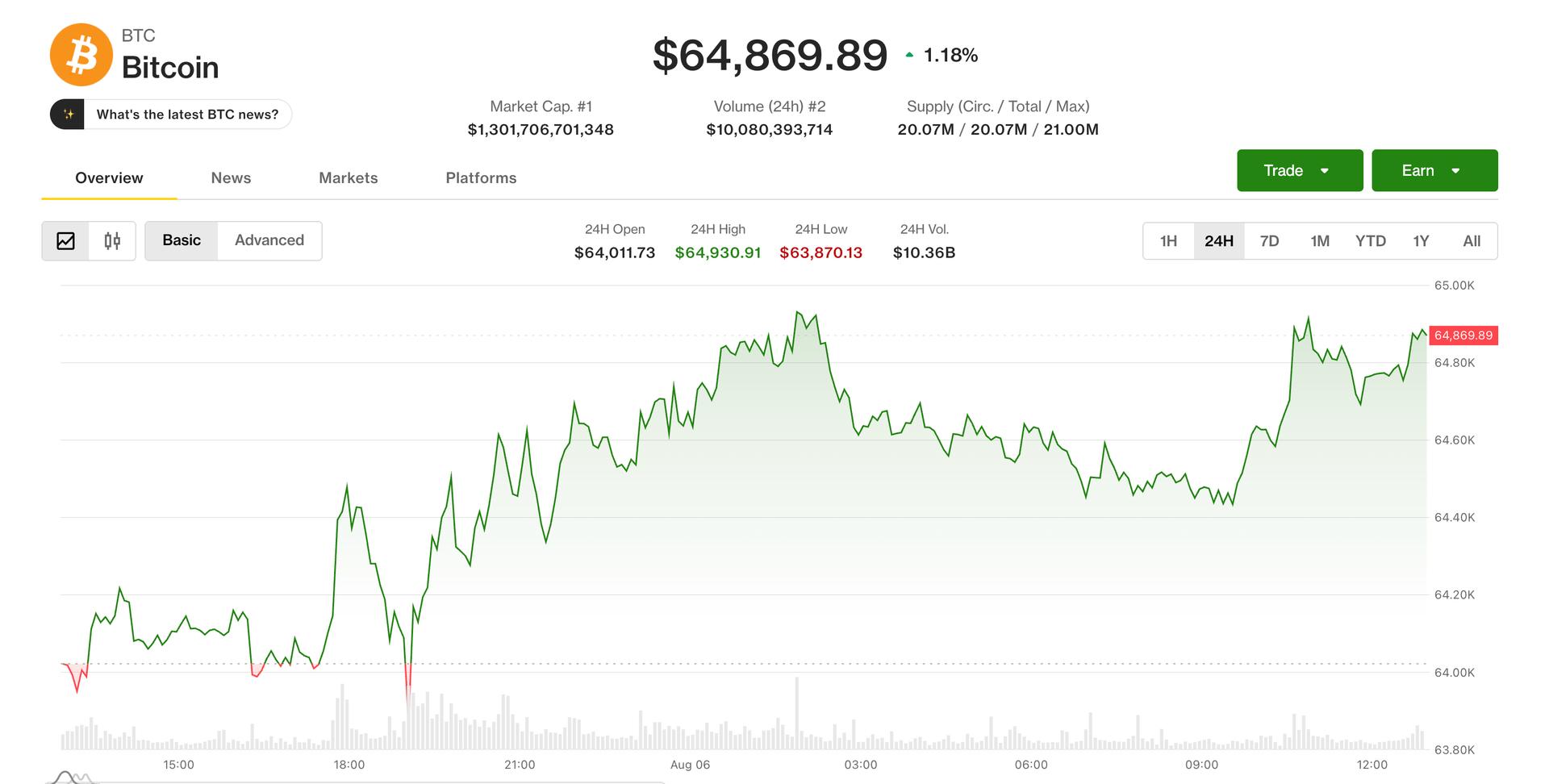
As Bitcoin (BTC) hovers robustly near the $65,000 mark, the cryptocurrency market finds itself at a fascinating confluence of groundbreaking institutional expansion and intricate macroeconomic crosscurrents. Crypto giant Coinbase has made a significant strategic move, extending U.S. equity trading capabilities to its U.K. user base, signaling a deepening convergence between traditional finance (TradFi) and the digital asset economy. Simultaneously, Bitcoin's immediate trajectory remains firmly tethered to the pulse of global macroeconomics, with recent comments from influential figures and shifts in commodity markets dictating risk sentiment. Understanding these intertwined forces is paramount to deciphering Bitcoin's next major move.
Coinbase's Strategic Global Leap: Bridging the Financial Divide
Coinbase's decision to enable U.K. users to trade U.S. equities represents a profound strategic declaration, positioning the company as a holistic financial services platform rather than just a crypto exchange. This move enhances Coinbase's value proposition, potentially attracting a wider demographic of investors seeking integrated financial management. For U.K. investors, direct access to robust U.S. equity markets via a familiar crypto platform streamlines investment processes and opens new avenues for portfolio diversification. This also highlights Coinbase's ambition to become a global financial super-app, challenging legacy institutions and further legitimizing the digital asset space by intertwining it with established financial rails. Such an expansion underscores the ongoing institutionalization and mainstream adoption of cryptocurrencies, as platforms increasingly blur the lines between traditional and digital asset investment.
Macro Winds: Trump's Influence on Risk Sentiment
Beyond the internal dynamics of the crypto market, broader macroeconomic and geopolitical narratives continue to exert significant influence. Recent comments from former President Trump, particularly regarding job creation, inflation outlooks, and a possible deal concerning the Strait of Hormuz, have demonstrably bolstered risk sentiment. Positive remarks on job growth often imply economic strength and stability, reducing recession fears. Indications of abating inflation pressures can signal a less hawkish stance from central banks, potentially paving the way for lower interest rates – conditions that generally favor risk assets like Bitcoin. The mention of a possible resolution around the Strait of Hormuz, a vital waterway for global oil shipments, alleviates concerns about supply disruptions and energy costs. Such perceived stability often translates into increased investor confidence and a greater appetite for risk, creating a more favorable environment for cryptocurrencies.
The Oil-Yield-Dollar Trilemma: Bitcoin's Defining Nexus
However, the sustained optimism for Bitcoin hinges critically on a complex interplay of global macro factors: oil prices, Treasury yields, and the strength of the U.S. dollar. Bitcoin's next significant move is contingent on whether a sustained decline in oil prices can genuinely lead to a reduction in Treasury yields and a weakening of the dollar. Here's a breakdown of this crucial relationship:
1. Lower Oil Prices and Inflation Expectations: A persistent downtrend in oil prices signals easing inflationary pressures, as energy costs ripple through the supply chain. This, in turn, can temper expectations for aggressive monetary policy tightening from central banks like the Federal Reserve.
2. Impact on Treasury Yields: If inflation expectations moderate due to lower oil, the demand for higher yields on government bonds (like U.S. Treasuries) diminishes. Investors require less compensation for inflation risk, causing bond prices to rise and their yields to fall. Lower Treasury yields make 'risk-free' investments less attractive, prompting a potential reallocation of capital into higher-growth, riskier assets such as equities and cryptocurrencies.
3. The Dollar's Response: A dovish shift in monetary policy expectations (driven by lower inflation) and declining Treasury yields typically exert downward pressure on the U.S. dollar (measured by the DXY index). A weaker dollar makes dollar-denominated assets less appealing to international investors and can make Bitcoin, often seen as an alternative store of value, more attractive on a relative basis. Historically, a weaker dollar has often correlated with Bitcoin strength.
The market is essentially in a waiting game, observing whether the current easing in oil prices will translate into a verifiable shift in the yield and dollar narrative. If this chain reaction materializes, it could provide the robust tailwind necessary to propel Bitcoin beyond its current consolidation phase and toward new highs. Conversely, if oil prices rebound or if yields and the dollar remain stubbornly elevated, Bitcoin could face renewed headwinds, reinforcing its current trading range.
Conclusion: A Market in Flux and Transformation
The current crypto market, epitomized by Bitcoin's $65,000 valuation, is defined by a dynamic interplay of transformative industry developments and potent macroeconomic forces. Coinbase's bold step into U.S. equity trading for U.K. users underscores the relentless march towards financial convergence and the maturation of the digital asset sector. Simultaneously, Bitcoin's immediate future is inextricably linked to the broader global economic narrative, with the oil-yield-dollar trilemma acting as a critical barometer. As senior crypto analysts, our focus remains on disentangling these complex threads, recognizing that while the industry innovates from within, its journey is profoundly shaped by the tides of the global financial system. Investors and enthusiasts alike must remain vigilant, understanding that Bitcoin's next chapter will be written not just by blockchain advancements, but by the nuanced dance of oil prices, interest rates, and currency valuations.