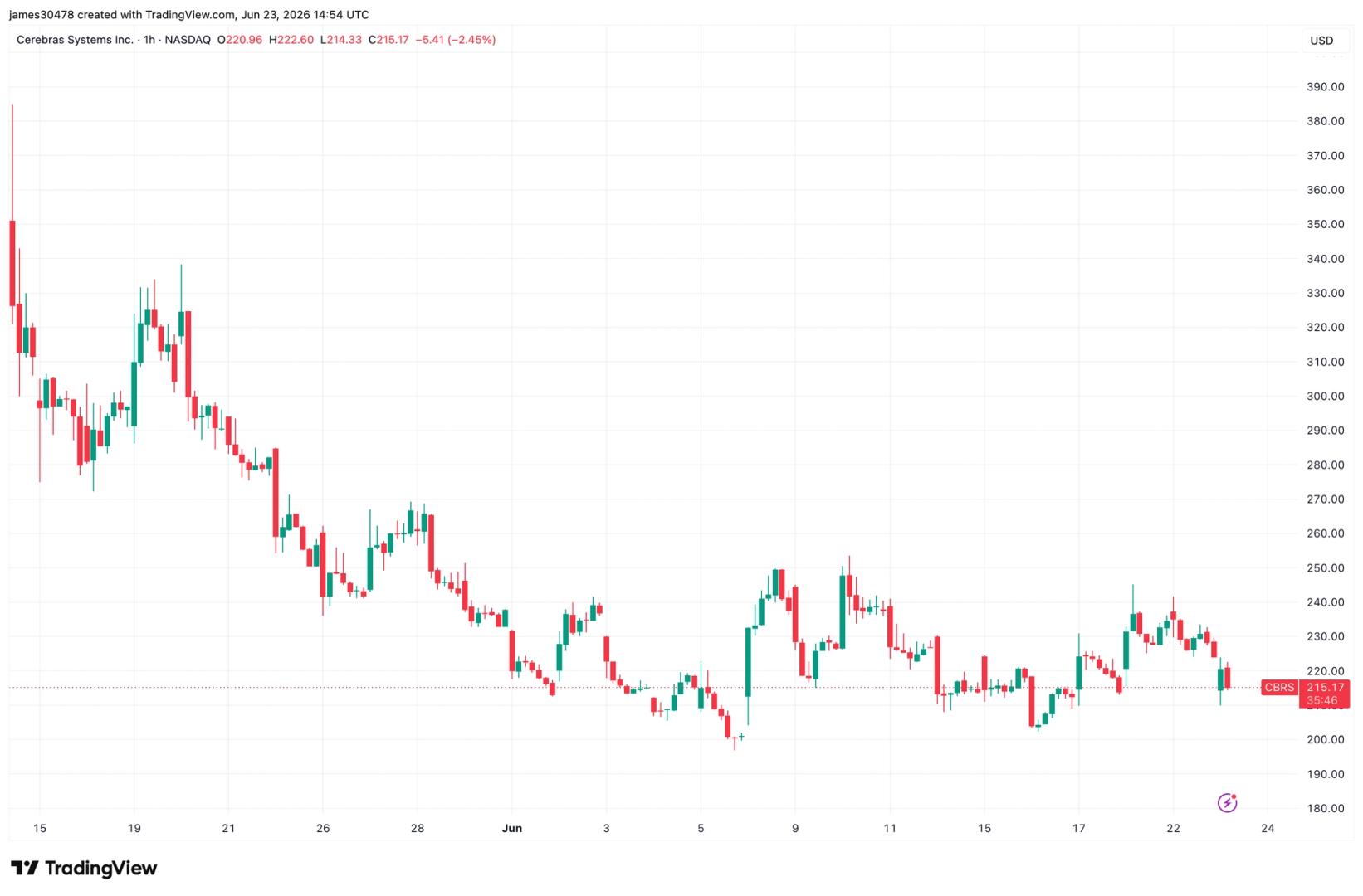
The immediate reaction to Cerebras's inaugural public earnings report sent ripples through the tech world, echoing concerns that transcend individual sectors and touch upon the broader investment climate for high-growth, innovative companies. Despite reporting a staggering 92% increase in revenue year-over-year, the specialized AI chipmaker saw its shares plummet by 11%. For a company operating at the cutting edge of artificial intelligence infrastructure, this sharp downturn offers a crucial lesson in market expectations and the evolving metrics investors prioritize, even in the most promising domains.
The Paradox of Performance: Strong Growth, Weak Sentiment
Cerebras Systems, renowned for its colossal Wafer-Scale Engine (WSE) chips designed to accelerate AI training, has long been a darling of venture capital. Its first public earnings call was therefore keenly anticipated, a barometer for how a pure-play AI hardware firm might translate technological prowess into shareholder value. The reported 92% revenue growth is, by any traditional measure, an extraordinary achievement. It underscores the insatiable demand for AI compute power, a trend we've observed escalating rapidly across industries. Enterprises and research institutions are clamoring for solutions that can handle increasingly complex neural networks, and Cerebras has positioned itself effectively to capture a significant portion of this market.
However, the market's reaction suggests that revenue growth, no matter how impressive, is no longer the sole determinant of investor confidence. The 11% share drop indicates a deeper concern. This is where the nuanced perspective of a seasoned financial analyst becomes critical, especially one accustomed to evaluating volatile and sentiment-driven markets like crypto, where narratives can often overshadow underlying fundamentals. The lesson here is universal: unchecked enthusiasm can quickly give way to rigorous scrutiny.
The Margin Squeeze: A Forewarning for Future Profitability
The crux of investor apprehension lay not in past performance but in future projections. Cerebras forecasted a lower core gross margin for the upcoming quarter. For those less familiar with financial metrics, gross margin is the revenue left over after deducting the cost of goods sold (COGS). It’s a vital indicator of a company’s pricing power, operational efficiency, and, ultimately, its ability to generate sustainable profits. A decline in forecasted gross margin suggests that while the company expects to continue selling its highly specialized chips, the profitability derived from each sale is expected to diminish.
This forecasted contraction could stem from several factors inherent in the competitive and capital-intensive semiconductor industry. It might indicate rising input costs, increased research and development expenses necessary to maintain a technological edge, or intensifying price competition from rivals like Nvidia, AMD, or even the in-house chip development efforts of hyperscale cloud providers. Developing and manufacturing state-of-the-art AI chips requires monumental capital expenditure and continuous innovation. When margins are squeezed, it signals a potential struggle to recoup these investments efficiently, casting a shadow over the long-term profitability trajectory.
Investor Psychology and the AI Premium
The market's punitive reaction also reflects the exceptionally high valuations and expectations placed upon AI companies. Investors have, for some time, been willing to pay a premium for growth in the AI sector, driven by the transformative potential of the technology. However, as these companies mature and transition from private ventures to public entities, the focus inevitably shifts from pure growth narratives to the more tangible path to sustainable profitability and free cash flow generation.
This shift in investor psychology is not unique to AI; it’s a pattern observed repeatedly across various tech booms, from dot-com enterprises to SaaS companies, and even in the evolving crypto market. Early-stage investors often prioritize user adoption, technological breakthroughs, and market share. Public markets, however, eventually demand a clear roadmap to financial sustainability. A warning sign regarding gross margins, even in the context of explosive revenue growth, can trigger a re-evaluation of the investment thesis, leading to significant price corrections as the market recalibrates its valuation models. The "growth at all costs" mentality often gives way to a "profitable growth" imperative.
Broader Implications for High-Growth Tech
From the perspective of an analyst navigating volatile markets, the Cerebras scenario provides valuable insights into broader market sentiment and risk appetite. The crypto market, much like nascent AI hardware, is characterized by disruptive innovation, speculative fervor, and often, a disproportionate focus on future potential over current profitability. When a bellwether company in a red-hot sector like AI faces headwinds over margin sustainability, it can signal a broader tightening of investor scrutiny across high-growth, high-expenditure sectors.
This isn't to say Cerebras is in dire straits; 92% revenue growth is undeniably strong. Rather, it highlights a maturing market where even impressive top-line numbers are not enough to offset concerns about long-term profitability. Such shifts in market sentiment can spill over, affecting investor confidence in other speculative assets, including various cryptocurrencies or blockchain projects that are still years away from tangible profitability. It underscores a global macro environment where capital is becoming more discerning, demanding a clearer path to sustainable financial health, rather than simply chasing growth at any cost.
The Road Ahead for Cerebras and the AI Industry
Cerebras now faces the dual challenge of continuing its impressive revenue growth while simultaneously addressing and reversing the forecasted margin compression. This will likely involve strategic decisions around pricing, supply chain optimization, and perhaps even diversifying its product offerings or service models to improve profitability. The competition in the AI chip space is only intensifying, with established giants and nimble startups vying for market share. Innovation will remain paramount, but so too will prudent financial management. For the broader AI industry, Cerebras's earnings report serves as a timely reminder that technological leadership must ultimately translate into economic viability. Companies in this space will need to articulate not just their revolutionary capabilities, but also a clear and credible strategy for converting innovation into sustainable profit.
Conclusion: A Cautionary Tale for Growth Investors
Cerebras's 11% slump, despite its soaring revenue, encapsulates a critical shift in investor focus. It’s a cautionary tale even amidst a strong market for AI, underscoring that public markets demand more than just technological breakthroughs and rapid expansion. They require a clear line of sight to sustained profitability and robust margins. As an analyst evaluating high-growth, speculative assets – whether in AI or crypto – this event reinforces the enduring importance of financial fundamentals. Pure growth can be exciting, but sustainable profitability is what truly builds long-term shareholder value. The market has spoken: the honeymoon period for AI's unchecked growth narrative might be giving way to a more pragmatic assessment of financial health.