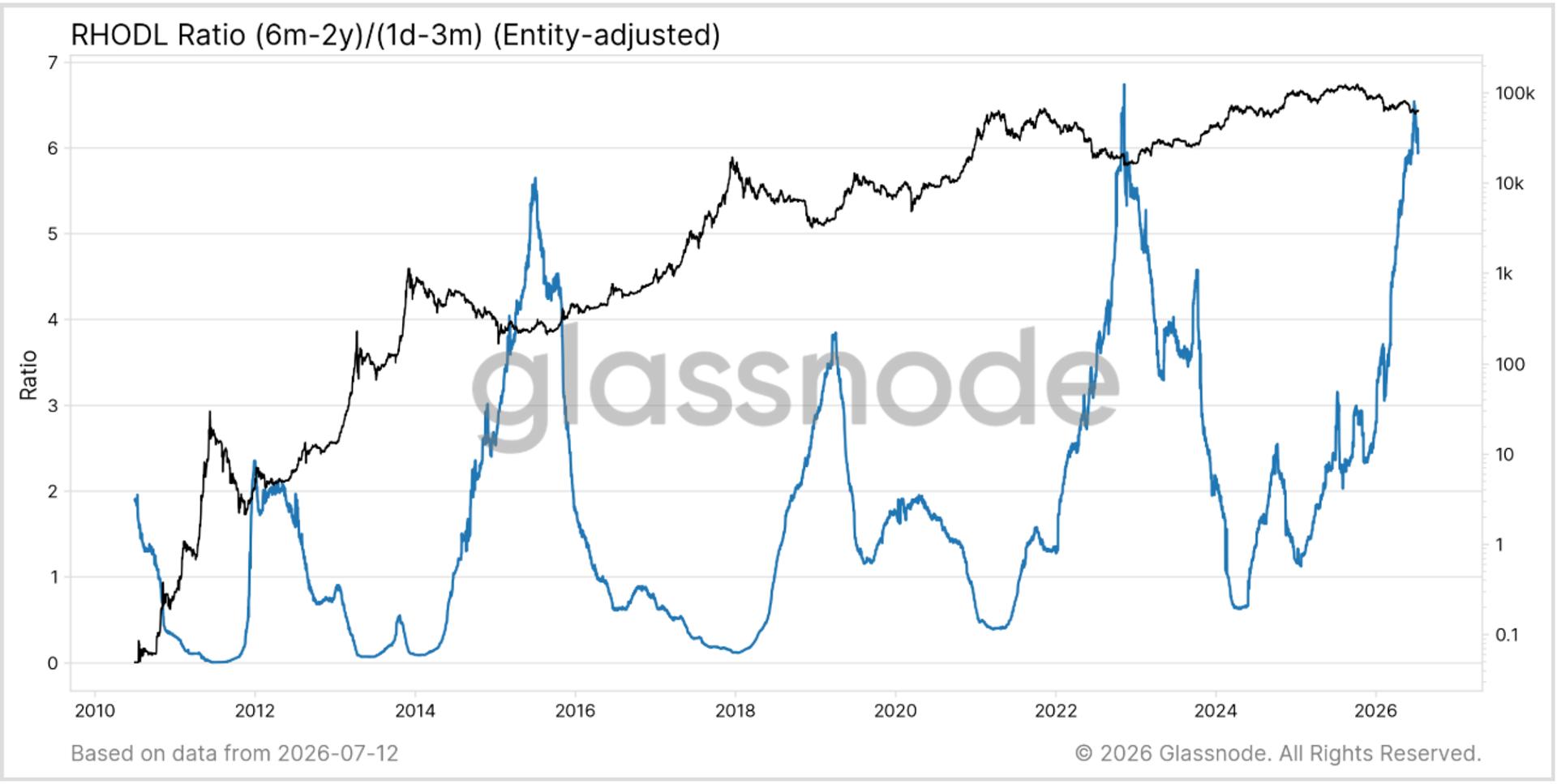
The cryptocurrency market, particularly Bitcoin, is often characterized by its dramatic price swings and fervent communities. Beneath the surface, however, a more profound and quiet transformation is underway: a significant supply transfer from Bitcoin's long-term holders (LTHs) to a new generation of buyers. This "great rotation" speaks volumes about market maturity and evolving investor psychology, yet its implications are heavily nuanced by the looming shadow of potential Federal Reserve rate hikes, which could still trigger the long-anticipated capitulation event.
The Mechanics of the Great Rotation
Long-term holders are the bedrock of Bitcoin's supply, typically defined as addresses that have held their coins unmoved for 155 days or more. These entities have weathered multiple market cycles, often accumulating during bear markets and resisting the urge to sell during euphoric peaks. Their accumulation patterns and subsequent distribution are crucial indicators of market sentiment and potential price movements. Recent on-chain data, without delving into specifics, strongly suggests that these seasoned investors are discreetly offloading a portion of their holdings.
This transfer isn't necessarily a bearish signal in isolation. It can indicate profit-taking after significant gains, a rebalancing of portfolios, or even a strategic reduction of risk in anticipation of macroeconomic headwinds. LTHs might be taking profits to lock in returns, or perhaps they believe that lower prices might be on the horizon, presenting an opportunity for re-entry at a more attractive valuation. This activity creates liquidity, allowing fresh capital to enter the market.
Who are these "new generation of buyers"? They represent a diverse cohort. Some are institutions making their initial foray or expanding existing positions, viewing current prices as an opportune entry point for long-term strategic allocation. Others are retail investors, perhaps new to the market or those who missed earlier rallies, now seeing an opportunity to acquire Bitcoin at what they perceive to be a discount from its all-time highs. This inflow of new capital and new participants can be a healthy sign of increasing adoption and market broadening, potentially laying the groundwork for the next leg of growth.
The Fed's Unyielding Gaze: A Macroeconomic Conundrum
While the internal dynamics of Bitcoin's supply rotation paint a complex picture, the external macroeconomic environment casts an even longer shadow. The Federal Reserve's stance on monetary policy is arguably the single most dominant factor influencing all risk assets, including cryptocurrencies, in the current landscape. With inflation stubbornly high, the Fed has signaled its intent to aggressively combat it through interest rate hikes and quantitative tightening.
Each rate hike effectively increases the cost of borrowing and reduces the overall money supply, draining liquidity from financial markets. This invariably leads to a re-evaluation of risk assets. Assets with no intrinsic yield, like Bitcoin, often become less attractive compared to traditional safe havens or yield-bearing instruments when interest rates rise. Furthermore, higher interest rates can slow economic growth, which can impact corporate earnings and overall investor confidence, leading to broader market sell-offs.
The "capitulation" event that the market has been anticipating refers to a sharp, broad-based sell-off driven by fear, forced liquidations, and a complete loss of confidence among a significant portion of investors. While Bitcoin has seen significant corrections, many analysts believe a true capitulation, where even long-term holders are forced to sell at a loss due to extreme market conditions or margin calls, has yet to occur. The quiet supply transfer from LTHs could be interpreted as a pre-emptive de-risking by some, but it doesn't necessarily signal the full capitulation that the Fed's aggressive tightening could induce.
Navigating the Crossroads: Strength or Precursor to Pain?
The interplay between Bitcoin's internal supply dynamics and external macro pressures presents a challenging analytical landscape. Is the "great rotation" a sign of underlying strength, indicating healthy market churn and diversification of ownership that will ultimately make Bitcoin more resilient? Or is it a precursor to a more significant downturn, with savvy LTHs subtly exiting ahead of a potential maelstrom created by the Fed?
The optimistic view suggests that the new generation of buyers, many of whom are entering with a long-term perspective, will eventually become the new LTHs, strengthening Bitcoin's foundational ownership structure. This fresh capital injects new life and conviction into the market. However, if the Fed proceeds with an aggressive series of rate hikes, it could trigger a deep recession or a significant liquidity crunch, which might force even these new buyers to sell at a loss, leading to the capitulation event many anticipate.
The critical factor will be the velocity and magnitude of the Fed's actions, coupled with how quickly the market prices in these expectations. A gradual, well-communicated tightening might allow the market to digest the changes without a catastrophic shock. Conversely, unexpected hawkishness or an acceleration of rate hikes could easily tip the scales towards a more severe market correction, testing the resolve of even the most dedicated Bitcoin holders.
Conclusion: A Market on the Brink of Re-evaluation
Bitcoin stands at a fascinating juncture. The "great rotation" from long-term holders to new buyers signifies a quiet, organic evolution within its ownership structure, suggesting a maturing asset class. This process, if allowed to unfold without external shocks, could be a net positive for Bitcoin’s long-term health and decentralization. Yet, the omnipresent threat of aggressive Federal Reserve monetary tightening looms large, holding the potential to override internal market dynamics and usher in a period of intense volatility and potential capitulation.
Investors and analysts must therefore monitor both on-chain metrics for signs of continued accumulation by strong hands and, perhaps more critically, the evolving macroeconomic narrative and the Fed's increasingly hawkish posture. The coming months will likely determine whether this generational handoff of Bitcoin supply proves to be a foundation for future growth or merely a pause before the next major reckoning.