Bitcoin Dominance Soars: A New Era for Crypto Markets?
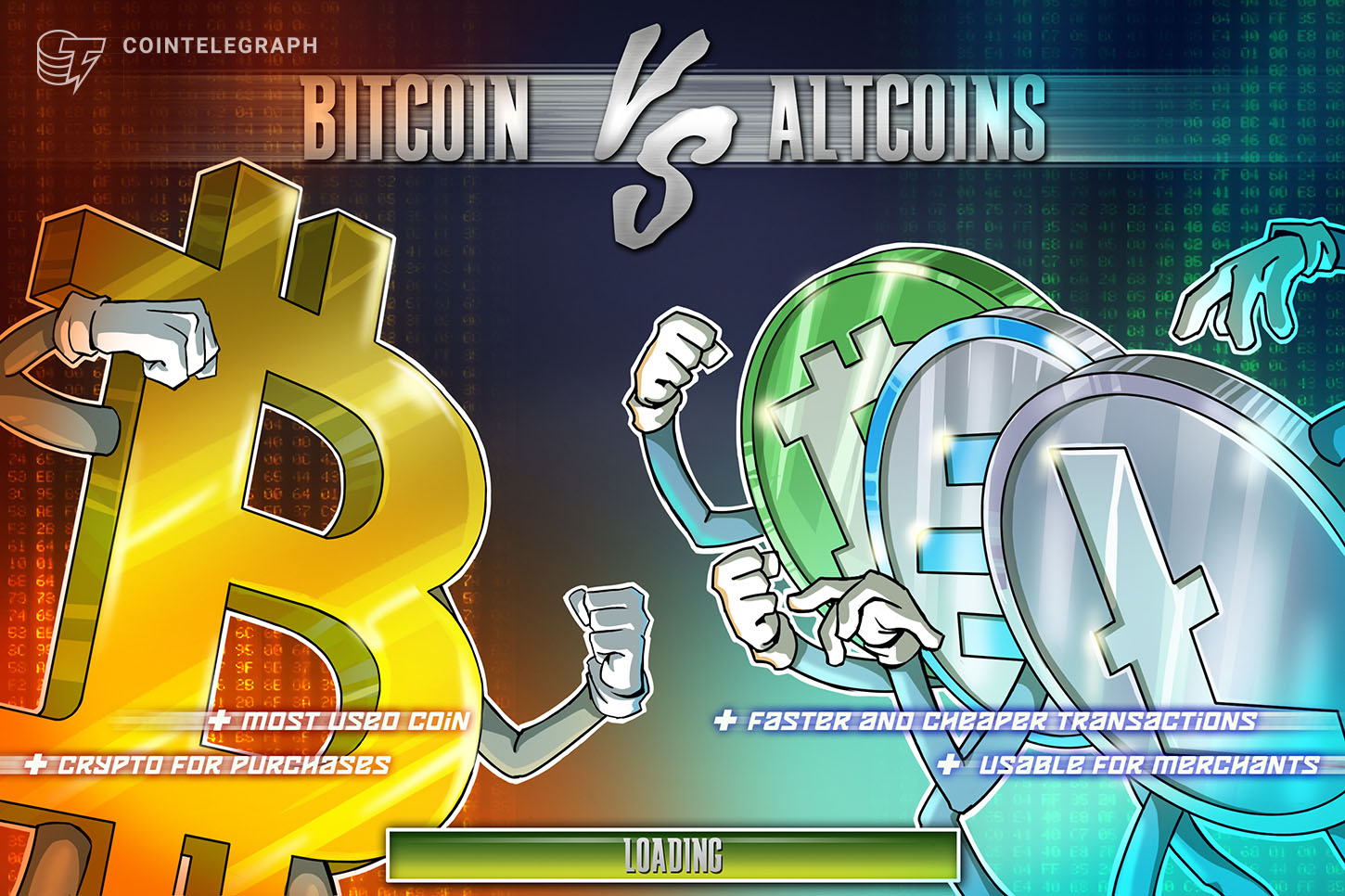
For years, the crypto market operated on a seemingly predictable rhythm: Bitcoin (BTC) would lead a bull run, consolidate, and then capital would 'rotate' into altcoins, sparking widespread 'altseasons' where lesser-known digital assets often saw exponential gains. This pattern has been a cornerstone of investor strategy, yet recent market dynamics suggest a significant shift. Bitcoin's market dominance, currently holding stubbornly above a key support level, signals a potential fundamental change: BTC may be absorbing capital from altcoins at an unprecedented rate, raising critical questions about the future – or even the existence – of broad-based altseasons.
As a Senior Crypto Analyst, observing this trend demands a deeper dive. The traditional 'Bitcoin pump, then altcoin pump' thesis appears to be faltering. Instead, we are witnessing a prolonged period where Bitcoin continues to assert its supremacy, even as altcoins struggle to maintain momentum, let alone initiate independent rallies. This isn't merely a temporary fluctuation; it reflects a confluence of factors transforming market structure and investor behavior.
The Unyielding Grip of Bitcoin Dominance
Bitcoin's market dominance, a metric reflecting its market cap share relative to the total crypto market, has been a closely watched indicator. Historically, a rising dominance signaled a flight to quality or a phase where BTC outperformed alts. A declining dominance, conversely, often heralded the beginning of an altseason. What's concerning for altcoin enthusiasts now is that BTC dominance isn't just holding steady; it's resisting downturns even as Bitcoin itself makes significant moves. This suggests that instead of capital rotating *out* of BTC into alts, new capital is flowing *into* BTC, or existing capital is being *retained* by BTC, effectively starving the broader altcoin market.
Several factors are contributing to this phenomenon. The approval of spot Bitcoin Exchange-Traded Funds (ETFs) in the U.S. has been a game-changer. These ETFs provide a regulated, accessible conduit for institutional and traditional finance capital to enter the crypto space, and almost exclusively, that capital flows into Bitcoin. This continuous demand stream acts as a powerful gravitational pull, anchoring funds within BTC's orbit. Furthermore, Bitcoin's narrative as 'digital gold' or a hedge against inflation has strengthened amidst global economic uncertainty, drawing in sophisticated investors seeking a comparatively safer crypto asset.
The Fading Echoes of Past Altseasons
To understand the current predicament, it's crucial to recall the genesis of past altseasons. They were often fueled by a surge of retail liquidity, a speculative frenzy for the 'next Bitcoin,' and a less mature market where even projects with questionable fundamentals could achieve massive valuations. The cycles typically involved Bitcoin breaking an all-time high, consolidating, and then the excitement cascading down the market cap spectrum – from Ethereum to large-cap alts, then mid-caps, and finally culminating in aggressive micro-cap pumps.
Today, the market has matured significantly. While retail interest remains, the sheer volume and sophistication of institutional money have shifted the playing field. Regulatory scrutiny has intensified, particularly for altcoins, many of which face classification challenges as unregistered securities. This regulatory overhang deters institutional participation and makes investors more cautious about deploying capital into assets with uncertain legal futures.
Are Altcoin Rotations Collapsing, or Merely Evolving?
The question of whether altseasons have 'disappeared' is complex. It's more accurate to say that the broad, indiscriminate altseason of yesteryear, where a rising tide lifted almost all boats, may indeed be a relic of the past. The capital efficiency of the market has improved, and investors, particularly larger ones, are now far more discerning. The easy 100x gains on obscure projects are increasingly rare as fundamental analysis, tokenomics, and actual utility take precedence over hype and speculation.
This doesn't mean altcoins won't perform. Instead, we are likely transitioning into an era of more *selective* altcoin rallies. We might see 'sectoral mini-seasons' where specific narratives or technological breakthroughs – such as AI integration, DePIN, specific Layer-2 solutions, or real-world asset (RWA) tokenization – drive concentrated surges in a handful of well-positioned projects. For an altcoin to outperform Bitcoin in this environment, it will require truly innovative technology, strong developer activity, robust community support, clear regulatory pathways, and demonstrable real-world utility.
Navigating the New Landscape: Investor Implications
For investors, this shift necessitates a recalibration of strategy. Blindly allocating to a basket of altcoins in anticipation of a broad altseason is now a high-risk proposition. Instead, the focus must sharpen on rigorous due diligence, understanding specific use cases, evaluating competitive landscapes, and assessing team credibility. Bitcoin may remain the safest long-term bet, serving as the primary capital accumulator.
Diversification will still be key, but it will be a more curated diversification into high-conviction altcoins that demonstrate genuine potential for adoption and sustained growth, rather than speculative pumps. Risk management strategies become paramount, acknowledging that the volatility inherent in altcoins might not always be rewarded with outsized gains relative to Bitcoin.
Conclusion: The End of an Era, the Dawn of Selective Value
The sustained strength of Bitcoin dominance and the apparent collapse of broad altcoin rotations signal a maturation of the crypto market. While the speculative allure of altcoins remains, the market is becoming less forgiving of projects lacking substance. The romanticized idea of an all-encompassing altseason may be fading into memory, replaced by a more discerning landscape where capital flows primarily into Bitcoin, and only selectively into altcoins that can truly differentiate themselves. Investors must adapt to this new reality, prioritizing quality, utility, and fundamental strength, as the bar for outperforming Bitcoin continues to rise.