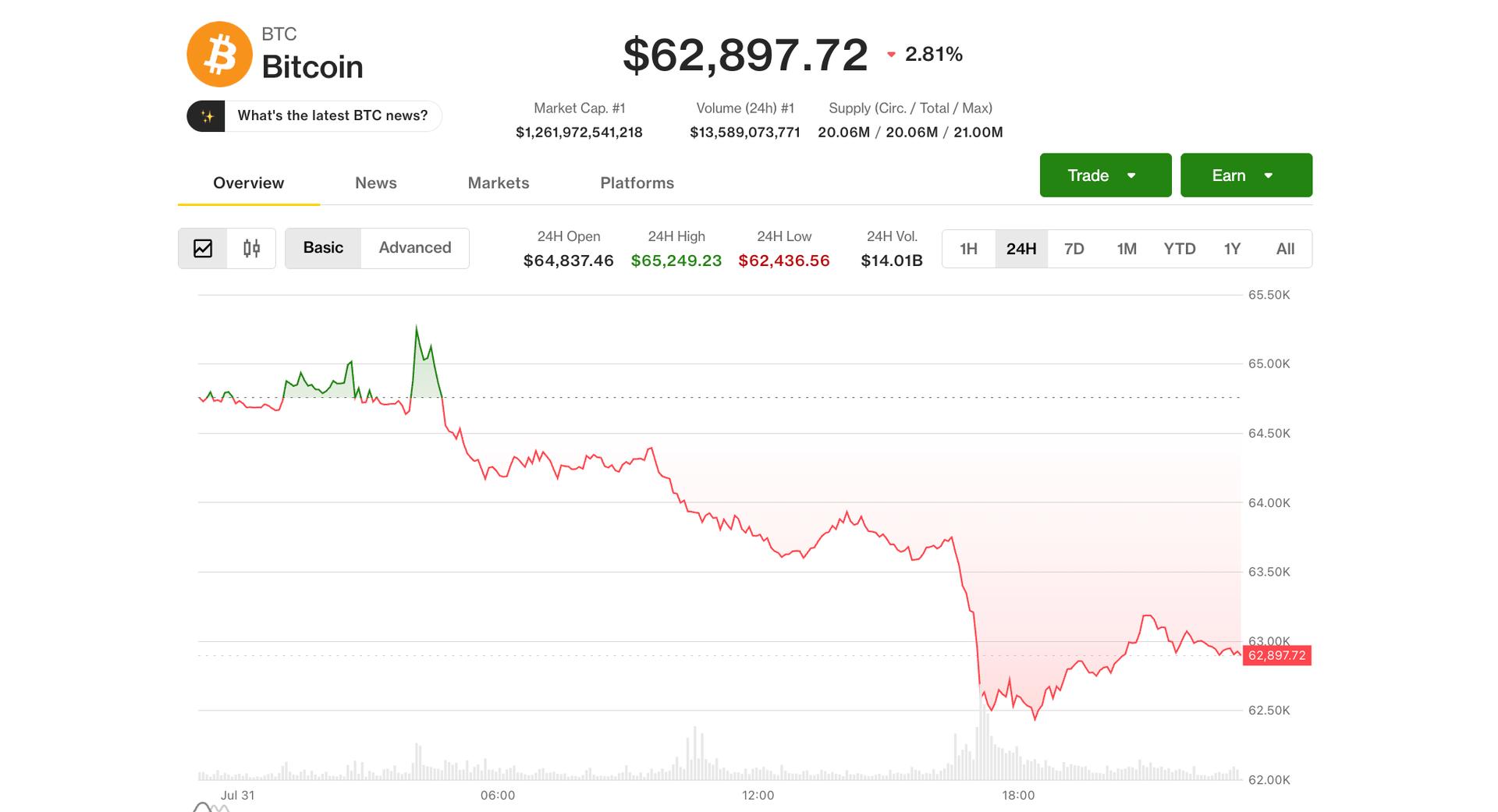
Bitcoin's August Crossroads: Resilience Meets Macro Headwinds as Forced Selling Exhausts
Bitcoin, the bellwether of the cryptocurrency market, has once again demonstrated its remarkable resilience, shrugging off a continuous barrage of negative news throughout the past month to hold onto its hard-won gains. This inherent strength, signaling a potential exhaustion of 'forced-selling' by distressed entities, paints a cautiously optimistic picture. However, as we step into August, the market narrative shifts from internal fortitude to external pressures, with analysts widely anticipating a 'choppy' period dominated by looming macroeconomic data and persistent rate hike fears.
The past few weeks have tested Bitcoin's mettle against a backdrop of increased regulatory scrutiny, project-specific insolvencies, and ongoing concerns about broader market stability. Despite these headwinds, the digital asset not only resisted significant downward pressure but managed to consolidate its position, holding onto the crucial psychological and technical levels it reclaimed. This steadfast performance is a testament to the maturing nature of the crypto market and the increasing conviction among its long-term holders. It suggests that much of the 'weak hand' selling, often triggered by panic or liquidity crises, has largely subsided, leaving a more robust base of participants.
A critical factor contributing to this newfound stability, as highlighted by market analysts, is the apparent exhaustion of 'forced-selling.' This term refers to the selling pressure originating from liquidations, margin calls, or the deleveraging efforts by institutions and large players who might have been overextended. Historically, periods of intense market stress have been exacerbated by these cascading sell-offs, creating a downward spiral. The cessation of such forced liquidations implies that the market has purged a significant portion of its speculative leverage. While this is fundamentally positive, as it reduces immediate downside risk, it also means that a key source of selling pressure has dried up. The market is now less prone to rapid capitulations, but it also means a strong, volume-driven rally will need fresh catalysts beyond merely short-covering or the absence of forced liquidations.
However, the calm brought by exhausted selling is anticipated to give way to a more turbulent, 'choppy' August. The primary drivers for this cautious outlook stem directly from the macroeconomic landscape, which continues to exert a profound influence on risk assets globally. Central to this uncertainty are the persistent fears surrounding further interest rate hikes by major central banks, particularly the U.S. Federal Reserve. Higher interest rates increase the cost of capital, making riskier investments like cryptocurrencies less attractive relative to traditional, safer assets. Traders are therefore treading carefully, awaiting clearer signals regarding future monetary policy, which remains contingent on incoming economic data.
Crucially, upcoming jobs data will play a pivotal role in shaping market sentiment. Strong employment figures could embolden central banks to maintain or even accelerate their hawkish stance, potentially leading to further rate hikes and a tightening of global liquidity. Conversely, signs of a softening labor market could signal an economic slowdown or even a recession, potentially prompting central banks to pause or reverse their tightening cycle. The market's interpretation of this data will be complex; while a pause in rate hikes might be seen as bullish for risk assets, it could also be accompanied by broader concerns about economic health. This delicate balance creates an environment ripe for volatility and rapid shifts in direction, without a clear, sustained trend.
Beyond rate hike fears and jobs data, August typically presents its own seasonal challenges for financial markets. Often characterized by lower trading volumes due to summer holidays, thin liquidity can amplify price movements, leading to greater volatility even on minor news events. For Bitcoin, this could translate into significant price swings within a defined range, as it battles key resistance levels while relying on established support. This period of consolidation might be essential for Bitcoin to build a stronger foundation for its next major move, but the immediate path will likely be characterized by short-term trading opportunities and increased caution from longer-term investors.
In conclusion, Bitcoin stands at a fascinating crossroads. Its demonstrated resilience in the face of recent negative catalysts, coupled with the apparent exhaustion of forced-selling, highlights a maturing asset class with a dedicated holder base. This internal strength provides a compelling argument for its long-term viability. However, the immediate future, particularly through August, remains heavily clouded by external macroeconomic factors. The interplay between interest rate policy, critical economic indicators like jobs data, and the inherent seasonality of summer trading will likely dictate a 'choppy' and potentially volatile period. Investors and traders would be wise to exercise prudence, monitor macro developments closely, and prepare for a market that is more reactive to external cues than driven by internal crypto-specific catalysts. While the deleveraging phase appears to be behind us, true price discovery now awaits clearer signals from the global economy.