Bitcoin's $78,000 Stand: Resilience Under Pressure as Dollar Dominates and Yen Falters
As August draws to a close, Bitcoin finds itself in a precarious yet remarkably resilient position, holding just under the significant $78,000 mark. This level has emerged as a crucial battleground, demonstrating the digital asset's enduring strength even as formidable macroeconomic forces exert significant downward pressure on global markets. The narrative is dominated by a surging U.S. dollar, fueled by persistent rate-hike bets, which has not only pushed the Japanese Yen past the critical 160 intervention line but is also serving as a tangible cap on broader cryptocurrency market performance. As senior crypto analysts, understanding these interwoven dynamics is paramount to discerning Bitcoin's near-term trajectory and the broader health of the digital asset ecosystem.
The Dollar's Unyielding Ascent: Why Bitcoin Feels the Squeeze
The strength of the U.S. dollar is the undisputed heavyweight champion impacting global finance right now. Persistent inflation data, coupled with a hawkish stance from the Federal Reserve, continues to bolster expectations of further interest rate hikes. Higher interest rates make dollar-denominated assets, particularly U.S. Treasury bonds, significantly more attractive to investors seeking yield. This 'flight to safety' and 'yield hunting' narrative draws capital away from riskier assets, including cryptocurrencies. Bitcoin, despite its perceived inflation-hedging properties, behaves like a risk-on asset in such environments, meaning it tends to suffer when investors favor less volatile options. The cost of borrowing dollars also increases, tightening global liquidity and making speculative investments less appealing. This dynamic creates a powerful headwind, making it harder for Bitcoin to break out of its current consolidation range.
The Yen's Warning Shot: A Symptom of Broader Economic Divergence
The breach of the 160 level by the Japanese Yen against the dollar is more than just a currency milestone; it's a flashing red light for global economic stability. Japan's steadfast commitment to ultra-loose monetary policy, aiming to stimulate its economy and combat deflation, stands in stark contrast to the Fed's aggressive tightening. This policy divergence creates an irresistible carry trade opportunity, where investors borrow in low-interest yen to invest in higher-yielding dollar assets, further exacerbating yen weakness and dollar strength. While the immediate impact on Bitcoin might seem indirect, the yen's predicament signals broader instability in global currency markets and sovereign debt. Should this instability escalate, it could trigger unpredictable capital flows. While some argue that extreme fiat currency debasement could eventually drive investors towards hard assets like Bitcoin, in the immediate term, periods of heightened volatility often see capital flow into the most liquid safe-haven, which, paradoxically, is often the U.S. dollar.
Bitcoin's Battleground: Technical Resilience Versus Fundamental Pressure
That Bitcoin is 'holding $78,000' despite these macroeconomic pressures speaks volumes about its underlying strength and adoption. This level, potentially a new psychological or technical support, suggests a strong contingent of buyers willing to accumulate at or around this price point. It indicates a degree of maturity in the market, where fundamental demand and long-term conviction are counteracting some of the immediate macro headwinds. However, 'holding' also implies a struggle; breaching above $80,000, for instance, would require a significant influx of capital, likely necessitating a shift in the prevailing dollar strength narrative or a major positive catalyst internal to the crypto space. Without such a catalyst, $78,000 could eventually succumb to sustained macro pressure, or it could form a strong base for a future uptrend once the dollar's momentum wanes.
Broader Crypto Market: Altcoins Under Pressure, Stablecoins Reign
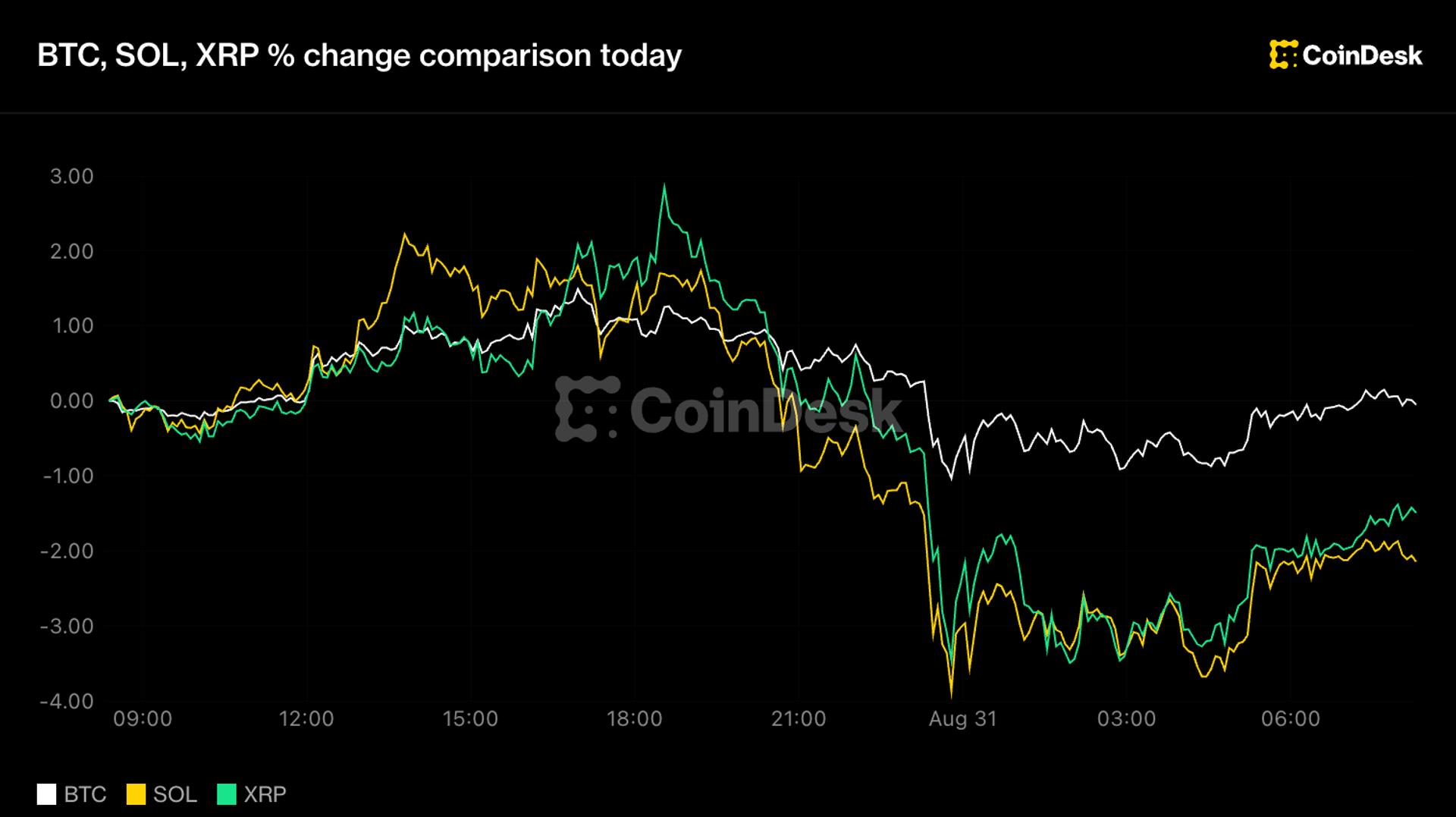
The dollar's dominance casts a longer shadow over the broader altcoin market. With Bitcoin struggling against macro forces, altcoins, which typically exhibit higher beta relative to Bitcoin, face even greater volatility and downward pressure. Capital tends to flow out of smaller-cap, higher-risk altcoins first during periods of uncertainty, consolidating into Bitcoin or stablecoins. Stablecoins, predominantly dollar-pegged, ironically benefit from dollar strength as they offer a secure haven within the crypto ecosystem, allowing investors to stay 'in crypto' without exposure to market volatility. This flight to quality within the digital asset space underscores the market's risk-off sentiment, highlighting the need for careful portfolio management and a focus on projects with strong fundamentals and clear value propositions.
Navigating the Path Forward: Key Indicators for September and Beyond
Looking ahead, several critical indicators will shape Bitcoin's trajectory. First, forthcoming inflation data (CPI, PCE) and subsequent Federal Reserve commentary will be paramount. Any signs of inflation cooling significantly could temper rate-hike expectations, potentially weakening the dollar and offering breathing room for risk assets. Second, global economic stability, particularly any intervention by Japanese authorities in the FX market, will be closely watched. Such actions could introduce new volatility but also signal a potential peak in dollar strength. Third, Bitcoin's own network fundamentals and institutional adoption metrics will continue to play a role. Consistent growth in active addresses, transaction volume, or news of major institutional inflows could provide internal catalysts, helping Bitcoin decouple from some of the macro drag. Investors should prepare for continued volatility but also recognize the potential for significant upside should the macroeconomic tide begin to turn.
Conclusion: Cautious Optimism in a Volatile Landscape
Bitcoin's ability to maintain its footing near $78,000 through the challenging close of August is a testament to its evolving resilience and growing investor conviction. However, it operates within a global financial system where the U.S. dollar's strength, driven by rate-hike bets and global economic divergences like the yen's struggles, remains a dominant force. As senior analysts, our assessment is one of cautious optimism. Bitcoin is proving its mettle, but sustained upward momentum will likely require a softening of the dollar's relentless ascent. Until then, investors should remain agile, closely monitor macroeconomic shifts, and recognize that while Bitcoin's long-term potential remains robust, the short-to-medium term will be a delicate dance between intrinsic strength and external pressures.