Bitcoin Under Pressure: IBIT Drives ETF Outflows as Market Digests Pullback
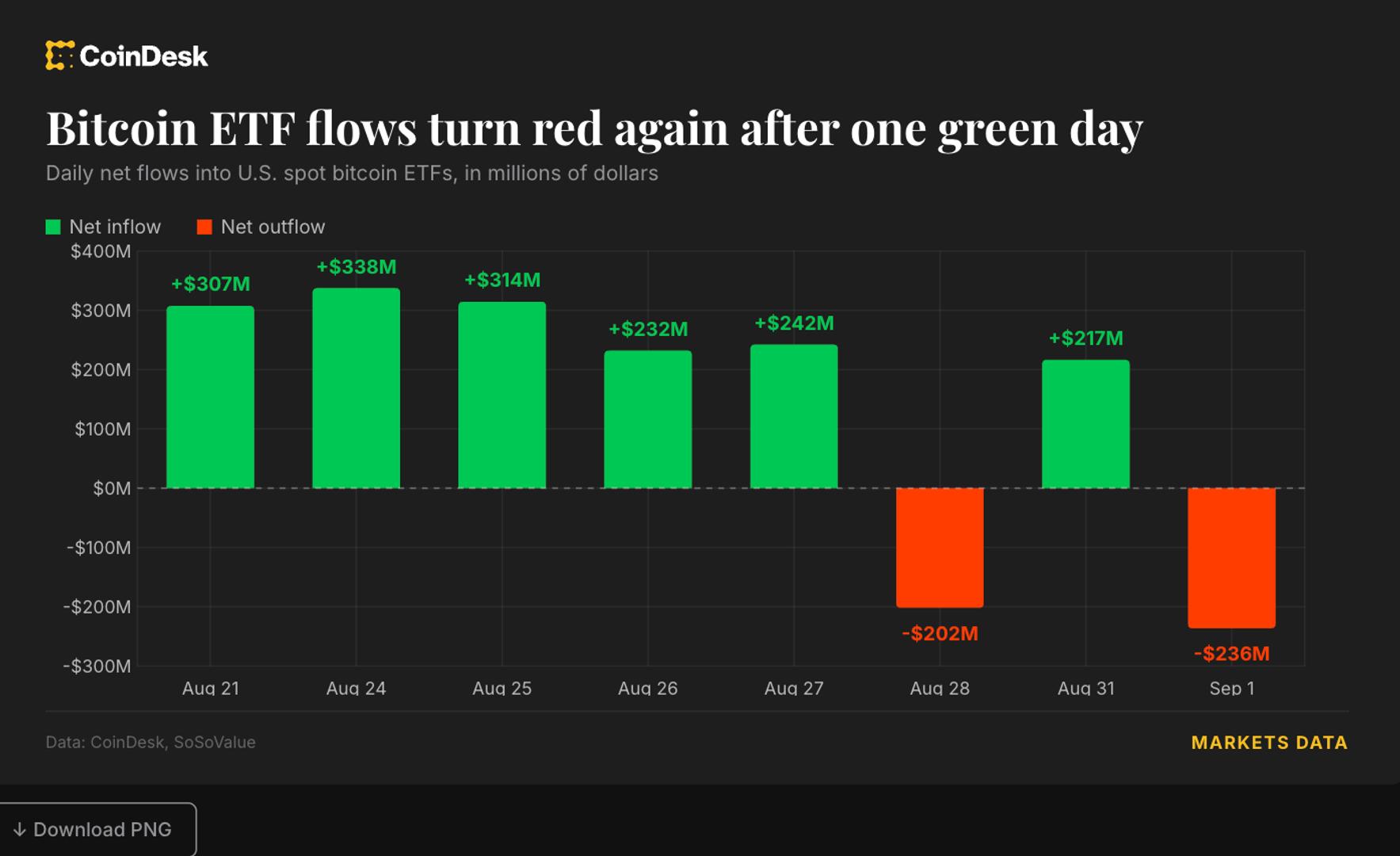
The cryptocurrency market witnessed a significant shift today as Bitcoin, the bellwether digital asset, dipped below the crucial $77,500 mark, sending ripples across the entire ecosystem. While smaller crypto ETFs registered modest inflows, the spotlight remained firmly on the spot Bitcoin ETFs, which collectively experienced a substantial $236 million outflow. A key driver in this institutional recalibration was BlackRock’s IBIT, one of the most prominent Bitcoin ETFs, underscoring a period of profit-taking and potential risk reassessment among institutional investors.
Understanding the Outflow Dynamics: IBIT's Pivotal Role
For weeks, the narrative surrounding spot Bitcoin ETFs has been overwhelmingly positive, with unprecedented inflows signaling robust institutional adoption. However, today’s data paints a different picture. The $236 million net outflow marks a notable reversal, with BlackRock's IBIT, typically a powerhouse of consistent inflows, contributing significantly to this negative trend. While specific figures for IBIT's individual outflow are crucial for a complete picture, its mention as a primary driver suggests a broad-based institutional reaction.
This outflow from major Bitcoin funds stands in contrast to the resilience shown by smaller crypto-focused ETFs, which continued to attract capital. This divergence hints at a potential strategic reallocation within the digital asset space. Investors might be rotating out of the more established, large-cap Bitcoin exposure to explore opportunities in nascent altcoin sectors, or simply consolidating gains from their Bitcoin positions.
Macroeconomic Headwinds and Profit-Taking Sentiments
The recent dip in Bitcoin's price and the subsequent ETF outflows are not isolated events but rather intricate responses to a confluence of factors. A primary driver appears to be profit-taking. After Bitcoin’s remarkable rally to new all-time highs, many investors, both retail and institutional, are likely cashing in on substantial gains. This is a natural part of any market cycle and can lead to short-term corrections.
Furthermore, broader macroeconomic concerns continue to loom large. Persistent inflation data, coupled with hawkish signals from central banks regarding interest rates, often pushes investors towards a "risk-off" sentiment. In such environments, even assets with strong long-term fundamentals like Bitcoin can face selling pressure as portfolios are de-risked. The allure of higher yields in traditional finance, or a flight to safer havens like the dollar, can temporarily divert capital away from volatile assets.
The upcoming economic calendars, packed with inflation reports and central bank policy meetings, cast a long shadow over risk assets. Uncertainty surrounding these events can lead to precautionary selling, as market participants brace for potential volatility. Investors are keenly watching for any cues that might signal a shift in monetary policy or a clearer path for global economic recovery.
Bitcoin's Price Action: Navigating Key Levels
The slip below $77,500 is a technical indicator that demands attention. While not catastrophic, it suggests a weakening of immediate support levels. Analysts will now be closely watching for Bitcoin to establish new support floors. Critical psychological and technical levels, such as the $75,000 and even $70,000 marks, could come into play if selling pressure persists. Conversely, a quick rebound above $77,500 could signal that today's dip was merely a temporary blip.
It's important to contextualize this pullback within Bitcoin’s broader bull run. Healthy corrections are essential for sustainable growth, flushing out excessive leverage and allowing the market to consolidate before its next leg up. The speed and depth of any recovery will provide insights into the underlying strength of demand.
Broader Market Implications: Altcoins in the Red
As expected, Bitcoin’s struggles have sent shockwaves across the broader cryptocurrency market. "Every major is red on the day," as the source context notes, highlighting Bitcoin's undeniable influence. Altcoins, which often exhibit higher volatility, tend to amplify Bitcoin's movements. During periods of Bitcoin correction, altcoins typically experience even sharper declines as investors de-risk across the board.
However, the narrative of smaller crypto ETFs taking money suggests a nuanced approach. While the overall sentiment might be cautious, there is still appetite for diversification and potentially higher-beta plays within the crypto space. This could indicate a selective rotation rather than a complete withdrawal of capital from the digital asset market.
The Long-Term Outlook: A Temporary Hiccup or a Trend Shift?
From a senior analyst's perspective, today’s outflows, while significant, should be viewed within the larger framework of institutional adoption. The fundamental thesis for Bitcoin remains robust: increasing scarcity post-halving, growing global acceptance, and its role as a digital store of value. Spot Bitcoin ETFs have irrevocably altered the landscape, providing an accessible and regulated avenue for institutional capital.
It is premature to declare a sustained bearish trend based on a single day's or even a few days' outflows. Market cycles are characterized by ebb and flow. Periods of strong inflows are often followed by profit-taking and consolidation. The key will be to monitor subsequent ETF flows and Bitcoin's ability to hold crucial support levels over the coming days and weeks.
Investors should continue to focus on long-term trends, fundamental developments, and macroeconomic indicators. While short-term volatility is an inherent characteristic of the crypto market, the structural shift towards institutional embrace of Bitcoin suggests that current pullbacks are likely opportunities for strategic accumulation rather than reasons for panic.