Introduction: A Critical Juncture for Bitcoin
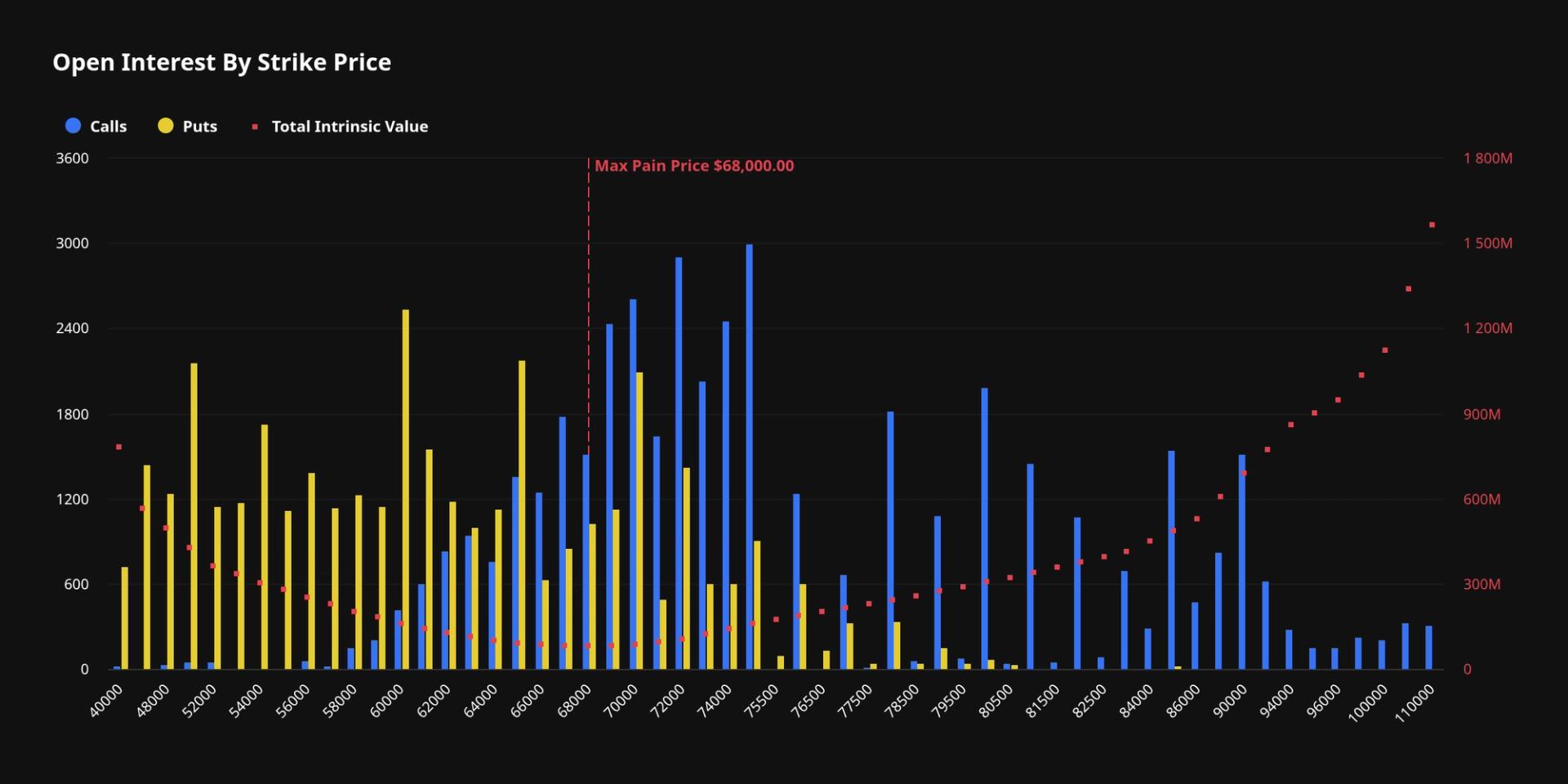
As the crypto market gears up for Friday, a colossal $6.4 billion Bitcoin options expiry looms large, setting the stage for what could be a period of amplified volatility. This isn't just another expiry; it follows a remarkable surge in Bitcoin’s price from approximately $62,000 to nearly $80,000 in recent weeks. Such a rapid ascent significantly alters the dynamics of outstanding options contracts, leaving market makers with substantial exposure to manage around several key strike prices. For astute investors and market participants, understanding the intricate mechanics at play is crucial to navigate the potential turbulence and capitalize on emerging opportunities.
Understanding the Options Landscape and its Scale
A Bitcoin options expiry marks the date when outstanding options contracts become void. At this point, in-the-money (ITM) options are settled, while out-of-the-money (OTM) options expire worthless. The sheer magnitude of this $6.4 billion expiry underscores its importance. This figure represents a significant portion of Bitcoin’s total market capitalization and could exert considerable influence on its price action, especially in a market already sensitive to large block trades and institutional flows.
Open interest (OI) in options markets indicates the total number of outstanding contracts that have not yet been settled. A high OI around specific strike prices, particularly on calls (betting on price increase) and puts (betting on price decrease), acts as powerful magnets or resistance levels. For this particular expiry, the prior rally means a significant number of call options, originally perceived as OTM, have now moved deep into ITM territory, fundamentally shifting the risk profile for those who sold them.
The Impact of Bitcoin’s Ascent from $62,000 to $80,000
Bitcoin's rapid climb from $62,000 to $80,000 is the central catalyst intensifying the current expiry's potential impact. During this rally, many traders likely bought call options expecting further upside, while others sold them. For market makers (MMs) who typically sell options to provide liquidity, this price surge means that a large volume of their sold call options are now in-the-money. This puts them in a ‘short gamma’ and ‘short delta’ position, meaning they incur losses as the price rises and their position becomes more sensitive to price movements.
To hedge against these burgeoning liabilities, market makers engage in 'delta hedging.' As Bitcoin's price rises, their short call options become more delta-positive, requiring MMs to buy spot Bitcoin to maintain a delta-neutral position. This dynamic itself contributes to upward price momentum, creating a potential 'gamma squeeze.' The critical question now is what happens when these hedges need to be unwound or settled at expiry.
Market Maker Mechanics and the 'Unwind' Phenomenon
The role of market makers is pivotal in understanding the volatility surrounding options expiries. Their primary objective is to maintain a balanced book and profit from the bid-ask spread, not to speculate on price direction. However, their hedging activities can inadvertently create significant market movements.
As expiry approaches, the gamma of options contracts becomes extremely sensitive. MMs must continuously adjust their spot positions, leading to heightened trading activity. The 'unwind' scenario is particularly relevant here: if the market is dominated by ITM call options, MMs who hedged by buying spot Bitcoin on the way up will either deliver this Bitcoin to the option holders (if exercised) or, crucially, sell their accumulated spot Bitcoin if the calls expire OTM or if they need to rebalance their overall portfolio. Conversely, if a large number of calls expire OTM, MMs who bought spot to hedge might liquidate those positions, potentially exerting downward pressure.
The concept of 'Max Pain' also comes into play. This is the strike price at which the largest number of outstanding options contracts (both calls and puts) will expire worthless, causing maximum financial loss to option holders and maximum profit to option writers (typically MMs). While not always a precise predictor, the price often gravitates towards this level leading up to expiry as sophisticated participants try to push the price towards their preferred outcomes.
Potential Scenarios for Post-Expiry Volatility
Given the $6.4 billion scale and the recent price action, several scenarios could unfold:
- Increased Volatility and Price Discovery: The most probable outcome is a period of heightened volatility. Market makers rebalancing their books, combined with speculative trading around key strike prices, can lead to sharp, intraday price swings. Once the expiry clears these positions, the market might then enter a new phase of price discovery, potentially establishing a clearer trend.
- A Relief Rally: If the market effectively absorbed the delta hedging buying pressure on the way up, and if the majority of ITM calls are exercised smoothly, the removal of this hedging overhead could lead to a 'relief rally.' The market might find renewed upward momentum without the constant pressure of MMs adjusting their spot positions.
- Short-Term Correction: Conversely, if a substantial number of call options that were ITM suddenly move OTM just before expiry, or if MMs were over-hedged and need to sell significant amounts of spot Bitcoin post-expiry, this could trigger a short-term correction. This selling pressure, especially if amplified by thin liquidity, could lead to a swift downside move.
- Choppy Sideways Action: In some cases, the market might simply consolidate, with selling pressure from one side offset by buying interest from the other, leading to choppy, sideways trading until the dust settles.
Historical Precedent and Investor Implications
Historically, large options expiries have often been associated with increased trading volumes and temporary price dislocations. While the outcomes are never identical, the pattern of heightened activity around these events is consistent. For investors, this demands a robust approach to risk management. Avoiding excessive leverage around these periods is prudent. Instead, informed participants might seek to identify tactical opportunities, such as observing where significant open interest lies, or looking for entry/exit points post-expiry once the market direction becomes clearer.
Monitoring on-chain metrics, funding rates (which indicate speculative sentiment in perpetual futures), and the evolving options open interest post-expiry will provide critical clues regarding the market's true direction and sentiment.
Conclusion: Navigating the Imminent Bitcoin Storm
The impending $6.4 billion Bitcoin options expiry is more than just a date on the calendar; it's a critical event shaped by Bitcoin's recent parabolic move. For market makers, it represents a complex juggling act of risk management. For investors, it signals a period where market mechanics could temporarily overshadow fundamental drivers. While the broader bullish narrative around Bitcoin – fueled by spot ETF inflows, institutional adoption, and the upcoming halving – remains strong, the short-term impact of this expiry cannot be understated. Vigilance, a nuanced understanding of derivatives mechanics, and disciplined risk management will be paramount for navigating what could be a volatile ride for the world's leading cryptocurrency.