The Illusion of Control: Why HODLing Bitcoin Outperforms Market Timing
In the dynamic and often volatile world of cryptocurrency, the allure of timing the market—buying low and selling high—is a powerful siren song. Many investors, fueled by the promise of rapid gains, dedicate countless hours to chart analysis, news aggregation, and gut-instinct predictions. However, a deep dive into Bitcoin’s historical performance reveals a counterintuitive truth, one that seasoned crypto experts have long advocated: for the vast majority, a disciplined buy-and-hold (HODL) strategy demonstrably beats the elusive quest to time the market.
The Concentration of Gains: Bitcoin's Peculiar Performance Trajectory
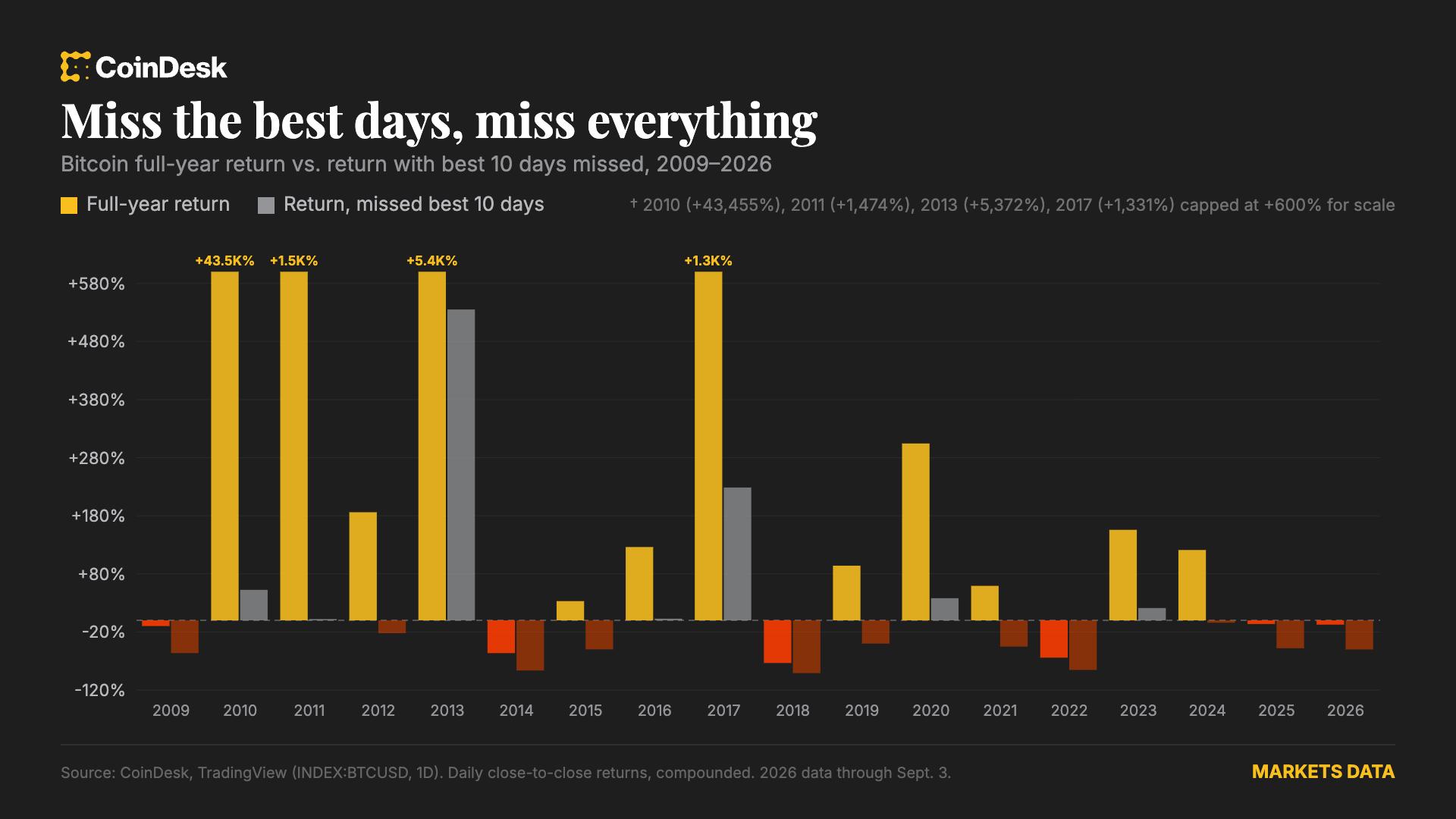
A comprehensive historical analysis of Bitcoin's price performance, spanning from its nascent stages in 2010 through projected trends into 2026, illuminates a critical, often overlooked characteristic: the overwhelming majority of Bitcoin’s annual returns are generated during an astonishingly tiny fraction of the calendar year. This isn't a phenomenon unique to Bitcoin, but it's particularly pronounced in assets with high volatility and rapid adoption cycles. Imagine missing just a handful of the best-performing days in a given year; such an absence could, and often does, decimate an investor's overall annual return, turning a stellar year into a mediocre or even negative one. For instance, studies on traditional equities have shown that missing the top 10 best trading days over decades can drastically reduce cumulative returns. In the crypto space, where price movements can be far more extreme, this effect is amplified exponentially.
The Data Speaks: A Decade of Missed Opportunities for Timers
Consider the practical implications of this concentrated gain phenomenon. An investor who attempts to time the market must not only accurately predict when to exit but, more critically, when to re-enter. The data suggests that Bitcoin's most significant upward movements are often sudden, unpredictable, and rapid, leaving little opportunity for re-entry for those waiting on the sidelines. If the vast majority of annual returns materialize in just a few days or weeks, an investor out of the market during these crucial periods, perhaps waiting for a "better dip" or avoiding perceived short-term risk, essentially forfeits the lion's share of that year's potential growth. The historical analysis from 2010 onwards would likely show that periods of exponential growth are interspersed with extended sideways movement or corrections, making the precise identification of these breakout moments akin to finding a needle in a haystack for even the most sophisticated algorithms, let alone individual traders.
The Psychological Trap: Greed, Fear, and the Futility of Prediction
Beyond the statistical improbability, human psychology plays a significant, often detrimental, role in market timing. Emotions such as fear of missing out (FOMO) often compel investors to buy at local tops, while panic selling driven by fear (FUD) frequently leads to exiting positions at local bottoms. The constant influx of news, social media sentiment, and price fluctuations creates an environment ripe for impulsive decisions. Even seasoned professional traders struggle to consistently outperform the market over the long term, and many who do attribute their success more to risk management and robust strategies rather than perfect timing. For the average retail investor, the cognitive load and emotional toll of attempting to predict Bitcoin's next move are immense, often leading to burnout and suboptimal financial outcomes. HODLing, in contrast, offers a reprieve from this emotional roller coaster, allowing investors to detach from short-term noise and focus on the asset's long-term value proposition.
The Undeniable Power of HODLing: Simplicity, Conviction, and Compounding
The buy-and-hold (HODL) strategy, therefore, isn't merely a passive approach; it's an active decision rooted in conviction about Bitcoin's long-term potential. By committing to holding an asset for extended periods, investors automatically ensure their participation in all of its performance days, including those crucial, highly concentrated gain periods. This strategy eliminates the stress of daily market analysis, reduces transaction fees associated with frequent trading, and, in many jurisdictions, defers capital gains tax liabilities until the asset is eventually sold. More importantly, it allows the powerful force of compounding returns to work its magic unimpeded. Bitcoin, viewed as digital gold or a hedge against inflation, has shown a remarkable ability to rebound from significant drawdowns and reach new all-time highs over multi-year cycles. HODLing aligns an investor with this macro trend rather than fighting against its micro-volatility.
Dollar-Cost Averaging: A Smarter Way to Accumulate
For those looking to mitigate the risk of investing a lump sum at an inopportune time, dollar-cost averaging (DCA) emerges as a refined application of the HODL philosophy. DCA involves investing a fixed amount of money at regular intervals, regardless of the asset's price. This strategy systematically buys more when prices are low and less when prices are high, effectively averaging out the purchase price over time. It removes the emotional component of trying to "buy the dip" or "wait for a correction," ensuring consistent accumulation and participation in the market's long-term upward trajectory. When combined with a HODL mindset, DCA becomes an incredibly powerful tool for building a significant Bitcoin position over time, further reinforcing the idea that consistent, emotionless accumulation trumps speculative timing.
Conclusion: Embrace the Long Game for Bitcoin Success
In conclusion, the sophisticated analysis of Bitcoin's historical performance unequivocally points to the superiority of a buy-and-hold strategy over the Sisyphean task of market timing. The fact that the bulk of Bitcoin’s annual appreciation is concentrated within a fleeting window of the year makes active trading an extremely high-risk, low-reward endeavor for most. As senior crypto analysts, we implore investors to shift their focus from short-term fluctuations to Bitcoin's robust long-term thesis as a foundational asset in the evolving digital economy. Embrace the simplicity, reduce emotional burden, and allow the power of time and conviction to unlock the full potential of your Bitcoin investment. While no investment is without risk, a disciplined HODL approach, perhaps complemented by dollar-cost averaging, offers the most pragmatic and historically validated path to success in the volatile yet promising world of cryptocurrency.