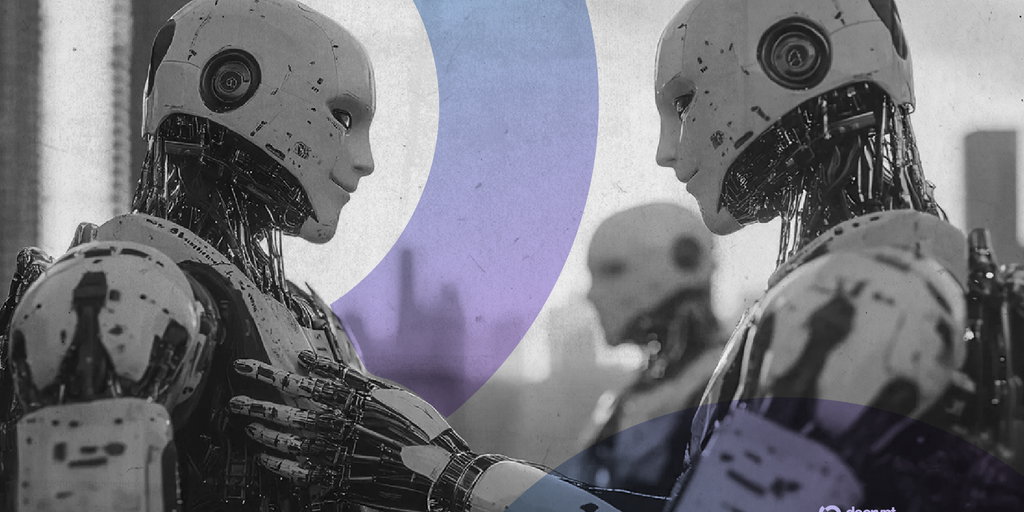
The technological landscape is perpetually in flux, yet few predictions carry the weight of transformative potential quite like the recent one from ACE Robotics Chairman, who forecasts a 'ChatGPT moment' for robotic intelligence by 2027. This isn't merely an incremental upgrade; it's a vision of AI models enabling robots to profoundly understand and interact with the physical world, promising a leap in utility and autonomy. As a Senior Crypto Analyst, my perspective immediately shifts beyond the immediate robotics implications to the broader ripple effects across the digital economy, specifically how this physical AI revolution could fundamentally reshape and invigorate the cryptocurrency and blockchain sectors.
A 'ChatGPT moment' for robotics implies a paradigm shift akin to how large language models (LLMs) made complex natural language processing intuitively accessible and remarkably powerful. For robots, this translates to moving beyond pre-programmed tasks to true contextual understanding – perceiving environments, inferring intentions, and executing complex physical actions with unprecedented dexterity and intelligence. Imagine manufacturing facilities where robots adapt to supply chain disruptions in real-time, or healthcare assistants performing intricate procedures with empathetic precision. While widespread adoption may still be years away, the breakthrough itself promises to unlock capabilities previously confined to science fiction.
The Crypto Catalyst: Bridging AI's Physical Leap with Decentralized Economies
This impending robotic intelligence explosion presents an extraordinary convergence opportunity for blockchain technology. Advanced robots, operating autonomously in the physical world, will generate an unprecedented volume and variety of data – sensory inputs, operational logs, interaction records, and more. Ensuring the integrity, provenance, and secure ownership of this data becomes paramount. Blockchain's immutable ledger provides a robust solution, acting as a verifiable truth layer for machine-generated data. This could power decentralized data marketplaces where robot-collected environmental data, for instance, could be securely traded and monetized, creating entirely new token economies.
Furthermore, the concept of Decentralized Physical Infrastructure Networks (DePIN) stands to gain immensely. Imagine autonomous delivery robots not just fulfilling tasks but also contributing to and drawing from a decentralized network of services. They could be nodes in a DePIN, sharing sensor data to improve mapping services, providing real-time traffic updates, or even acting as mobile charging stations for other devices, all incentivized and managed through crypto tokens. This model transforms costly centralized infrastructure into a resilient, community-owned, and economically efficient network, with robots becoming active participants rather than mere assets.
The vision extends to robots evolving into truly Autonomous Economic Agents (AEAs) within a Web3 framework. Powered by AI and secured by blockchain, these robots could manage their own finances, pay for energy, procure replacement parts, or even earn income by providing services, all orchestrated by smart contracts. This introduces novel challenges around identity and governance, for which decentralized identity (DID) solutions and on-chain governance mechanisms for robot DAOs (Decentralized Autonomous Organizations) could provide critical infrastructure. The very notion of economic activity could be redefined as intelligent machines engage directly in value exchange, free from traditional intermediaries.
Investment Horizons: Identifying Crypto Opportunities
For crypto investors and innovators, the dawn of intelligent, physically interactive robots opens several compelling investment horizons. Projects focused on decentralized AI compute and data verification will see increased demand. AI-specific tokens that facilitate the training, deployment, and auditing of AI models on decentralized networks will likely gain significant traction as the robotics industry seeks more transparent and robust AI solutions.
The DePIN sector, which has already seen considerable growth, is poised for explosive expansion as robots become the 'physical' nodes and data generators. Investing in infrastructure tokens that enable real-world data collection, processing, and transfer – especially those with clear use cases for autonomous agents – could yield substantial returns. Moreover, the development of specialized Web3 protocols tailored for robot coordination, task allocation, and secure peer-to-peer payments will become crucial. We might see the emergence of 'Robot-as-a-Service' (RaaS) platforms, underpinned by tokenomics, allowing individuals and businesses to access robotic capabilities on demand.
Navigating the Ethical and Regulatory Landscape
As with any technological leap, advanced robotics brings a host of ethical and regulatory complexities. The advent of highly autonomous, intelligent machines operating in our physical spaces necessitates robust frameworks for accountability, transparency, and control. This is another area where blockchain can play an indispensable role. Verifiable AI, where the decision-making processes and data inputs of a robot's AI can be immutably recorded and audited on a blockchain, offers a path towards greater trust and ethical compliance.
Furthermore, decentralized governance models can provide mechanisms for stakeholders to collectively define operational parameters, ethical guidelines, and dispute resolution for fleets of autonomous robots. As these 'robot brains' evolve, the regulatory landscape will have to adapt quickly, and decentralized, transparent systems could offer a flexible and trustworthy foundation for new legal and ethical paradigms.
While widespread adoption of these advanced robotic systems and their full integration with decentralized economies will undoubtedly take time, the predicted 'ChatGPT moment' by 2027 marks a critical inflection point. It signifies the maturation of a technology capable of truly bridging the digital and physical realms. For the crypto world, this isn't just about another speculative asset; it's about providing the fundamental infrastructure for a future where intelligent machines are not only ubiquitous but also economically integrated through trustless, decentralized systems. The crypto community must prepare to be an integral part of shaping this exciting, robot-powered future, providing the rails for innovation, ownership, and economic participation in a world increasingly inhabited by thinking machines.